
You may be wondering what the reference to water filter micron means while trying to select a whole house water filter system for your home or office. You may be thinking about what is the best micron rating. Let's find out.
What Does Micron Mean in Water Filters?

Water filter micron rating refers to the pore size of the filter screen. Micron is a measurement; the symbol is μm; 1 μm is 0.001 mm or 0.000039 of an inch, here are some examples:
- Fine beach sand - 50 to 2000 μm or 0.0019-0.0787 of an inch (0.05 to 2 mm).
- Human Hair - 70 μm or 0.0028 of an inch (0.07 mm).
- The smallest particle visible to Human eye – 40 μm or 0.0015 of an inch (0.04 mm).
A filter with a micron rating of 5 μm will remove or filter out contaminants of 5 μm or larger. Also, look for the efficiency rating of how well the filter removes particulates.
4 Types of Water Filter Micron Levels
1. MF microfiltration water purifier, with a filter micron rating of 0.1μm--10μm, is the first device for water purification in the home, which can filter large particles such as sediment, rust, and red worms.
2. UF ultrafiltration, with a filter micron rating of 0.001μm--0.1μm, can thoroughly filter large particles of impurities, bacteria, viruses and microorganisms in the water, and retain the original minerals and trace elements in the water, so that the water quality can be improved. It reaches the standard of sterile water and can be drunk directly.
3. NF nanofiltration water purifier has a filter micron rating of 1 nanometer to several nanometers, which can filter some heavy metals, but this nanofiltration water purifier is relatively rare in the market
4. RO reverse osmosis, with a filter micron ratingy of 0.1 nanometer (0.0001 μm), can intercept all substances except water. It is worth noting that because the pore size is too small, it cannot be filtered by water pressure, and a certain amount of water is required. Electricity, and because of the problem of pore spacing, filtration will produce a large amount of waste water.
So, What Micron Water Filter Do I Need?
At present, the domestic water purifiers on the market are mainly based on two technologies: ultrafiltration and RO reverse osmosis. Ultrafiltration technology uses membrane separation technology to filter out components larger than the size of water molecules. It can filter out harmful substances such as sediment, rust, suspended solids, colloids etc in water, and can retain some minerals that are beneficial to the human body. material elements. The filtration precision is about 0.001~0.1 microns. The RO reverse osmosis filtration precision is about 0.0001 micron, which is the highest precision water purification method, which can effectively filter the four major pollutants including precious metals, microorganisms, organic matter, etc.
We should choose a water purifier according to the water quality, not blindly pursuing high-precision filtration. In areas with hard water quality, reverse osmosis membranes can effectively filter out calcium ions in the water and reduce scale formation; areas with excessive heavy metals are suitable for reverse osmosis purification. If you only improve the quality of kitchen water and remove sediment, rust, residual chlorine, colloids, etc. in the water, an ultrafiltration water purifier will do.
1 Micron VS 5 Micron Water Filter
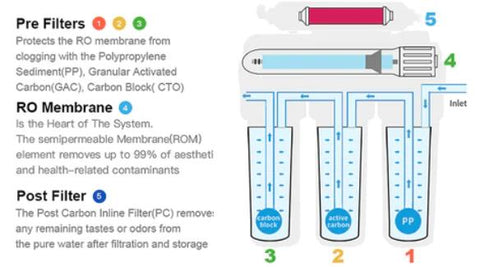
In the water purifier, 5 microns and 1 microns are generally the pore size of PP cotton. The difference between them is that the filtration precision of the two is different, that is, the minimum particle diameter that can be filtered. The filtration effect of 1 micron is better than that of 5 microns, and the filtration is more thorough. As for the selection, the pros and cons cannot be generalized. It can only be said that the one-micron is more delicate, and the five-micron is thicker, which should be reasonably selected according to the actual water quality.
First, one-micron filters out more impurities than five-micron ones, but one-micron filtration speed is slow. , 5 microns is slightly faster, 1um although the filtration accuracy is very high, but sometimes it may explode due to the large pressure of the water area. Also, with the same amount of water and water source, one-micron filter has a shorter lifespan than five-micron filters. For example, one-micron filters can be used for one month, and five-micron filters can be used for five months at once. Household drinking water is recommended to be more refined. If it is a large-scale purchase and batch customization, it is necessary to conduct water quality testing first, and select it reasonably. It is necessary to ensure water quality, save money, and avoid waste. Only a single simple filter is used. 5um, choose if necessary Multi-level filtration saves resources, first 5um and then 1um.
How to Choose the Right Micron Rating?
Unless you undertake a costly particulate analysis on your feedwater performed by a laboratory, the next best method to estimate the micron filter size required for your feedwater is trialling filter sizes.
Start with a low micron rating filter, such as a 5 μm. If you find this clog too quickly, losing water pressure to your home in a short period, try choosing a higher micron rating, 20 μm for example until you find the right balance between micron size and duration of time before it clogs.
You are looking for a filter that can give you at least 3-6 months of service before it needs replacing. A clogged filter means it has performed its job and removed the particulates; unfortunately, this also binds the filter and restricts water passage.
Larger Surface Areas and Depth Filters
Filters are available in different sizes, most common is 10 or 20-inch in length and either slimline 2.5-inches or Big Blue 4.5-inches in diameter. They are also available in a selection of materials and pore sizes (microns).
Pleated filters can be washed and reused but hold less dirt than a depth filter. Depending on your flowrate requirements and how many particulates are in you feed water will determine how long the element lasts between filter replacements and what size filter element you require.
If you're finding a 10 x 2.5-inches 5 μm depth filter blocks in 1-2 months, try a 20 x 2.5-inch, extending the filter's life or even the much larger 4.5-inch diameter depth filter with even more dirt holding capacity.
Multiple Filter Stages Can Help
Suppose you have very low feedwater quality with very high sediment levels. In this case, you may want to consider having multiply filters to stage the filtration, so they don't block so quickly yet still protect your home.
An example would be two filters in series. The first a 50 μm, the second a 5 μm; this combination would share the dirt loading capacity between both filters, extending your filter change window while maintaining water flow and pressure.
Having two inline filters allows you to remove smaller containments keeping your home appliances protected from tiny grains of silt and dirt.
Standard Universal Cartridges
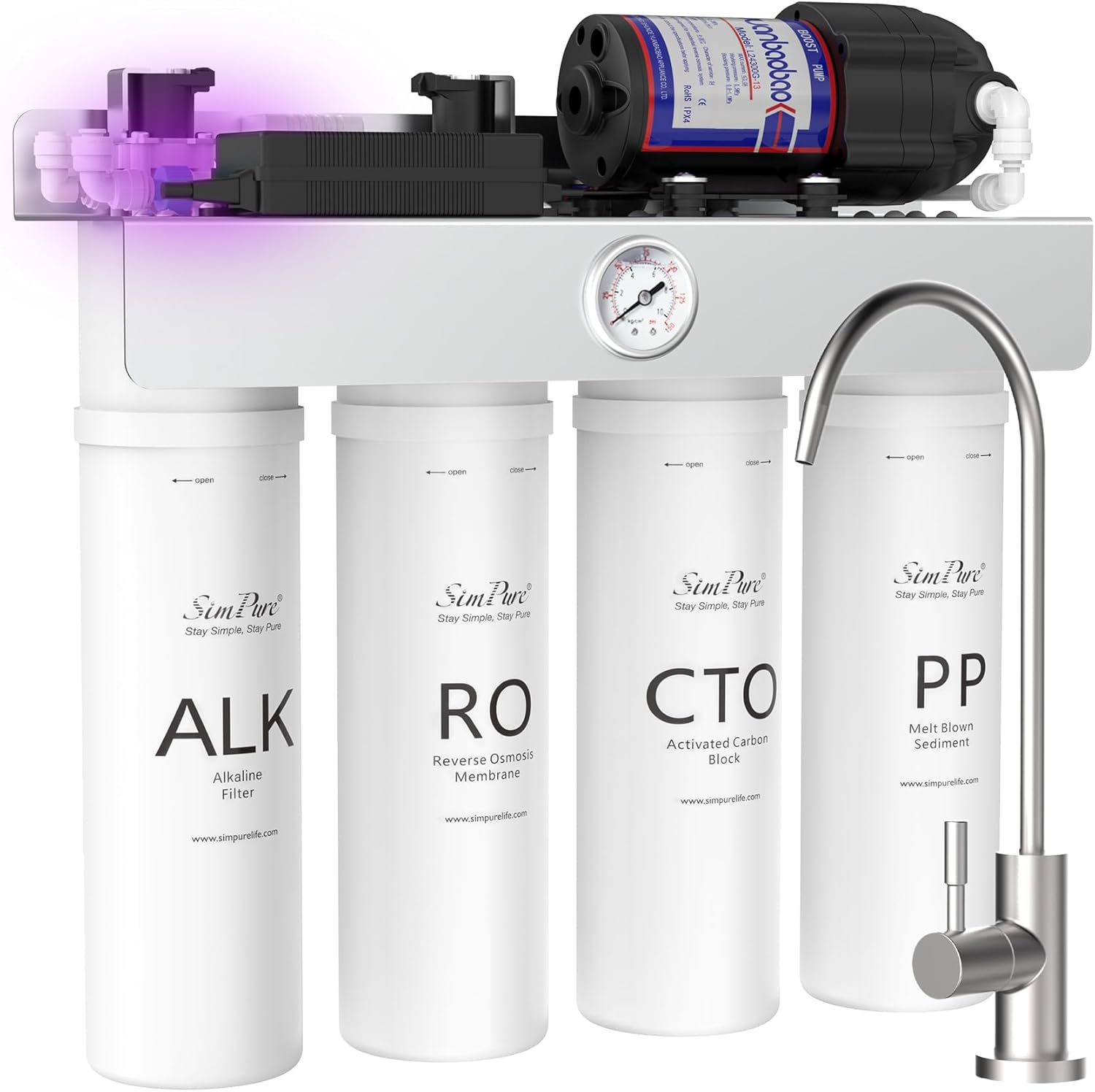
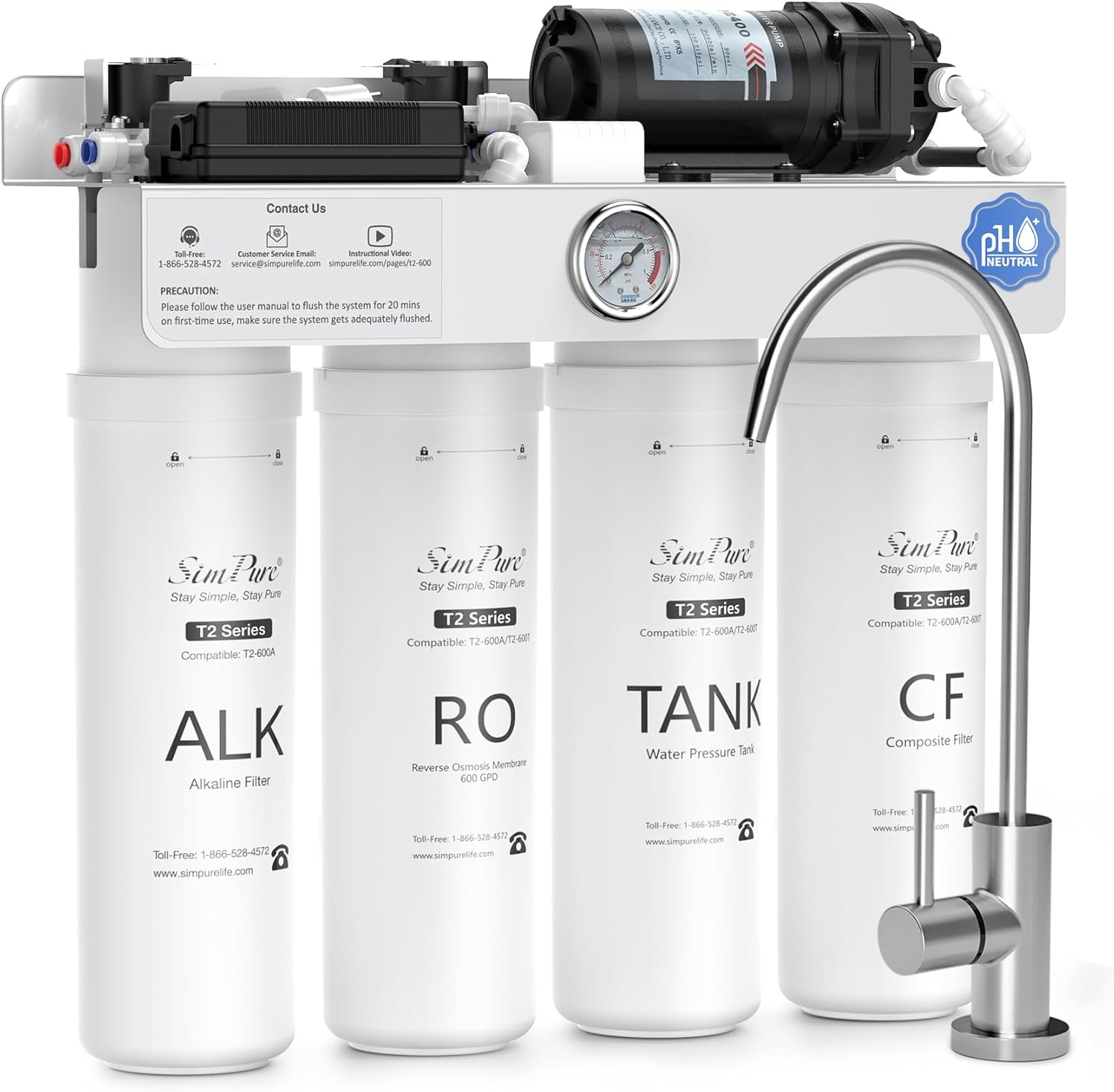
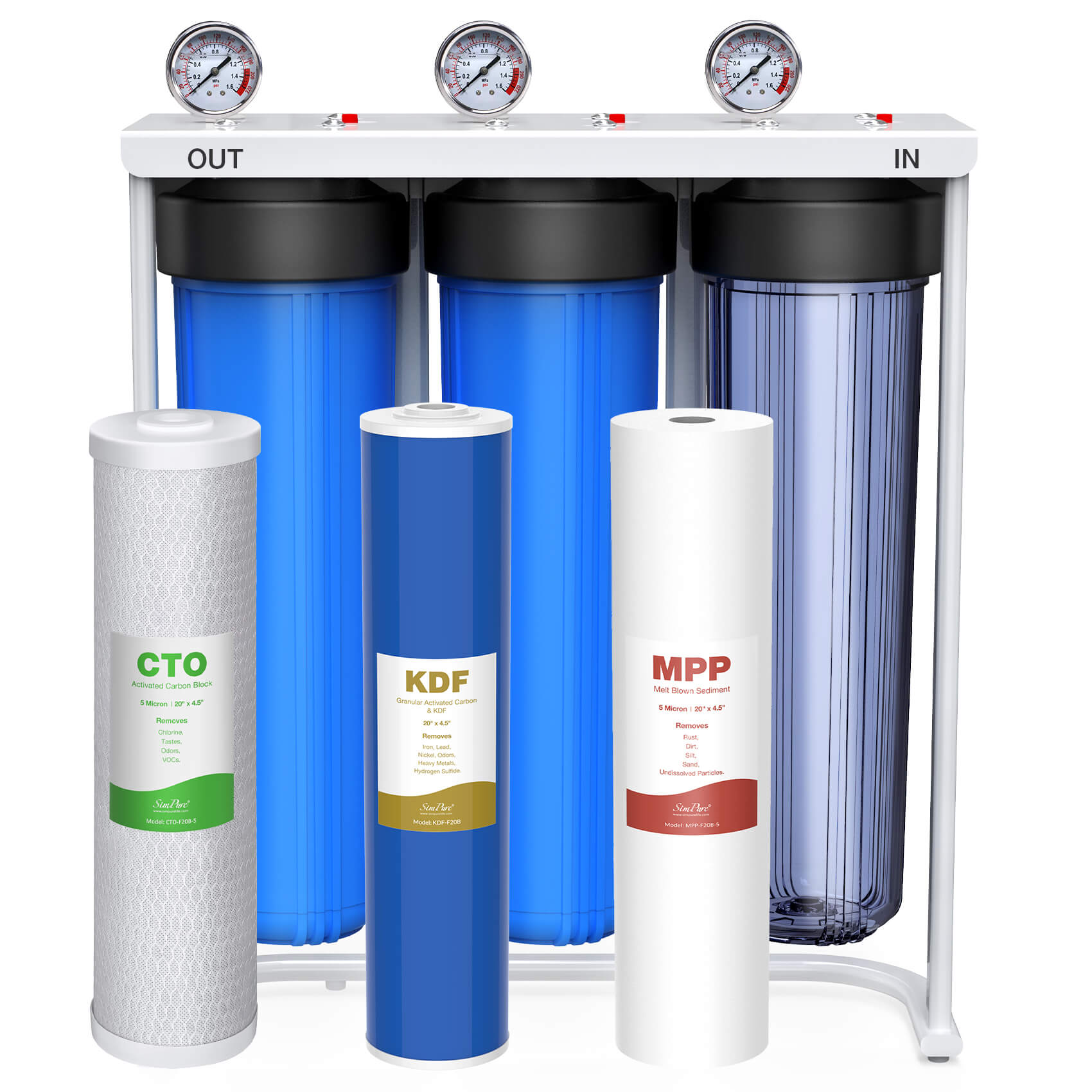
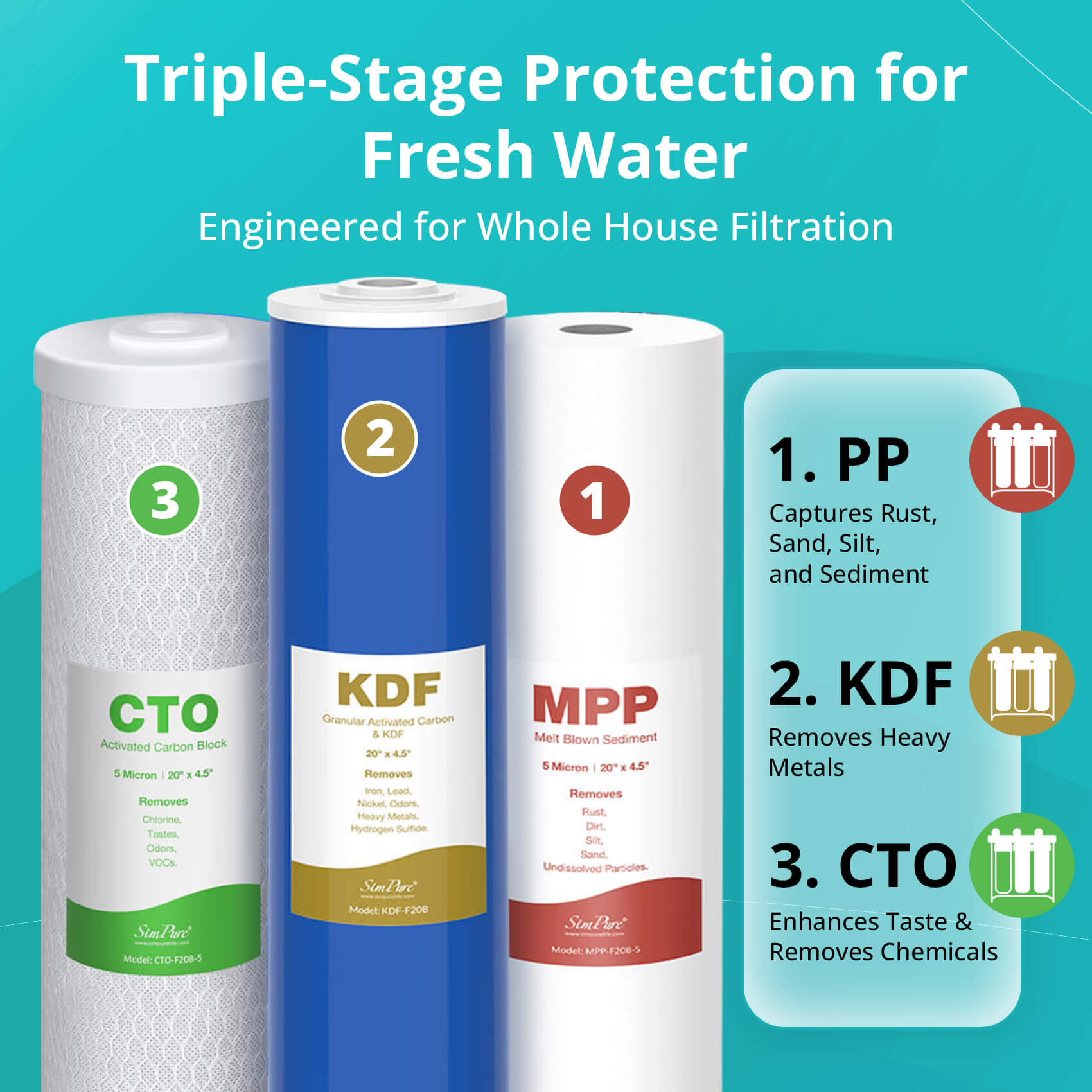
SimPure universal water filter has an extensive range of sediment filters made from food-grade Polypropylene (PP) in various lengths, from depth to pleated cartridge element designs depending on your requirements. Just explore below~

FAQs: 1 Micron vs 5 Micron Water Filter
If you’re considering ways to keep your pipes and water clean, many readers wonder about choosing the right filter. Here are the most common questions about filter micron ratings and which one is best for your home.
1. What does micron rating mean?
It shows the size of particles a filter can remove.
2. 1 micron or 5 micron—which is better?
1-micron removes finer particles; 5-micron handles larger sediments faster.
3. Does smaller micron mean cleaner water?
Yes, it removes finer debris and some bacteria.
4. Can I use both 1 and 5-micron filters together?
Yes, 5-micron pre-filters protect the 1-micron filter and extend its life.
5. How often should I replace a 1-micron filter?
Every 6–12 months, depending on water quality.
6. How often should I replace a 5-micron filter?
Usually 6–12 months, or when water flow slows down.
7. Will a 1-micron filter remove calcium?
It reduces some minerals, but an RO system is more effective for scale prevention.
8. Is flow rate affected by micron size?
Yes, smaller micron filters slightly slow water flow.
9. Can I install a 1-micron filter before my RO system?
Yes, it improves water quality and protects downstream filters.
10. Do all RO systems support 1-micron and 5-micron filters?
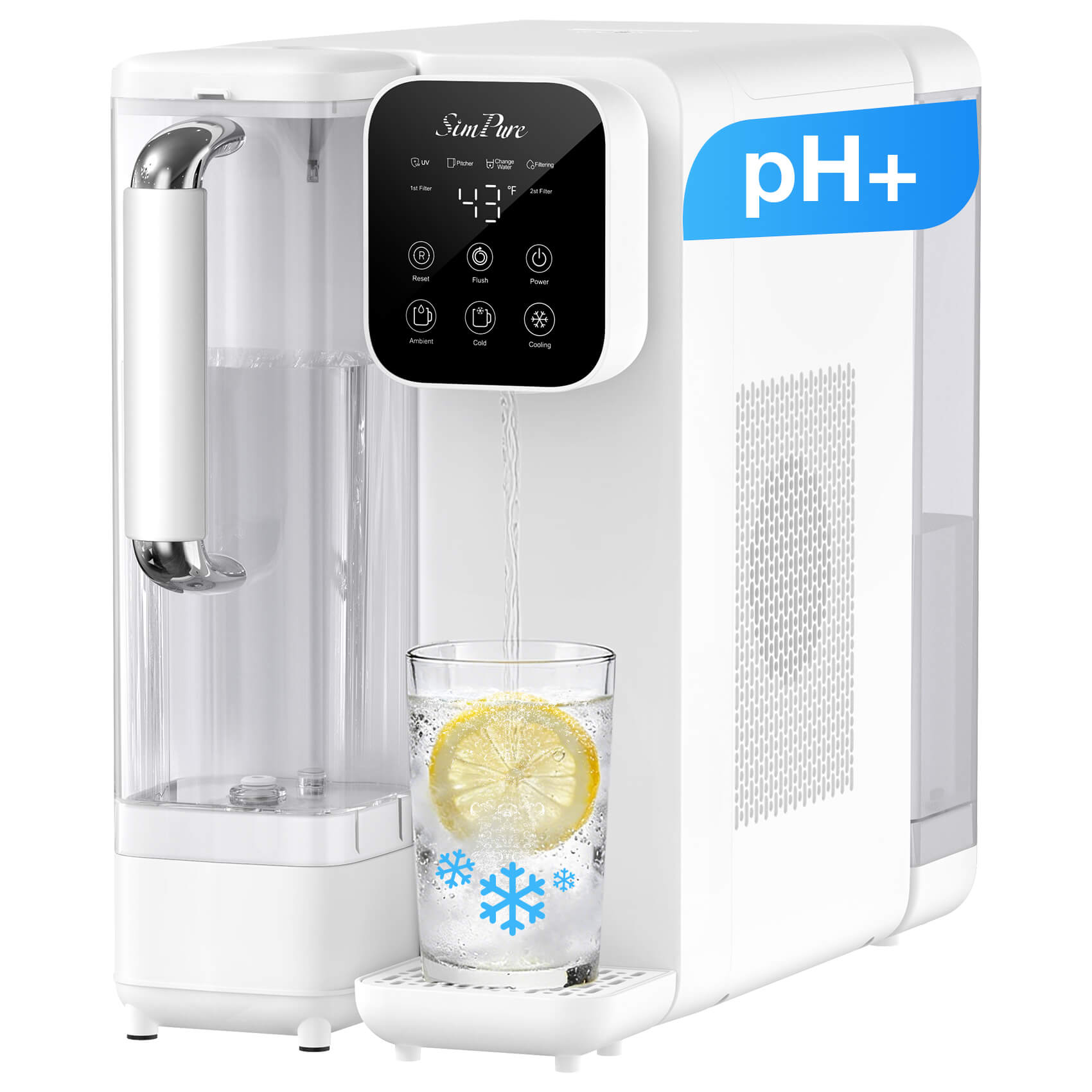
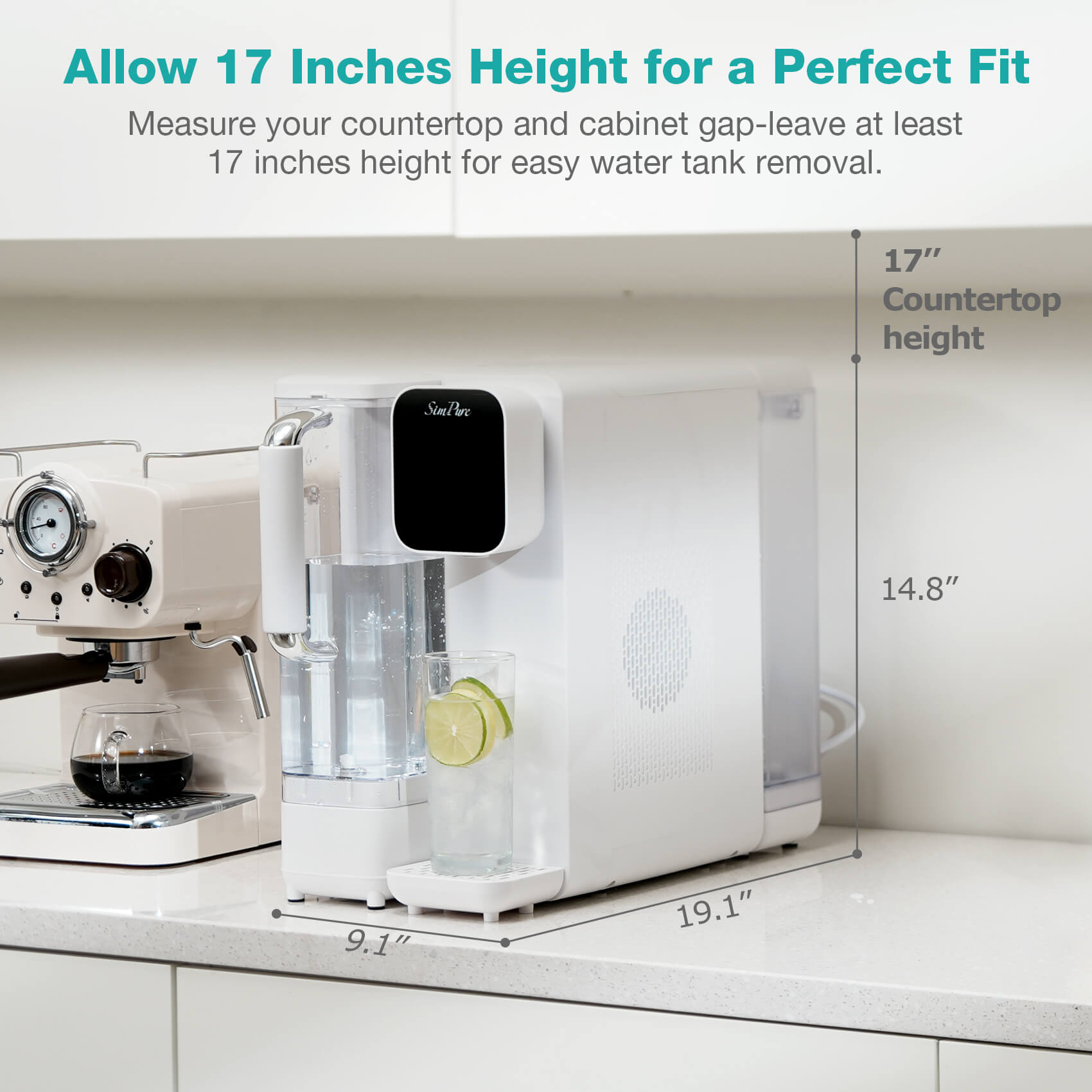
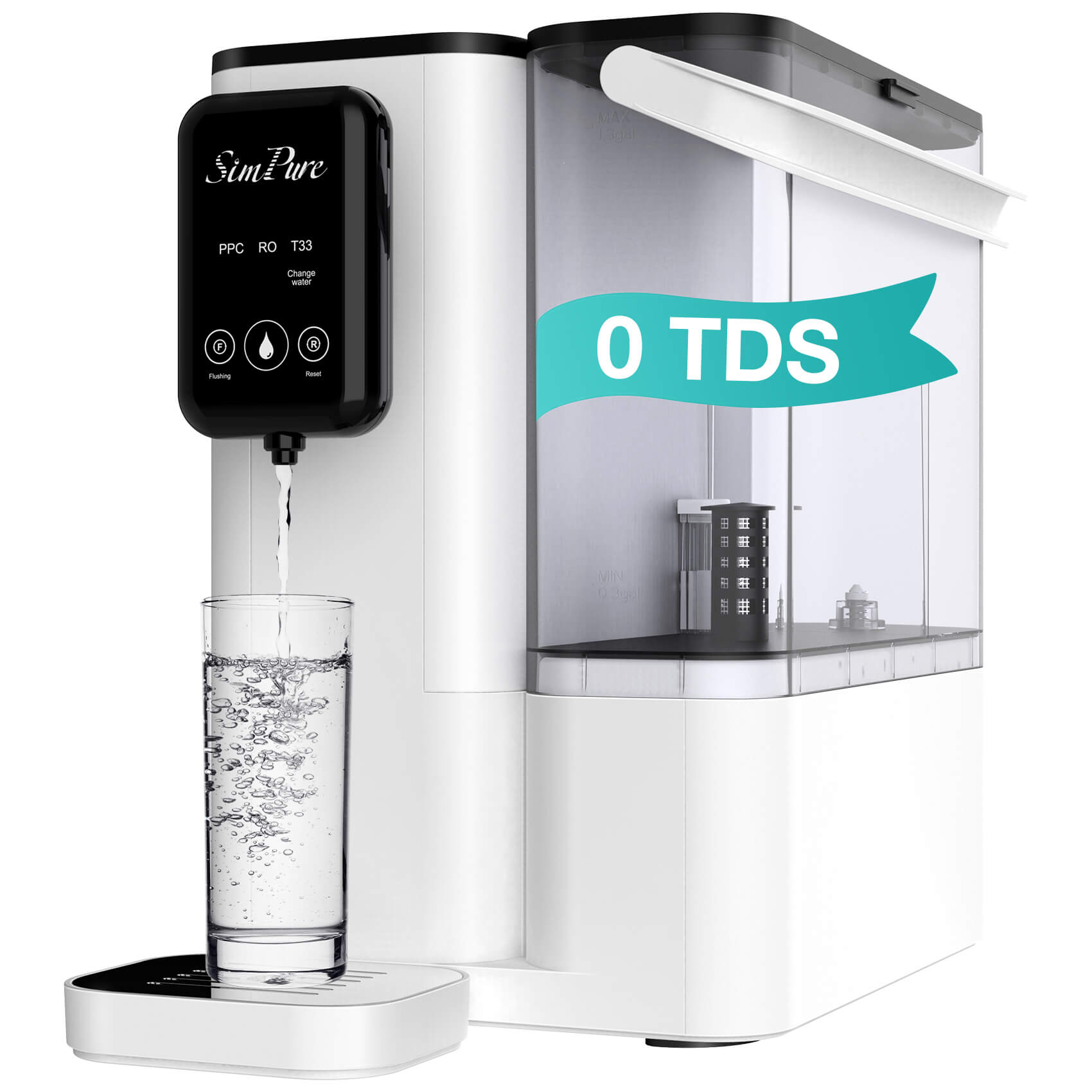
Most modern systems, like SimPure T1-400, are designed for multi-stage filtration including these sizes.
Final Bonus: 1 Micron vs 5 Micron Water Filter Comparison Table
| Feature | 1 Micron Filter | 5 Micron Filter |
|---|---|---|
| Particle Size Removed | Very fine sediment & some bacteria, ideal for drinking water clarity | Larger particles: sand, rust, dirt; suitable for high-sediment water |
| Best For | Pre-RO filtration & tap water for drinking | Well water, general sediment-heavy water |
| Flow Rate | Lower flow, may reduce faucet pressure | Higher flow, maintains normal water pressure |
| Clogging Speed | Clogs faster, requires more frequent maintenance | Clogs slower, longer filter life |
| RO Membrane Protection | Excellent protection, filters fine particles before RO | Protects RO membrane from large debris only |
| Filter Life / Replacement | Typically 3–6 months, more frequent replacement | Typically 6–12 months, less frequent replacement |
| Cost | Higher initial & maintenance cost due to frequent replacement | Lower cost, longer-lasting filter |
| Water Source Suitability | Municipal/tap water, clean or slightly sedimented water | Well water, river water, high sediment content |
| Maintenance Difficulty | Moderate, careful replacement needed | Easy, quick replacement |
| Typical Use | Final polishing, drinking water & pre-RO stage | Primary sediment removal, first-stage filter |