

Microplastics probably aren't the first thing you think about when filling a glass of water.
They're small, they can come from everyday plastic products, and they're not always something you can see. Plastic bottles and packaging are common sources, but synthetic fabrics and other household materials can also release tiny plastic particles over time.
That naturally raises a question for people who are paying closer attention to their drinking water: Can a reverse osmosis water filter remove microplastics?
The short answer is that RO filtration can reduce many particles because water passes through a very fine membrane. But the result depends on the membrane, the size and characteristics of the particles, and the design and condition of the filtration system.
If you're considering a reverse osmosis water filter for microplastics, here's what you should know before choosing one.
What Are Microplastics?
Microplastics are generally described as plastic particles smaller than 5 millimeters.
That definition covers a surprisingly wide range of sizes. Some particles are large enough to see, while others are measured in micrometers and require specialized equipment to detect.
They can enter water in several ways. Plastic products can break down as they age, while synthetic clothing can release tiny fibers during washing. Plastic materials can also wear down through everyday use.
Microplastics have been found in different water sources, including drinking water. The amount can vary, though, depending on where the water comes from and how it is tested.
Another point that's easy to overlook is that microplastics aren't all the same. Their size, shape, and material can be different, which matters when you're talking about filtration.
Can Reverse Osmosis Remove Microplastics?
Yes, RO filtration can help reduce many microplastic particles.
A reverse osmosis system sends water through a semi-permeable membrane. Water passes through the membrane while many larger substances are held back.
Microplastics are particles, rather than dissolved substances such as nitrate or fluoride. That makes the filtration process somewhat different, but the fine physical barrier created by the RO membrane can still help separate particles from the water.
It's important not to turn this into a claim that every RO system removes 100% of all microplastics. There are too many variables for that kind of blanket statement.
Particle size matters. So does membrane construction, water quality, pretreatment, and the condition of the filters. A system that is poorly maintained may not perform the same way as a properly maintained one.
For that reason, it's better to look at the specifications and filtration design of an individual RO system rather than relying only on a general claim about RO technology.
Why Does Filter Size Matter?
The word “microplastic” covers more than one size of particle.
A plastic fragment several millimeters across isn't the same as a particle measured in micrometers. This is one reason filtration performance can't always be reduced to a simple “yes” or “no.”
The other filtration stages matter, too.
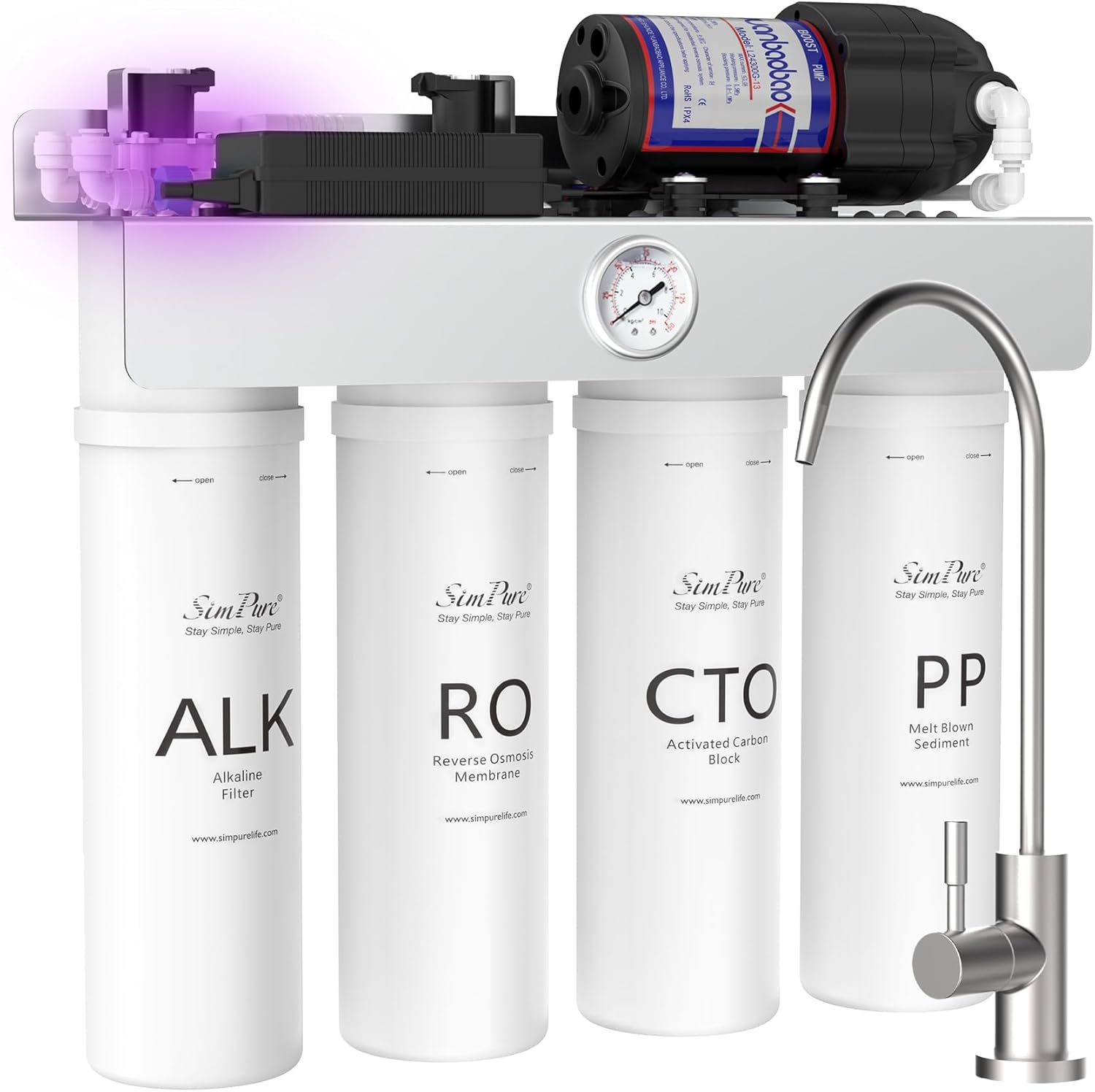
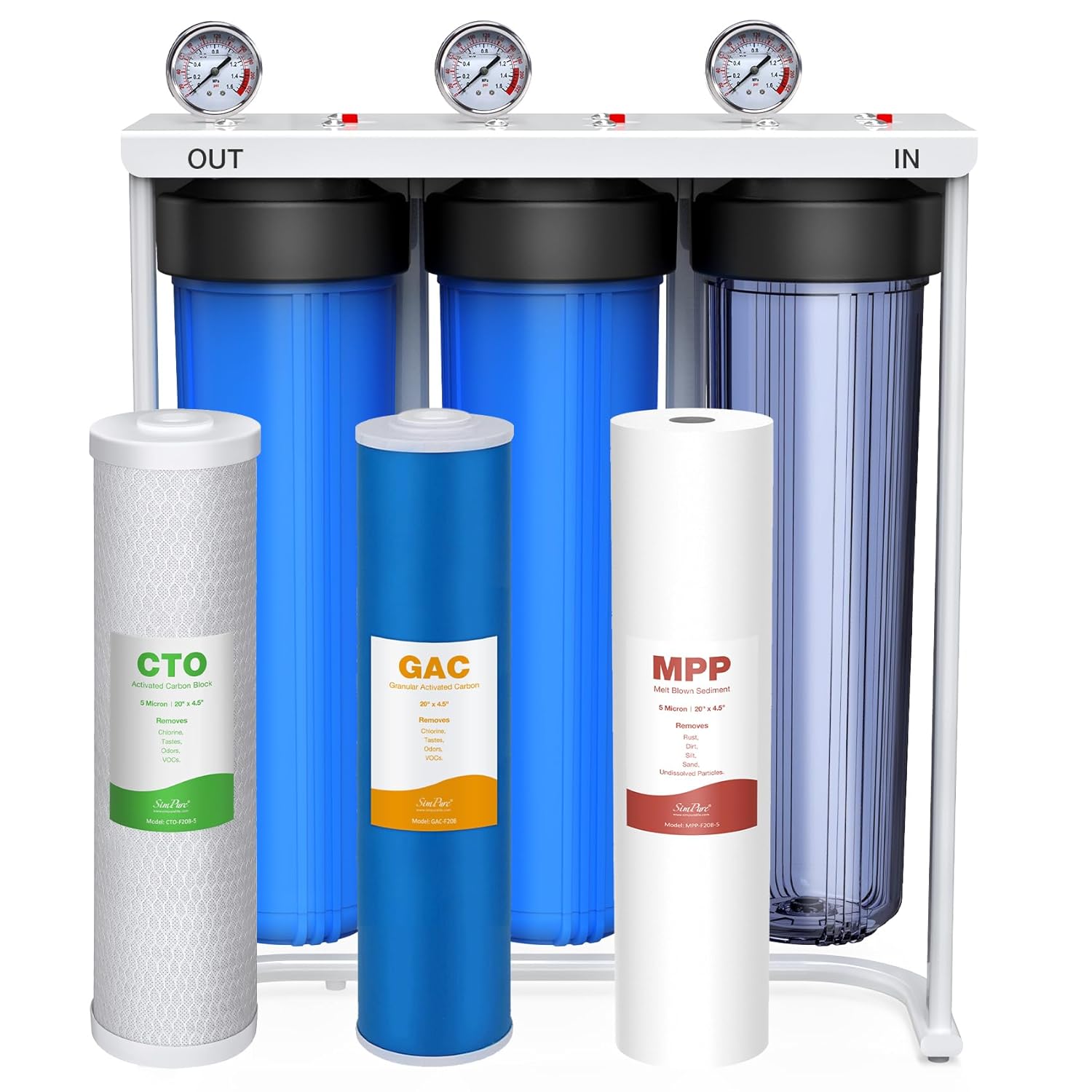
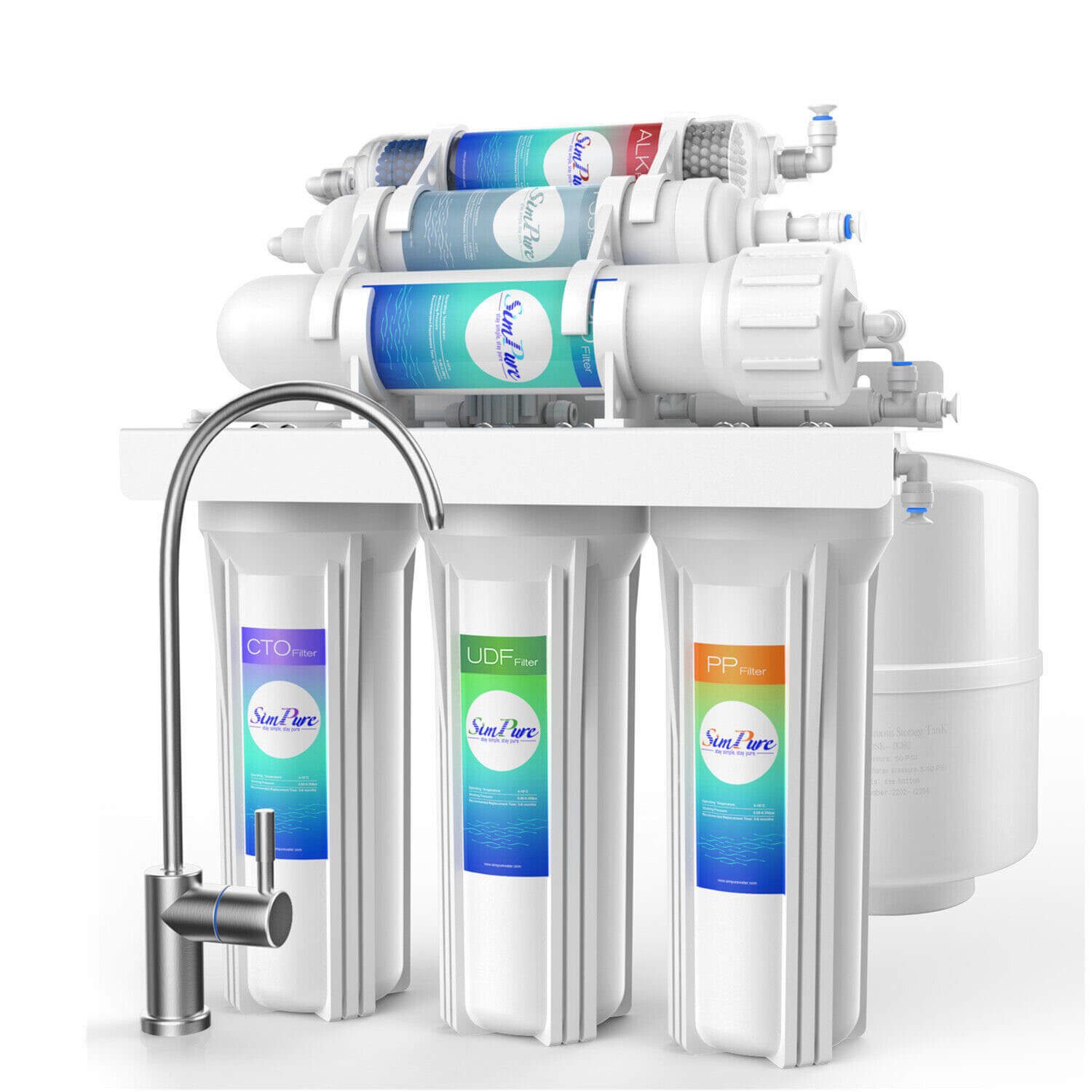
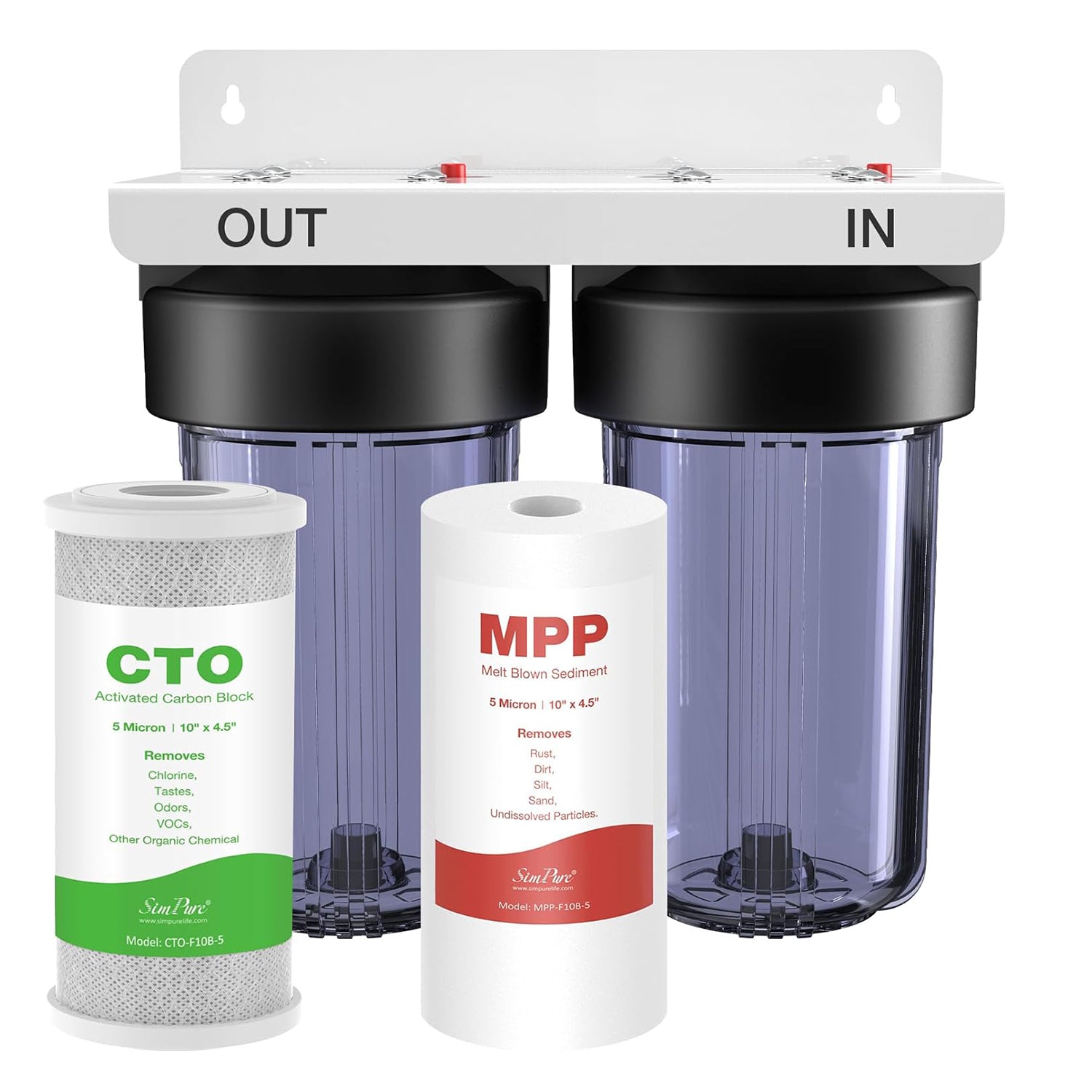
For example, a sediment filter can catch larger particles before the water reaches the RO membrane. That gives the membrane less particulate material to deal with and is an important part of a multi-stage filtration setup.
So if you're comparing RO systems, don't look only at the membrane. Check the entire filtration path, including the pre-filters and how the system is designed to handle different types of particles.
What About Regular Water Filters?
Different filters are designed for different jobs.
Carbon filters are widely used to improve taste and reduce certain substances in drinking water. Depending on the filter's construction, they may also capture some particles. But a standard carbon filter shouldn't automatically be treated as a dedicated solution for microplastic reduction.
Sediment filters are more focused on physical particles, particularly larger ones.
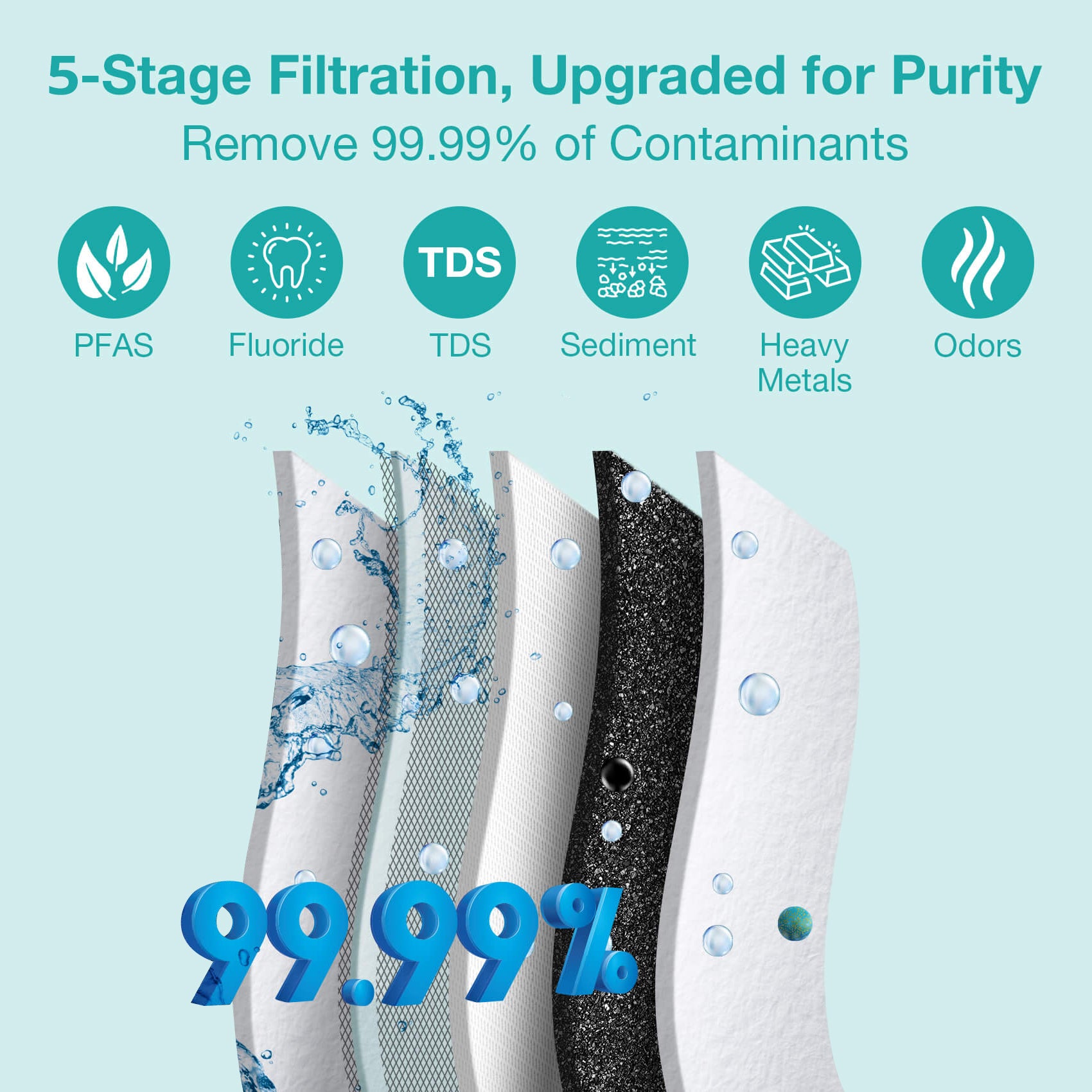
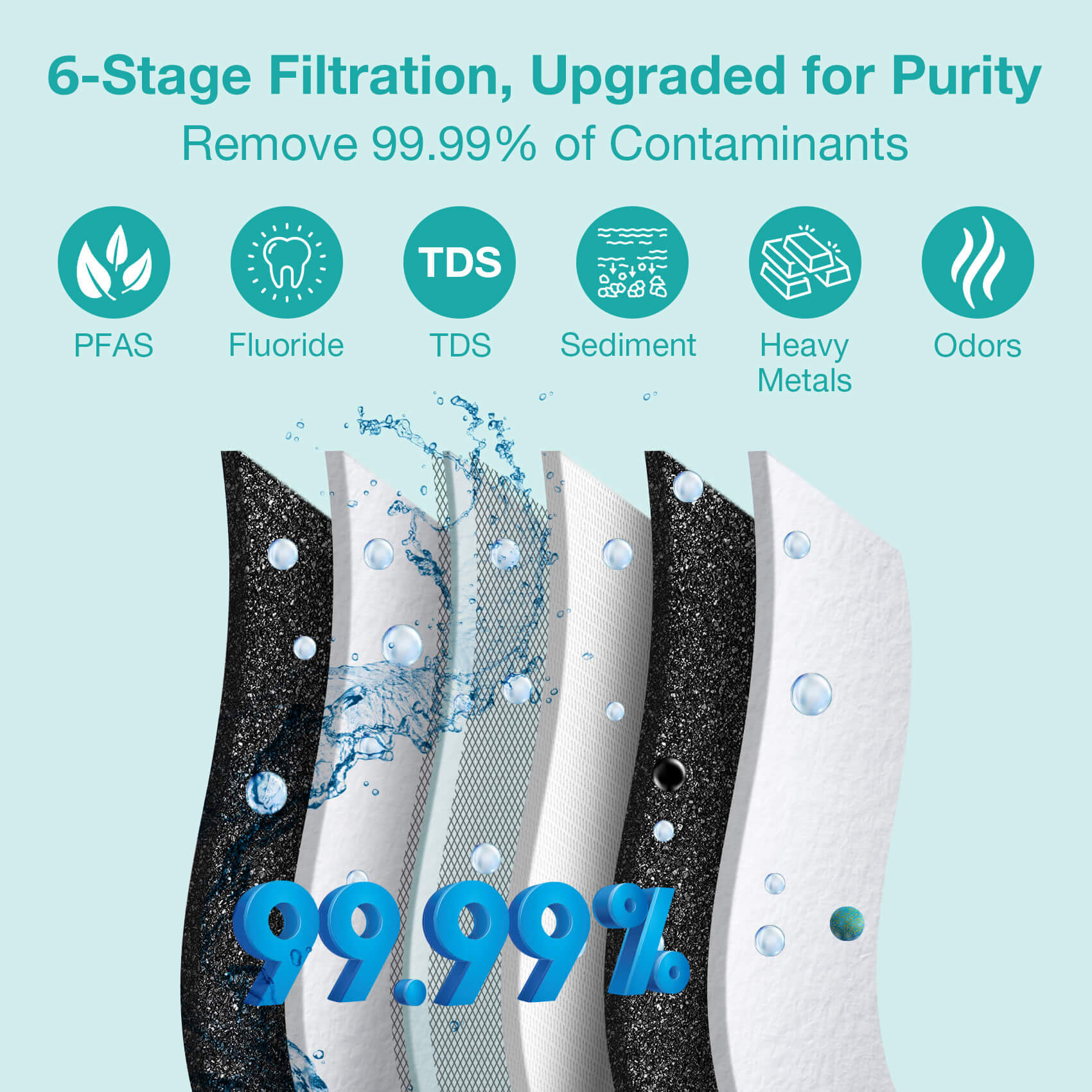
RO takes a different approach by using a membrane with a much finer separation capability. When several filtration stages are combined, each stage has a specific role instead of asking one filter to do everything.
That's one reason people choose multi-stage RO systems when they're looking for broader water filtration.
Does Boiling Water Remove Microplastics?
Boiling and filtration do different things.
Boiling is commonly used for certain water-treatment purposes, but it isn't the same as physically separating particles with a filtration membrane. If your specific concern is microplastics, filtration technology is more relevant than simply heating the water.
It's also worth keeping the issue in perspective. Research into the potential health effects of microplastics is still developing, and finding microplastic particles in water doesn't automatically tell us what level of risk they represent.
If you're concerned about them, reducing exposure where practical is a reasonable approach. You don't need to make every household decision around plastic, though.
What Should You Look for in an RO Filter for Microplastics?
Start with the membrane.
Look for a system that clearly identifies its RO membrane and provides information about the filtration stages. If a product makes a specific filtration claim, check whether the manufacturer provides supporting performance information.
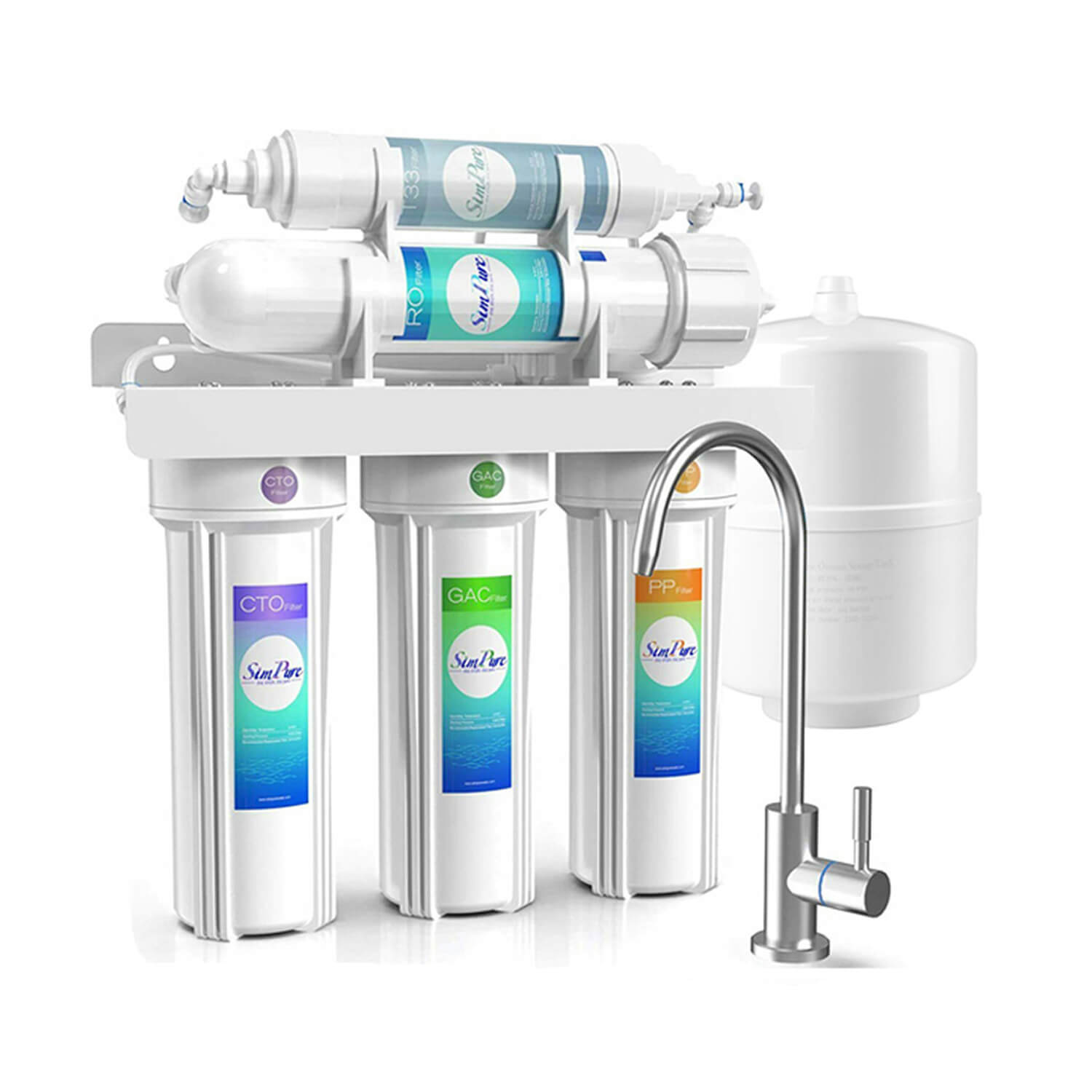
The pre-filtration setup is worth checking as well. A sediment filter can handle larger particles before they reach the RO membrane, while other filter stages may be designed for different water-quality concerns.
Then consider the everyday stuff.
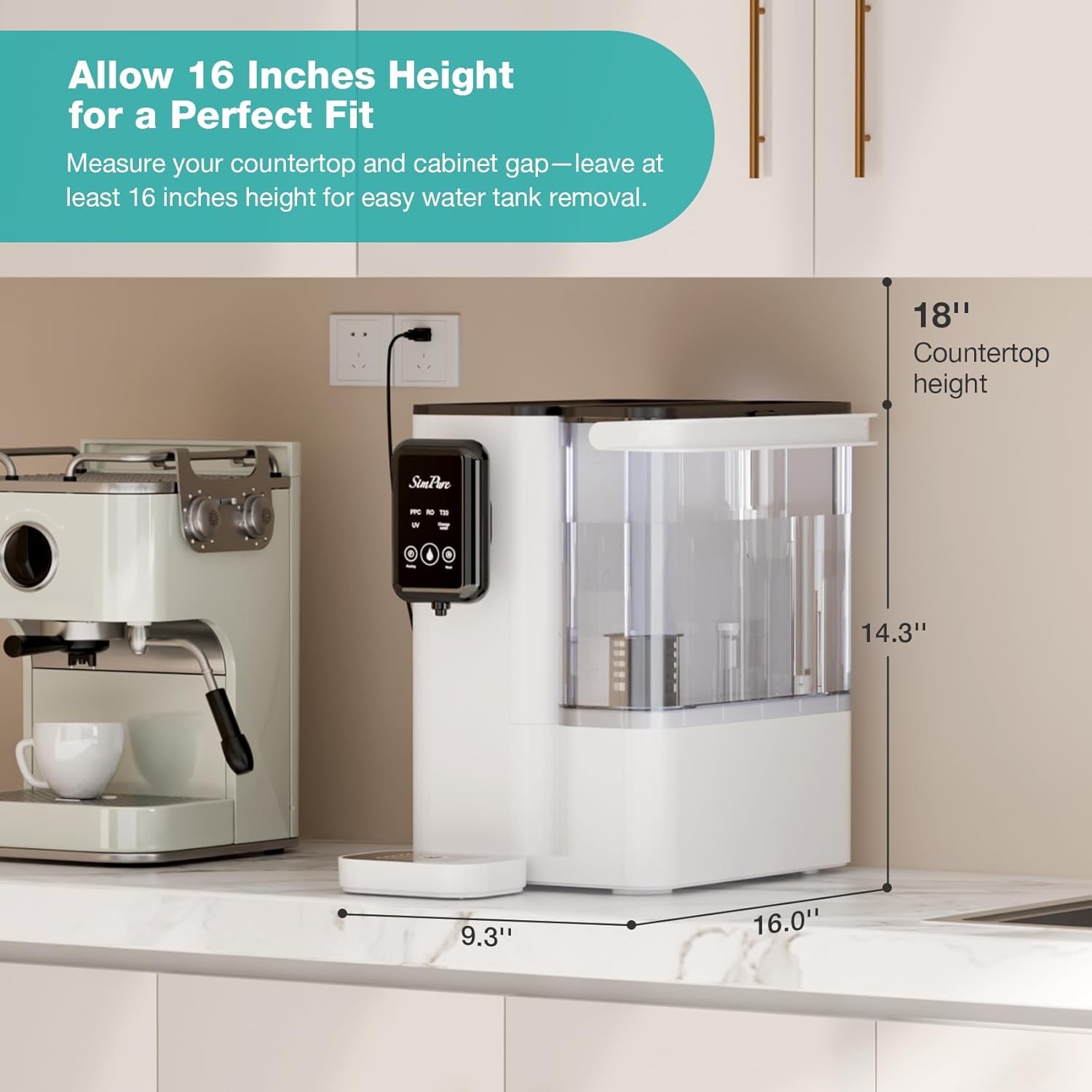
How often will you need to replace the filters? Is the maintenance straightforward? Does the system produce enough water for your household? Will it fit where you plan to use it?
These details are easy to ignore when you're focused on one contaminant. In practice, they're a big part of choosing a system you'll actually continue using.
What About Countertop RO Systems?
Not everyone wants to install an under-sink filtration system.
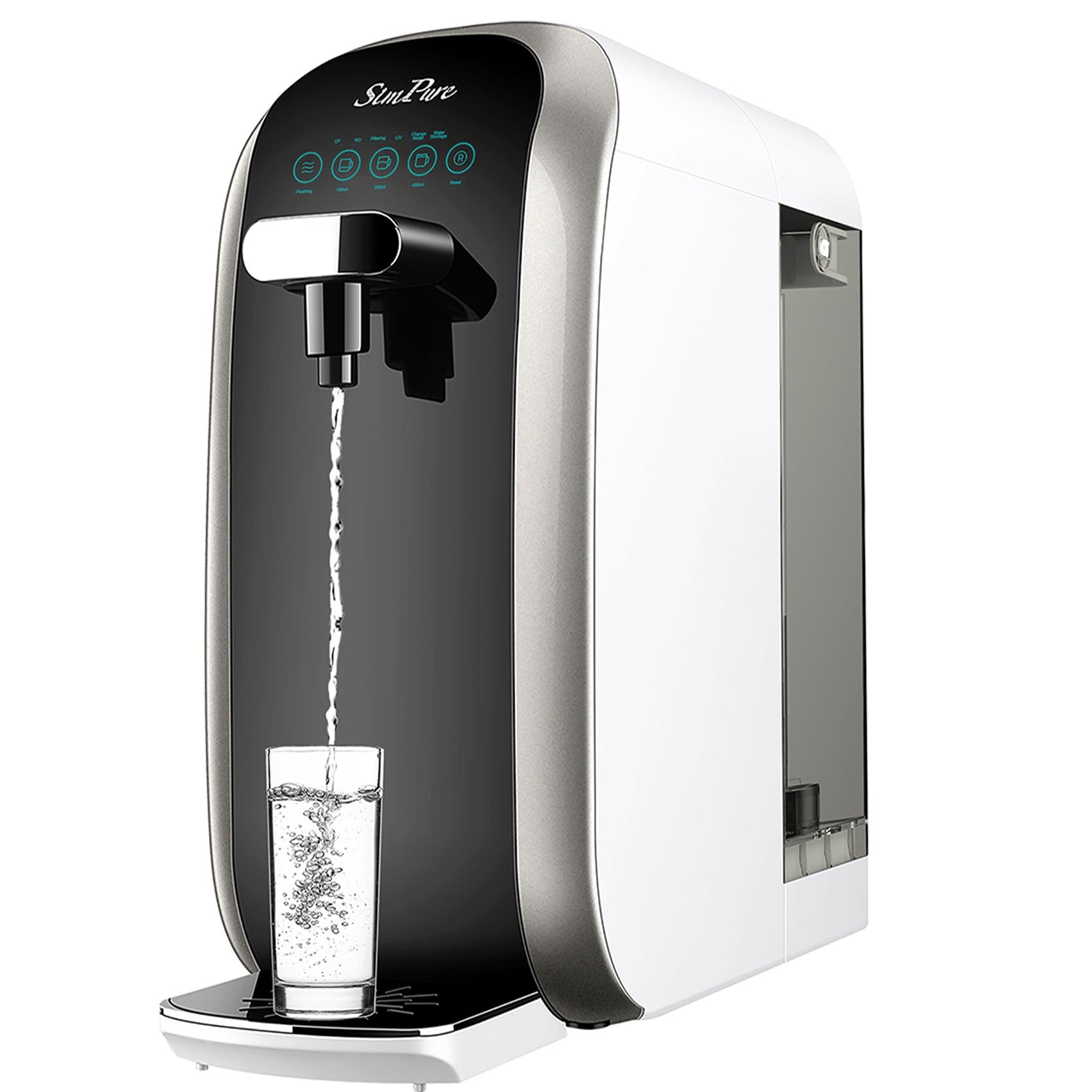
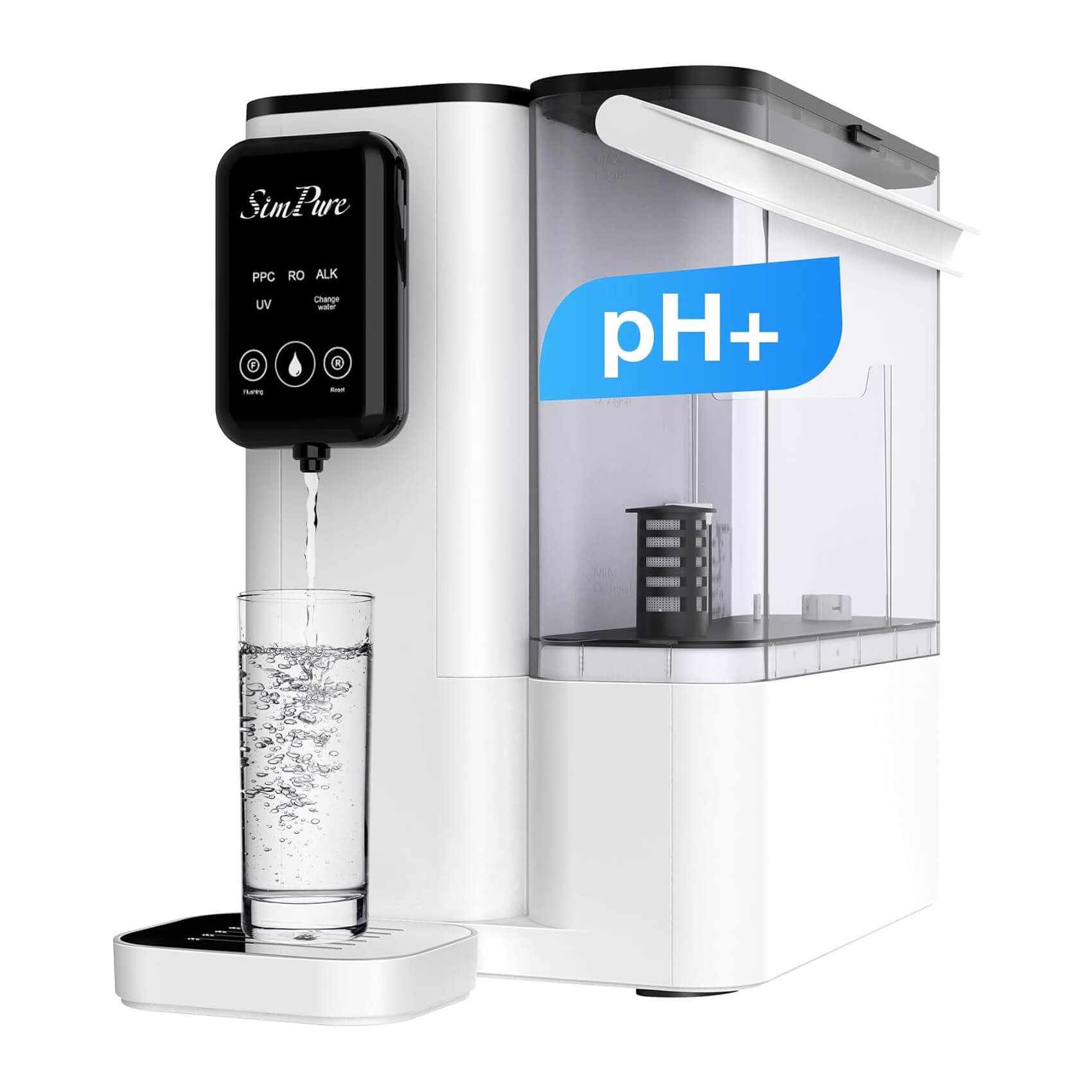
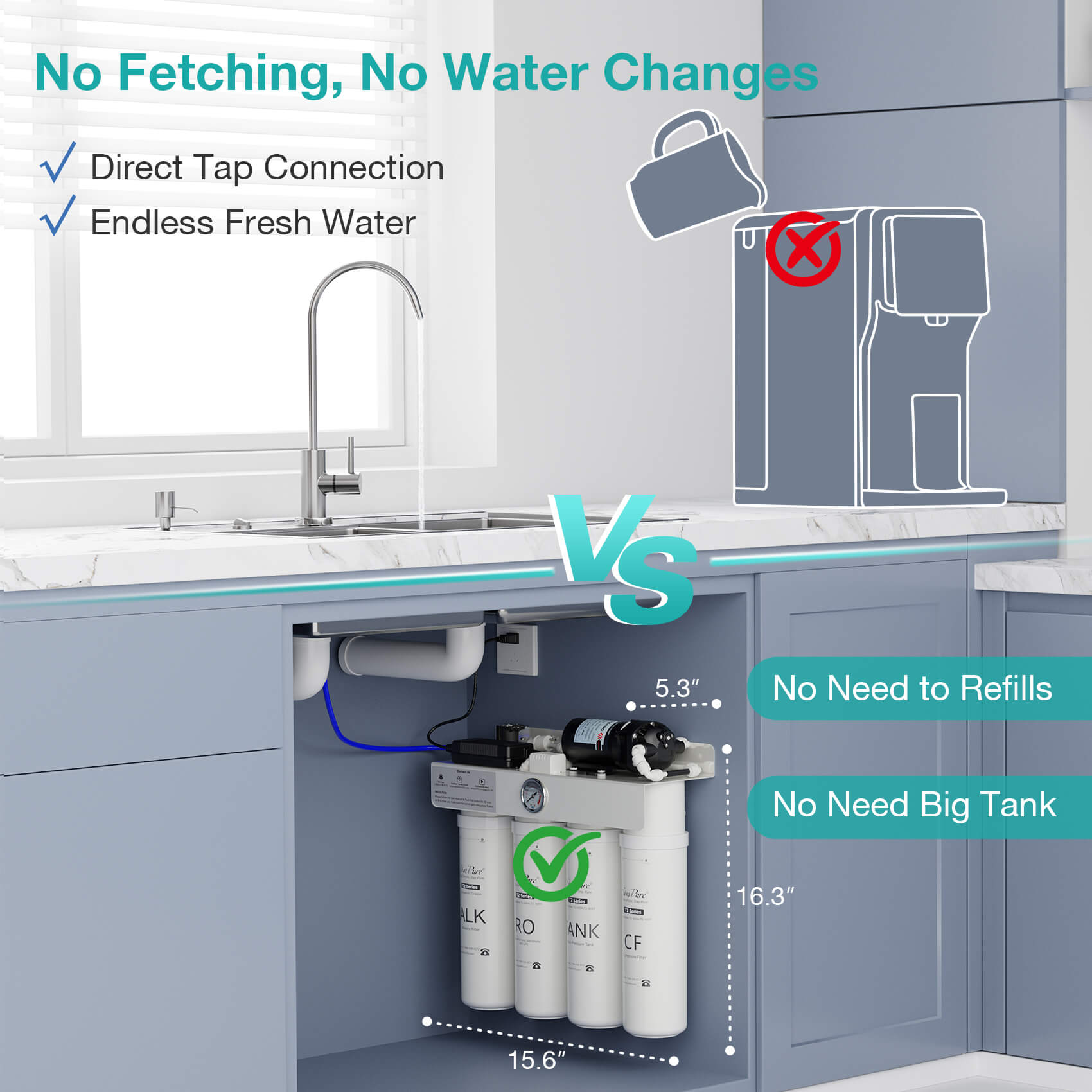
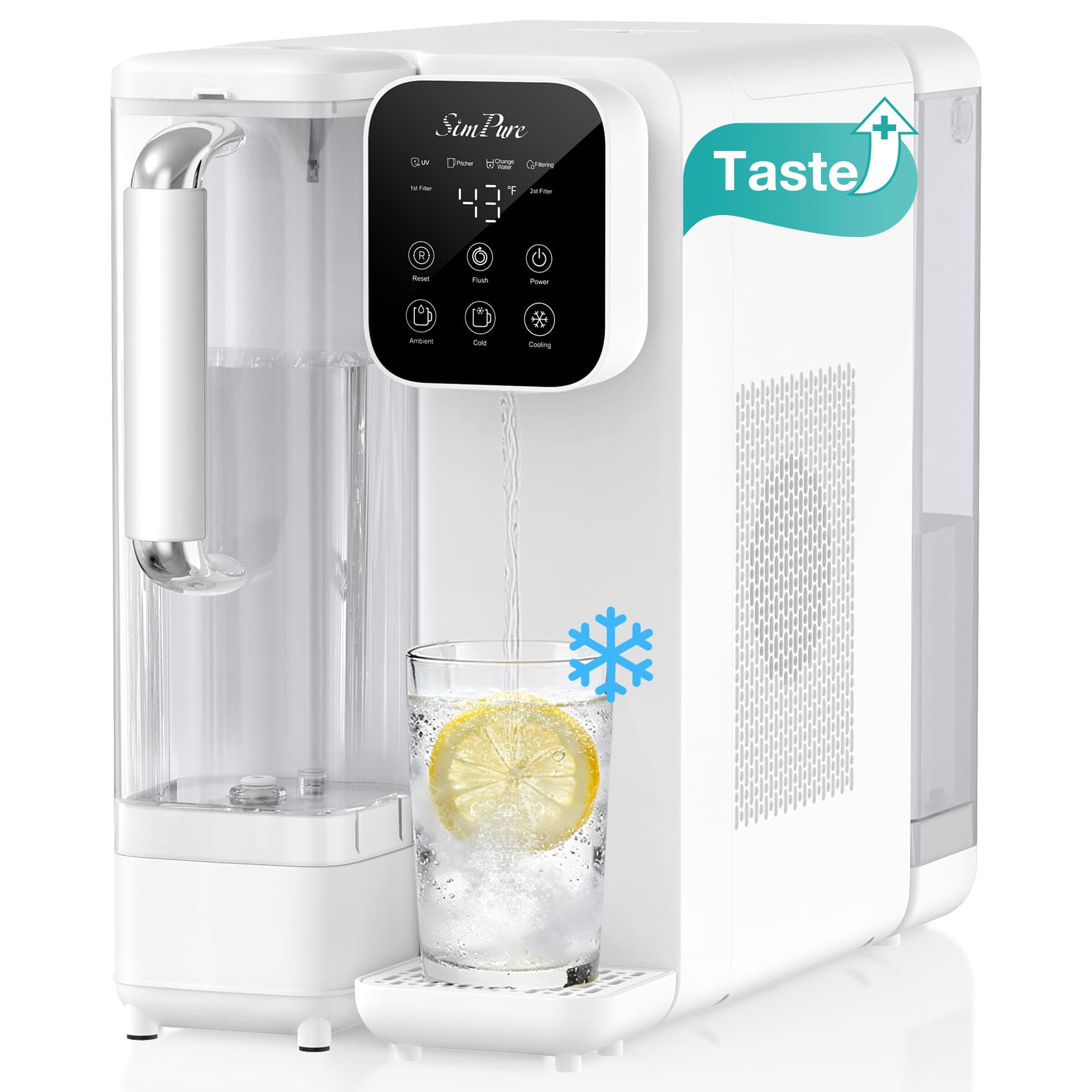
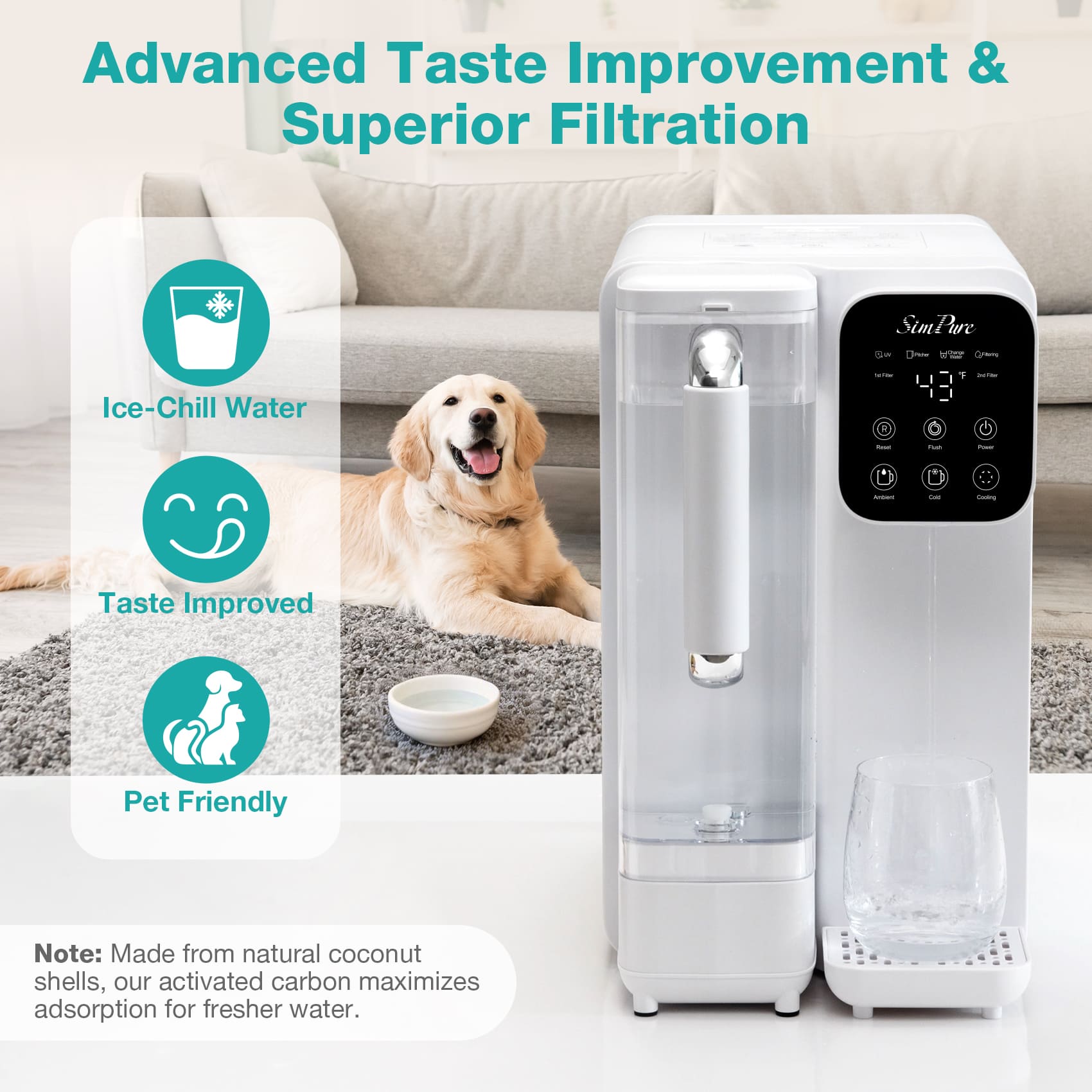
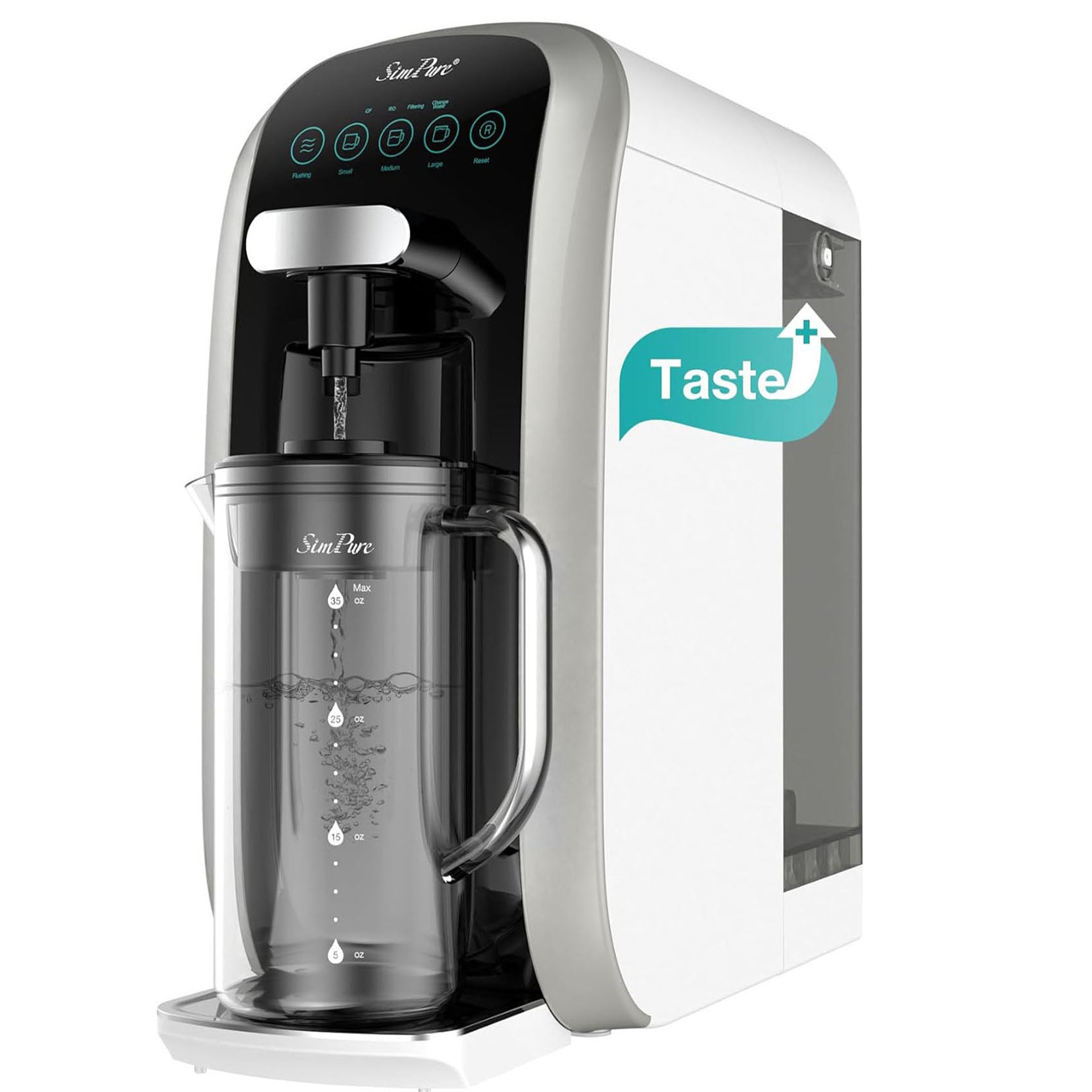
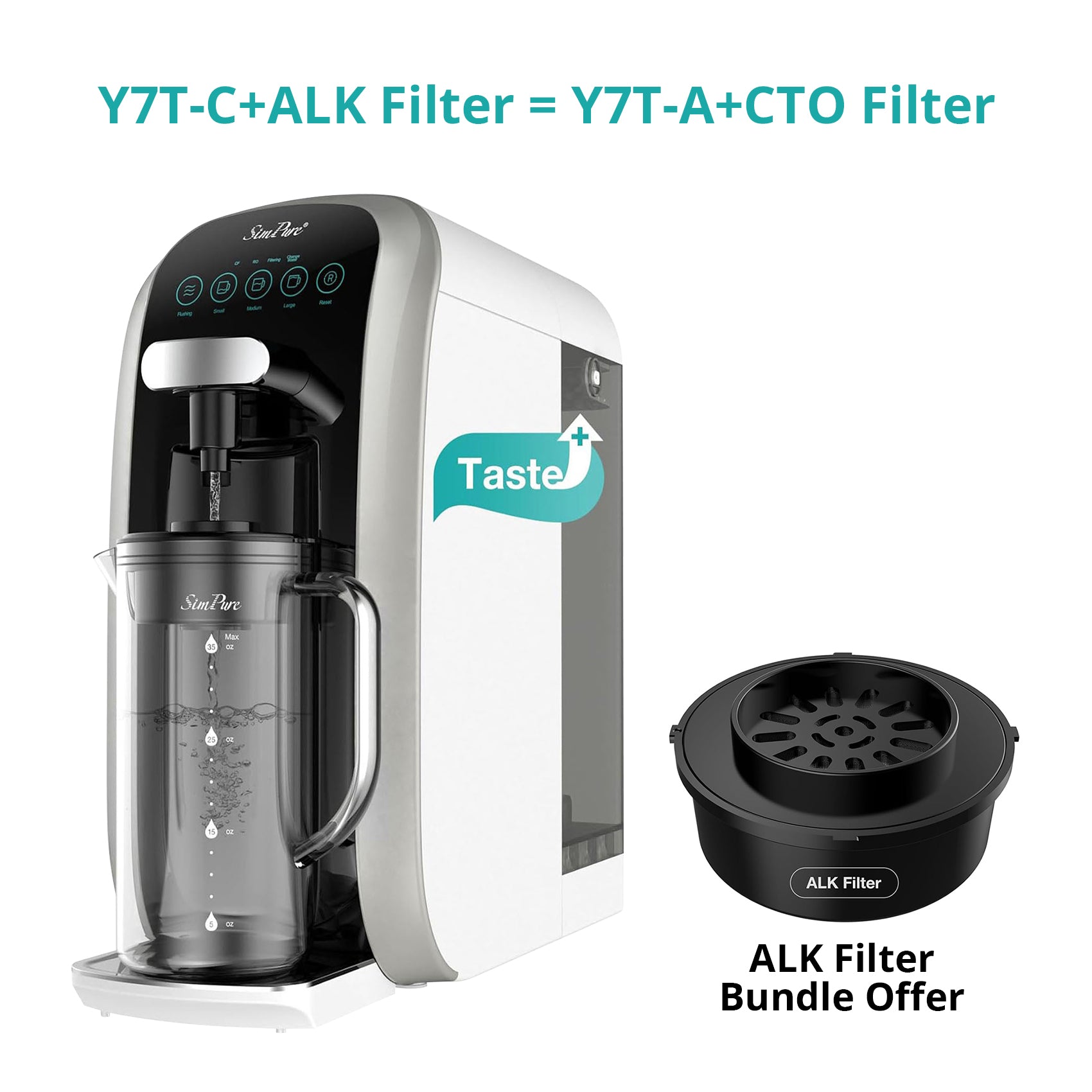
If you're renting, living in an apartment, or simply don't want to change your plumbing, a countertop RO system can be a simpler alternative. Most models are designed around a water reservoir, so you can place the unit on the counter and make filtered water without a permanent installation.
For someone searching for a reverse osmosis water filter for microplastics, this type of system can be particularly convenient if the main priority is drinking and cooking water.
Just remember that countertop doesn't mean one system is automatically better than another. The filtration stages, RO membrane, water output, and maintenance requirements still deserve a closer look.
Where SimPure Fits In
SimPure focuses on compact water filtration systems, including countertop RO models.
For renters and apartment residents, the countertop format removes one of the biggest barriers to getting RO filtration: installation. There's no need to build a permanent under-sink setup just to get filtered drinking water.
SimPure countertop RO systems use multiple filtration stages together with an RO membrane. The exact setup varies by model, so it's worth checking the specifications of the system you're considering rather than assuming every model has the same configuration.
If microplastics are part of your concern, look at the whole system. The pre-filters, membrane, replacement schedule, and overall design all contribute to how the filtration system works.
How Can You Reduce Microplastic Exposure at Home?
A water filter is only one part of the picture.
You can also reduce unnecessary contact with single-use plastics and choose reusable containers that are intended for storing food or drinking water. Paying attention to how plastic containers are used and heated is another practical step.
For drinking water, filtration may be worth considering if you're concerned about particles in your source water.
There's no need to completely change your daily routine. Start with the areas that are easiest for you to control.
So, Is RO a Good Choice for Microplastics?
If reducing microplastic particles is one of your reasons for looking at a new water filter, RO is a technology worth considering.
The RO membrane provides a fine physical barrier, while the other filtration stages can deal with larger particles and other water-quality concerns before or after the membrane.
Still, don't choose an RO system simply because the product page says “removes microplastics.”
Look at the membrane, filtration stages, maintenance requirements, and available performance information. Your source water matters, too.
A good filtration system isn't just one with impressive specifications. It's one that matches your water, fits your space, and is easy enough to maintain that you actually keep up with the filter changes.
FAQ
1. Does reverse osmosis remove microplastics?
RO filtration can reduce many microplastic particles because the membrane provides a physical barrier. Actual performance depends on particle size, membrane design, water conditions, and the overall filtration system.
2. Are microplastics found in drinking water?
Yes. Microplastics have been detected in different types of drinking water. The amount can vary depending on the water source and the testing method used.
3. Is RO better than a regular carbon filter for microplastics?
They work differently. Carbon filters can capture certain particles depending on their design, while RO uses membrane filtration. If microplastic reduction is a priority, check the specifications of the individual system rather than assuming all filters perform the same way.
4. Do I need an RO filter just because microplastics are a concern?
Not necessarily. Your water source, filtration goals, budget, and other water-quality concerns should all be considered before choosing a filter.
5. Can a countertop RO system help with microplastics?
A countertop system that uses an RO membrane can provide membrane-based filtration without permanent plumbing changes. Check the specific model's filtration stages and performance information before buying.