

Reverse osmosis water can be safe to drink, but “RO” is not a safety certificate. The answer depends on the source water, the contaminant you are trying to reduce, the exact system and claim, correct installation, maintenance, and the condition of the treated water at the tap.
That distinction matters because two homes can own similar-looking systems and still have different answers. One may be treating regulated municipal water for a verified lead-reduction claim. Another may be feeding an untested private well into a neglected countertop unit. The membrane label alone cannot resolve both situations.
Direct answer: It is reasonable to drink RO water daily when the source is appropriate, the exact model is qualified for the intended treatment job, the water path is installed and maintained correctly, and no advisory or treated-water result says otherwise. Low total dissolved solids, clear appearance, or an “alkaline” stage does not by itself prove that water is safe—or unsafe.
Use a six-gate file instead of a one-word verdict
A useful safety decision should survive six separate gates. Keep the evidence for them together as an RO safety file. If a gate is blank, the correct action is to investigate the blank rather than replace it with a reassuring slogan.
| Gate | Evidence to keep | A pass means | A blank or failure means |
|---|---|---|---|
| 1. Source | Current utility report, advisory, or certified private-well laboratory report | The starting water and current warnings are known | Test or contact the responsible authority before selecting treatment |
| 2. Treatment target | Named contaminant, concentration when relevant, and desired endpoint | The system has a defined job | “Cleaner water” is too vague to qualify a product |
| 3. Exact claim | Exact model, variant, standard, certifier, and reduction claim | The evidence matches the unit being used | Do not transfer a claim from another model, component, or test |
| 4. Water path | Installation record, startup flush, feed connection, drain route, storage route, and bypass status | Water follows the intended treatment path | Correct the installation or isolate the unit |
| 5. Condition | Replacement, cleaning, sanitation, leak, pressure, and long-idle records | The system is operating within its instructions | Service it before relying on treated water |
| 6. Treated result | Commissioning checks and any contaminant-specific confirmation required by the risk | The output supports the decision being made | Stop use and investigate the source, unit, sample, or test |
This file avoids a common category error: a treatment technology can be capable of reducing a substance under defined conditions, while a particular household installation may still lack evidence for that substance. The U.S. EPA describes point-of-use RO as a membrane process that creates treated permeate and a reject stream, and notes that such systems can potentially reduce several contaminant classes. “Potentially” is not the same as an exact-model promise.
Start with source water, because RO may not be necessary
For U.S. public water, begin with the current consumer confidence report and any active utility or health-department notice. For a private well, use a certified laboratory and a schedule appropriate to the well and local risks. A countertop reading cannot replace a source assessment.
Then write the treatment target as a complete sentence: “We need to evaluate this exact system for this substance, at this point of use, under these feed-water conditions.” That sentence is far more useful than “we want pure water.”
EPA specifically cautions that water-intensive RO should not be promoted for every application; a different filtration method may be sufficient when it matches the actual need. That makes “no RO needed” a valid outcome of the file, not a failed purchase.
Do not let an emergency advisory disappear inside the appliance
A household RO system does not cancel a boil-water, do-not-drink, harmful-algal-bloom, chemical-spill, or other authority notice. Follow the issuing authority's instructions for the affected uses and duration. If the notice does not explicitly recognize your exact treatment setup, do not improvise an exception.
The same rule applies after an unexplained pressure loss, flood, plumbing repair, damaged tube, cross-connection, unusual odor, or contaminated storage reservoir. The right question is not “Does RO usually work?” It is “What happened to this water path, and what evidence clears it for use again?”
The installation path is part of the water path

A membrane cannot protect water that bypasses it. Record the feed-water connection, tubing route, drain or reject-water route, storage vessel, dispensing outlet, and every bypass or refrigerator connection. Confirm that the exact manual—not a similar product video—controls startup, flushing, filter orientation, leak checks, and service.
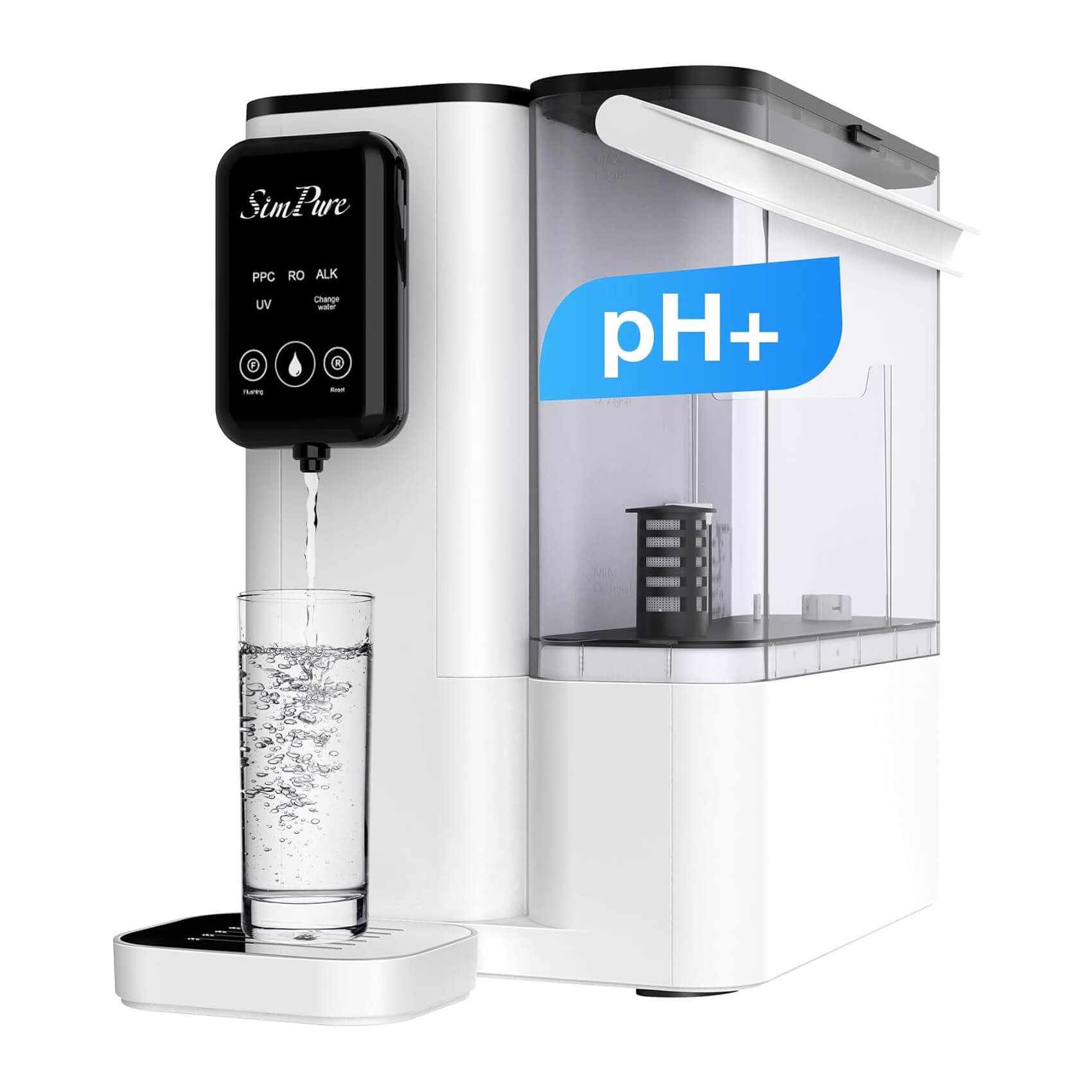
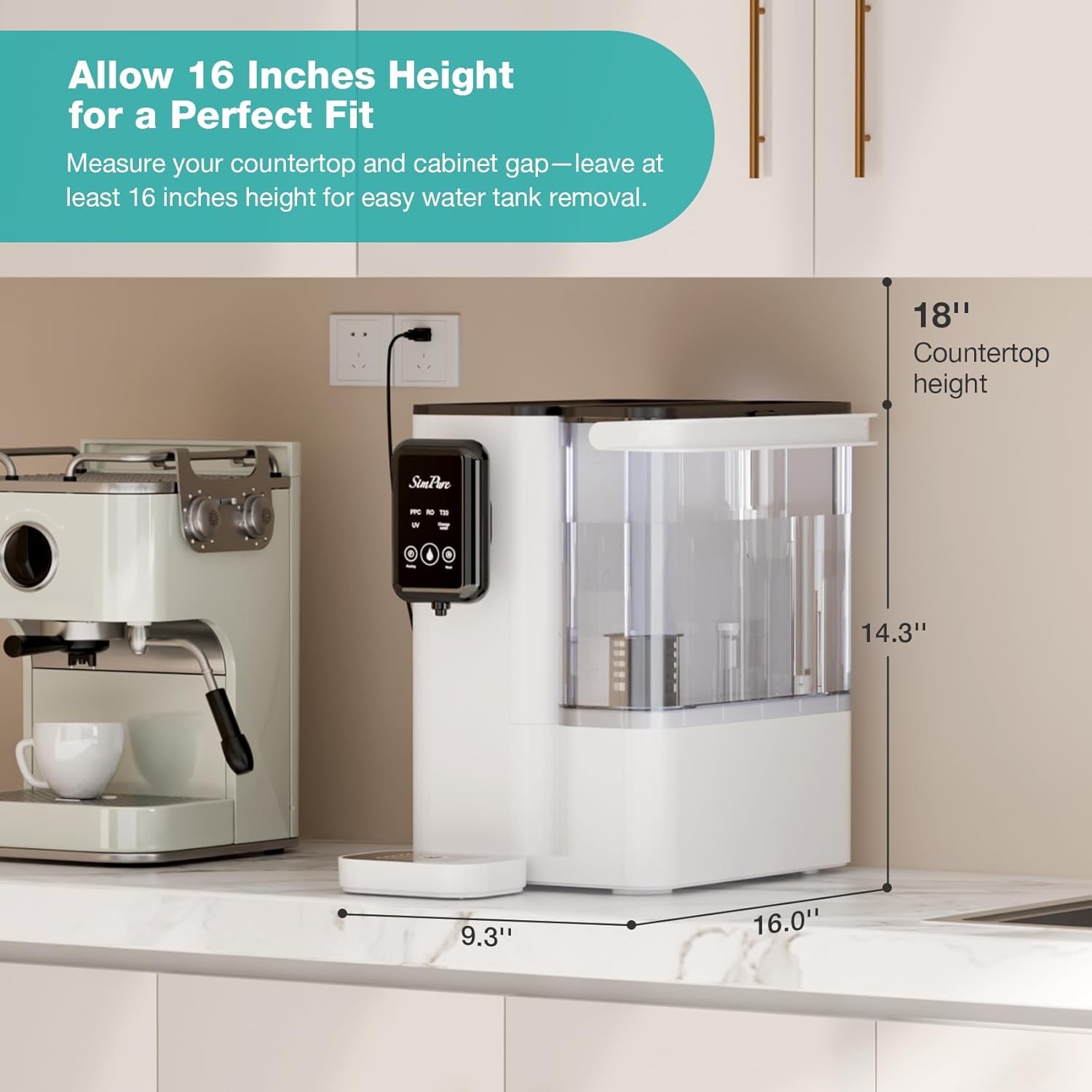
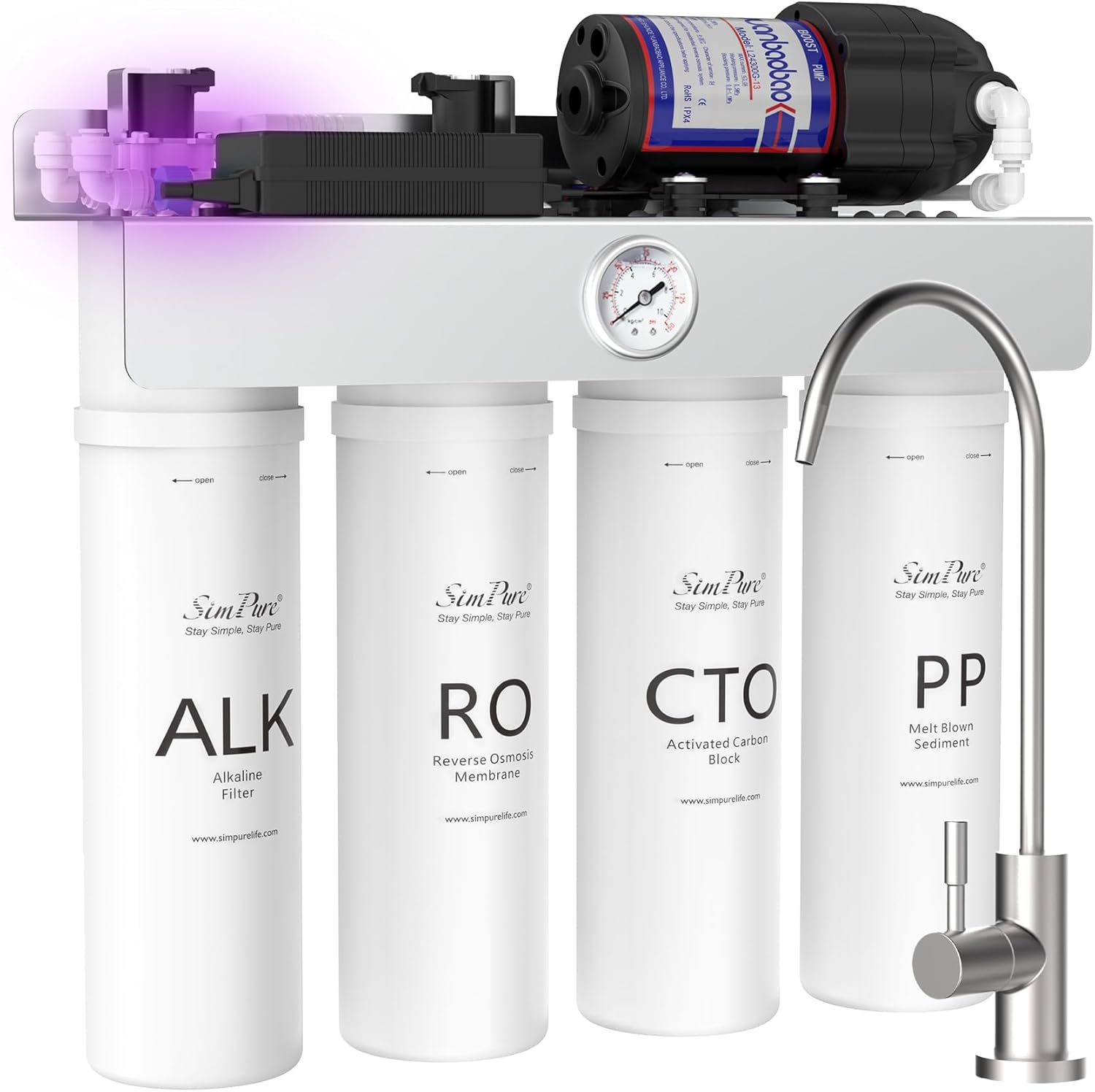
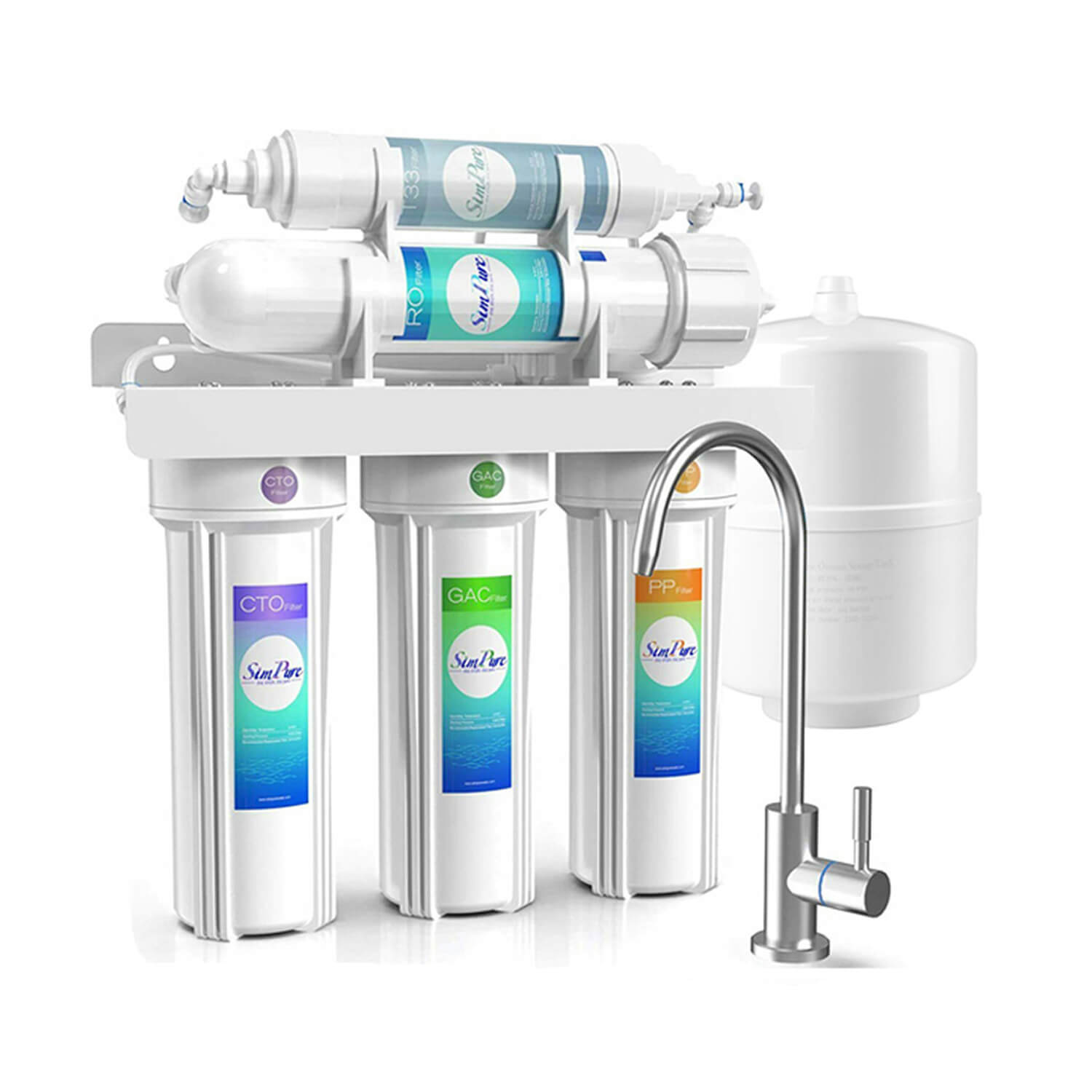
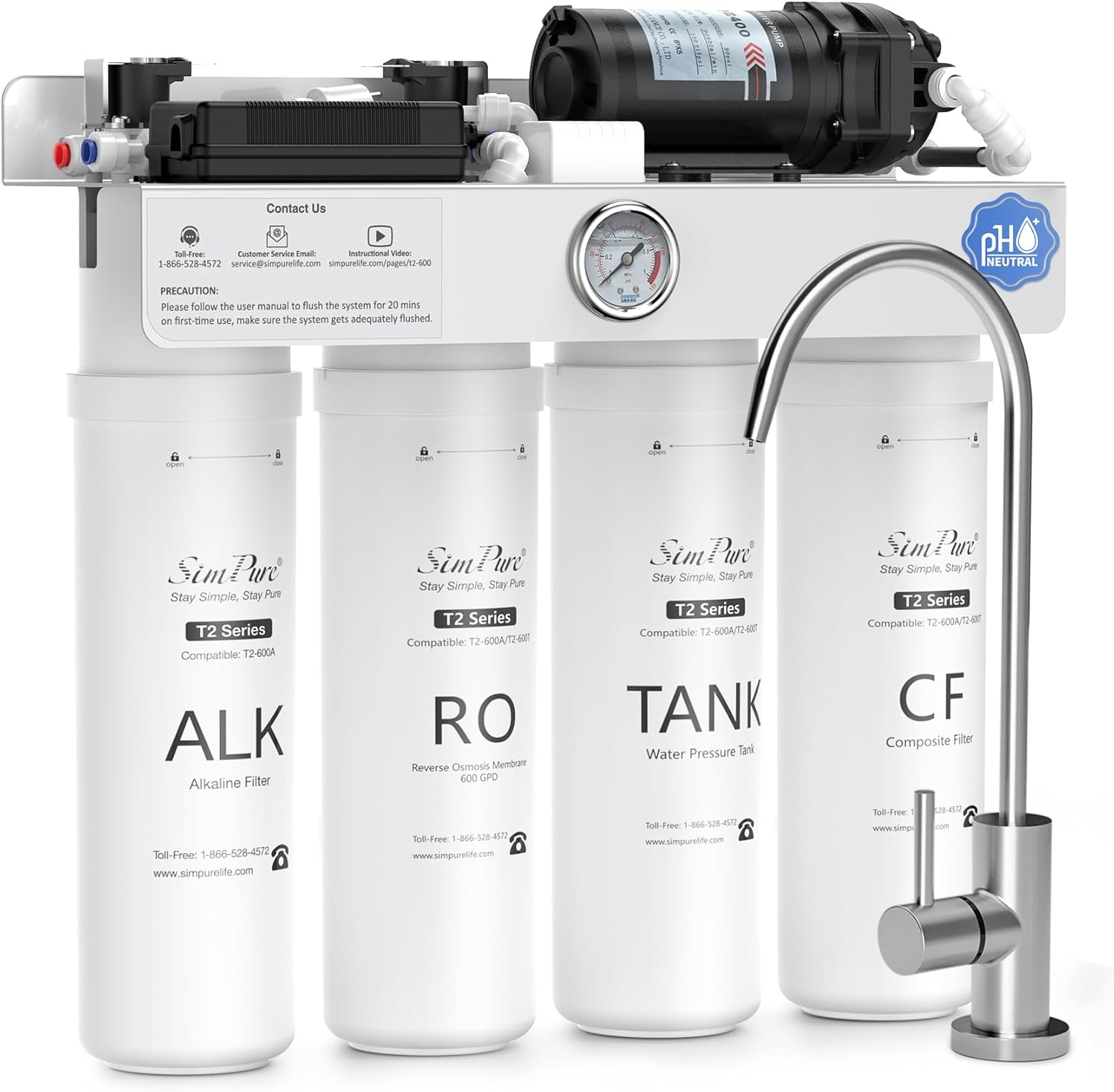
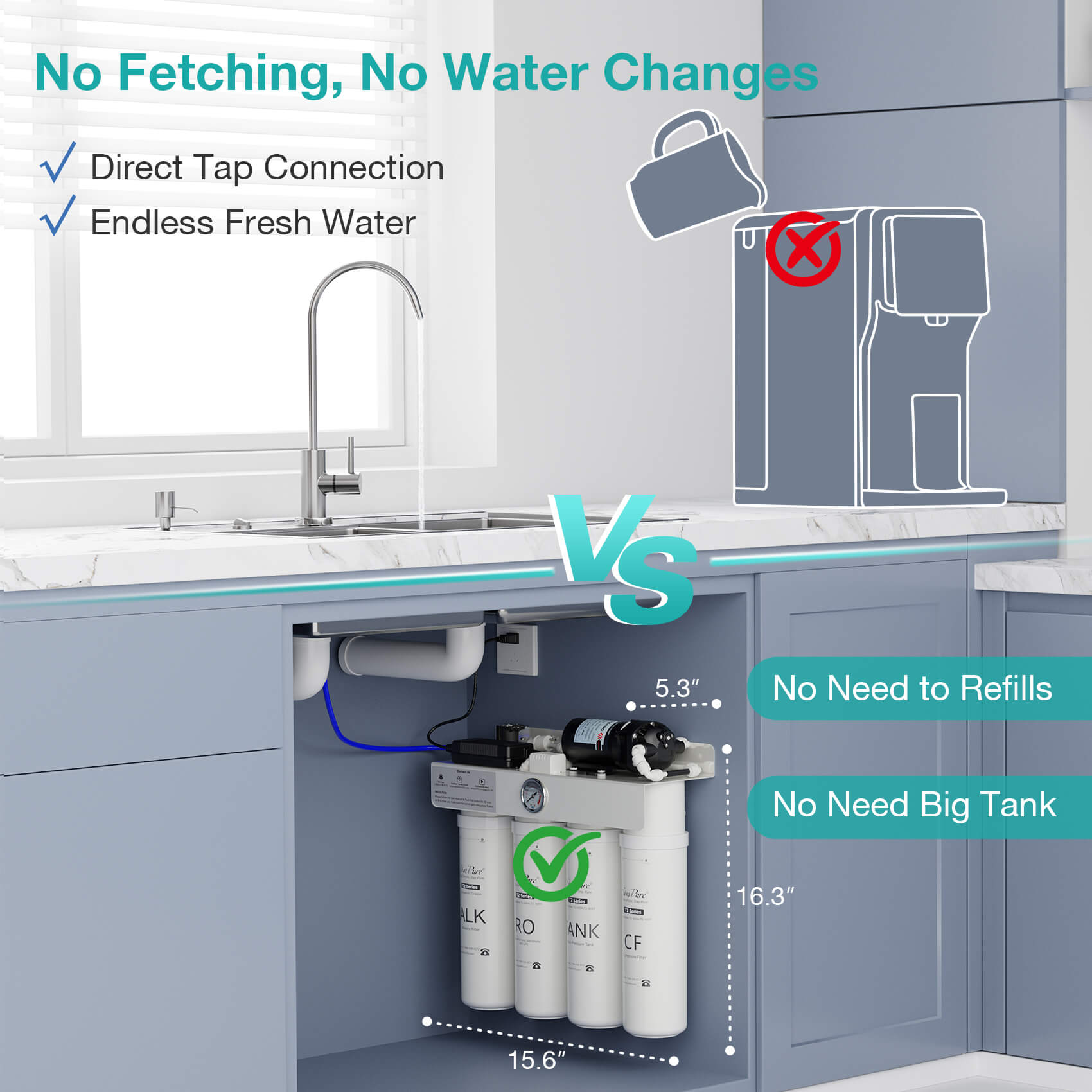
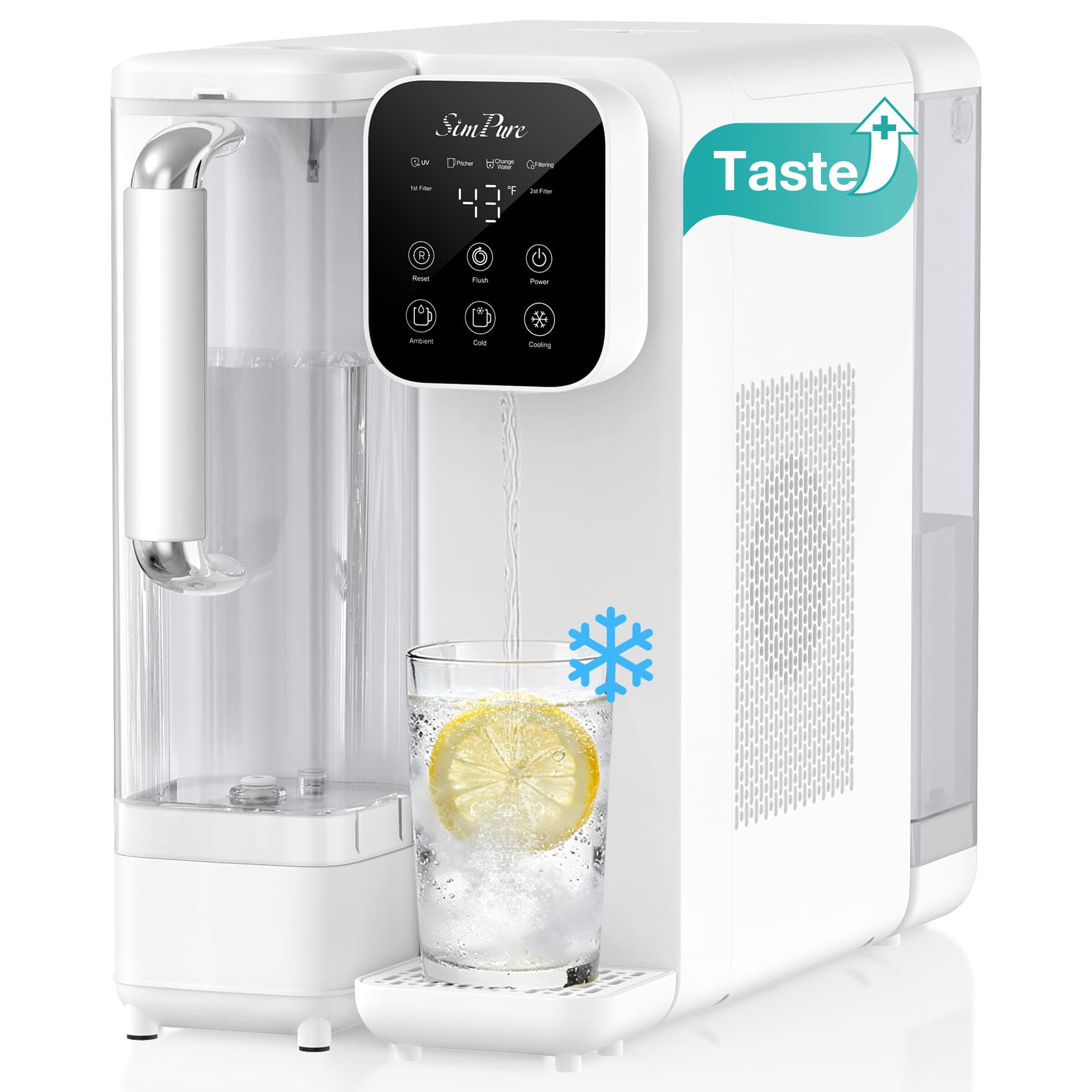
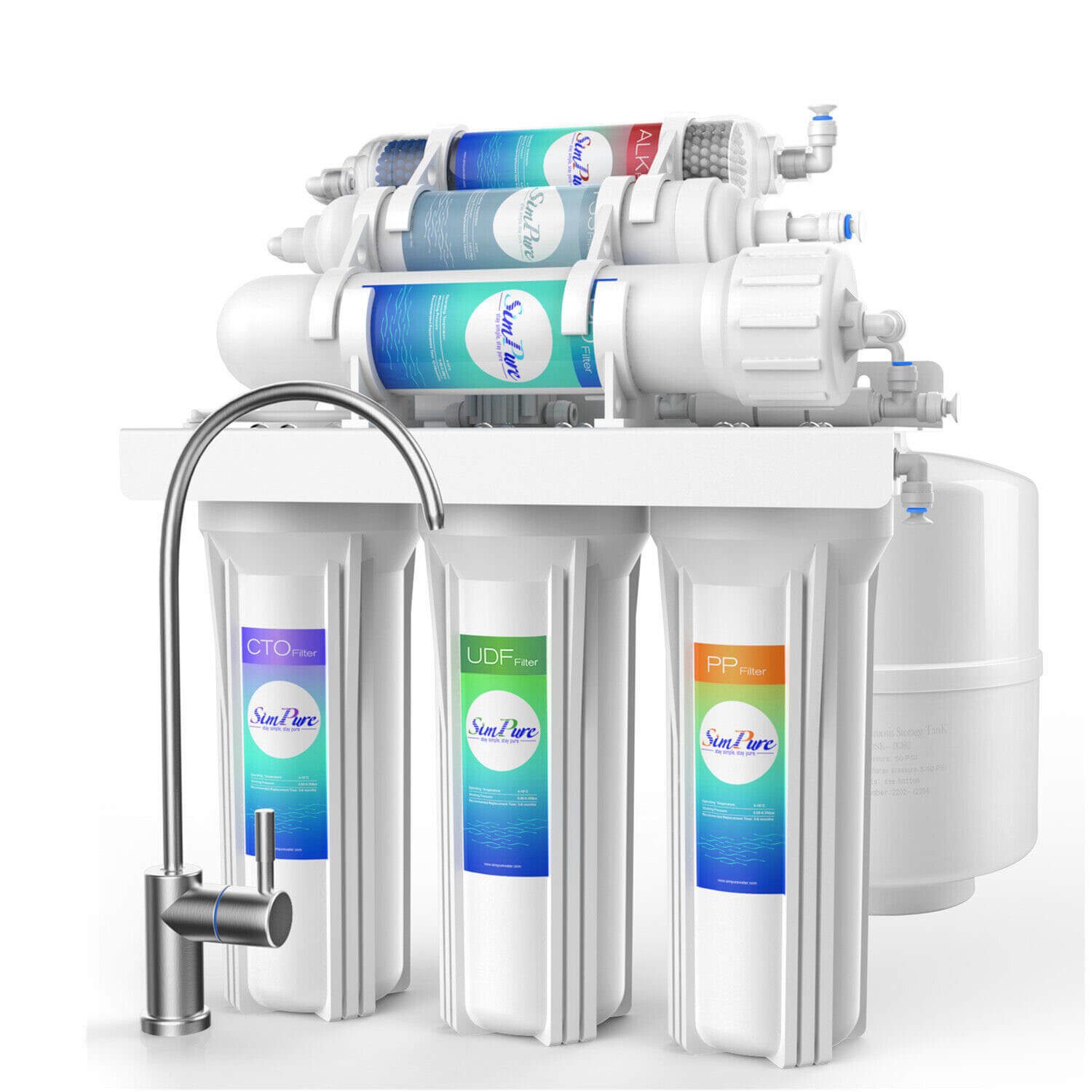
Countertop systems add their own path: the feed reservoir, treated-water vessel, air exposure, removable parts, and the time water may sit between uses. Under-sink systems add adapters, tubing, faucet hardware, drain connections, and sometimes a storage tank. Neither format is automatically safer. The easier system to inspect, clean, service, and keep correctly connected may be the more defensible choice for a particular household.
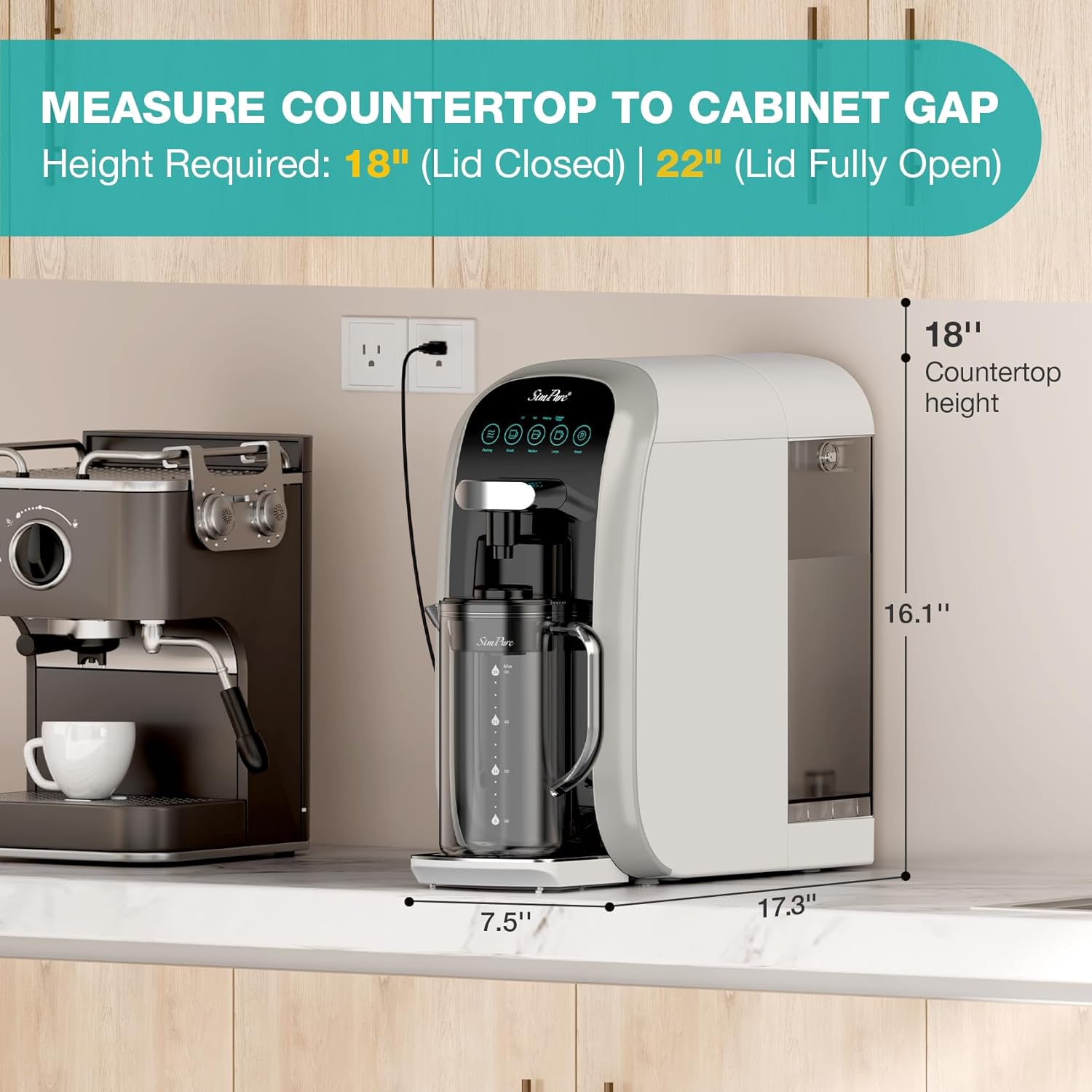
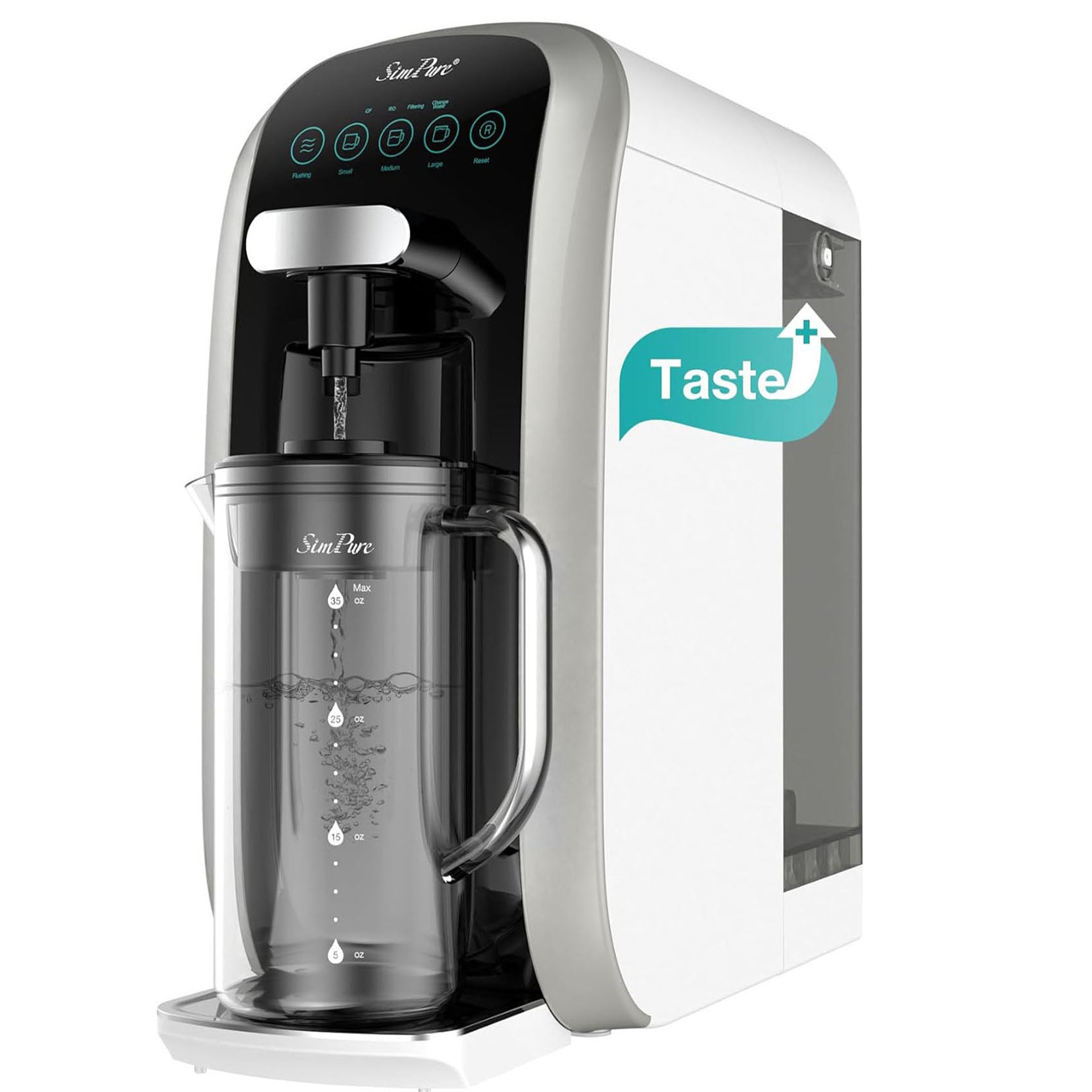
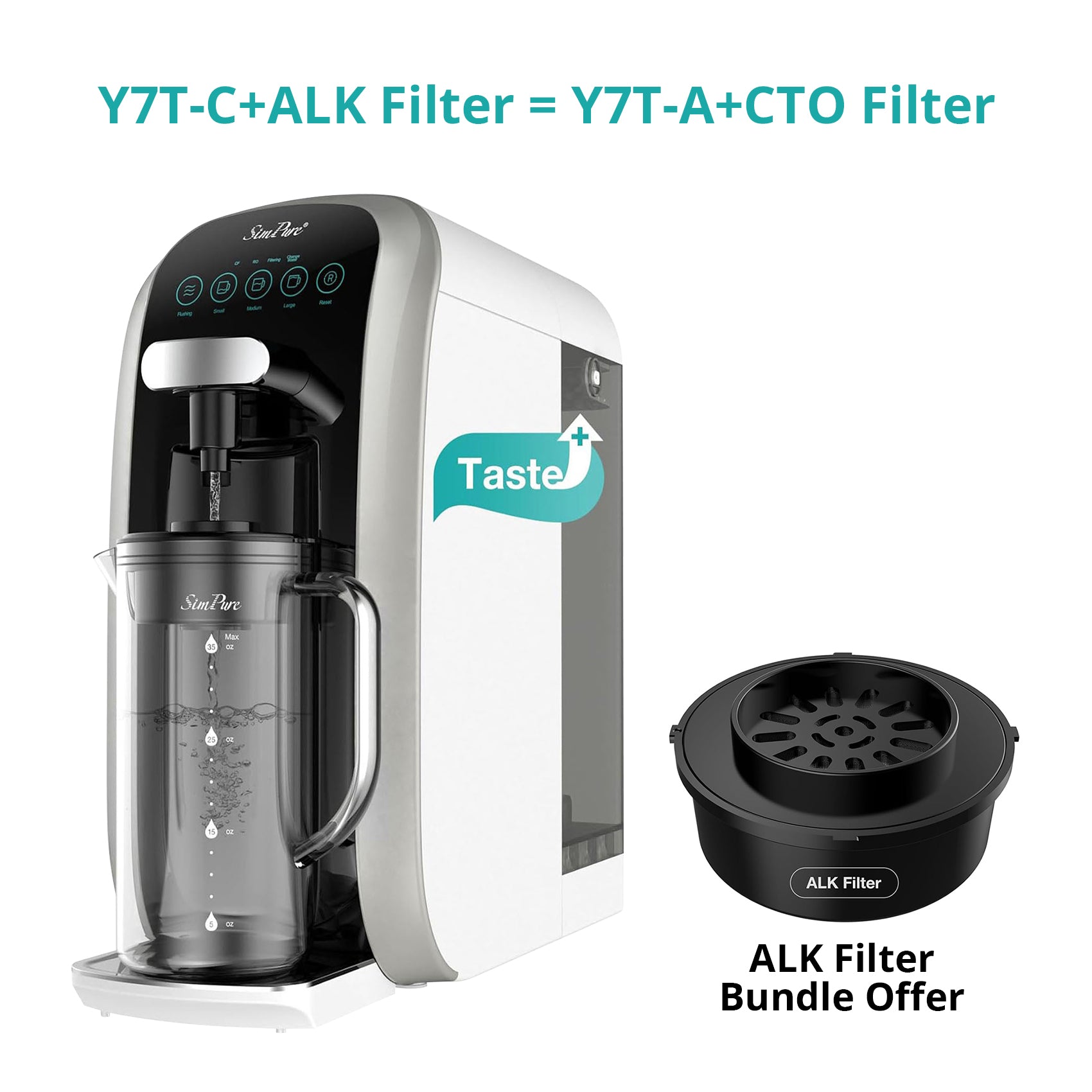
A site-fit image can prove that a real product has a particular layout; it cannot prove contaminant reduction. For example, the current SimPure Y11C-A product record identifies a countertop format with a removable water path. Its installation clearance and components are relevant to service access. Any treatment claim still requires its own exact evidence.
Maintenance is a hygiene control, not a calendar reminder

Water filters and wetted devices can become a maintenance problem when they are not cleaned and replaced as directed. The correct service interval is the exact model's instruction adjusted by any supported indicator, usage, feed-water condition, and observed problem—not a number copied from another cartridge.
Keep a simple log:
- exact system model and installed cartridge part numbers;
- installation, startup, and flush dates;
- replacement, cleaning, and sanitation actions;
- long idle periods, power interruptions, pressure loss, leaks, or unusual taste and odor;
- the reason for each service action and the post-service check.
The current Y11C-A replacement-filter record, for example, provides an exact compatibility checkpoint. That is useful because a cartridge that physically resembles the original is not automatically equivalent. Compatibility and treatment performance are separate claims, and both must match the installed unit.
Match the claim to the model—not the word “RO”
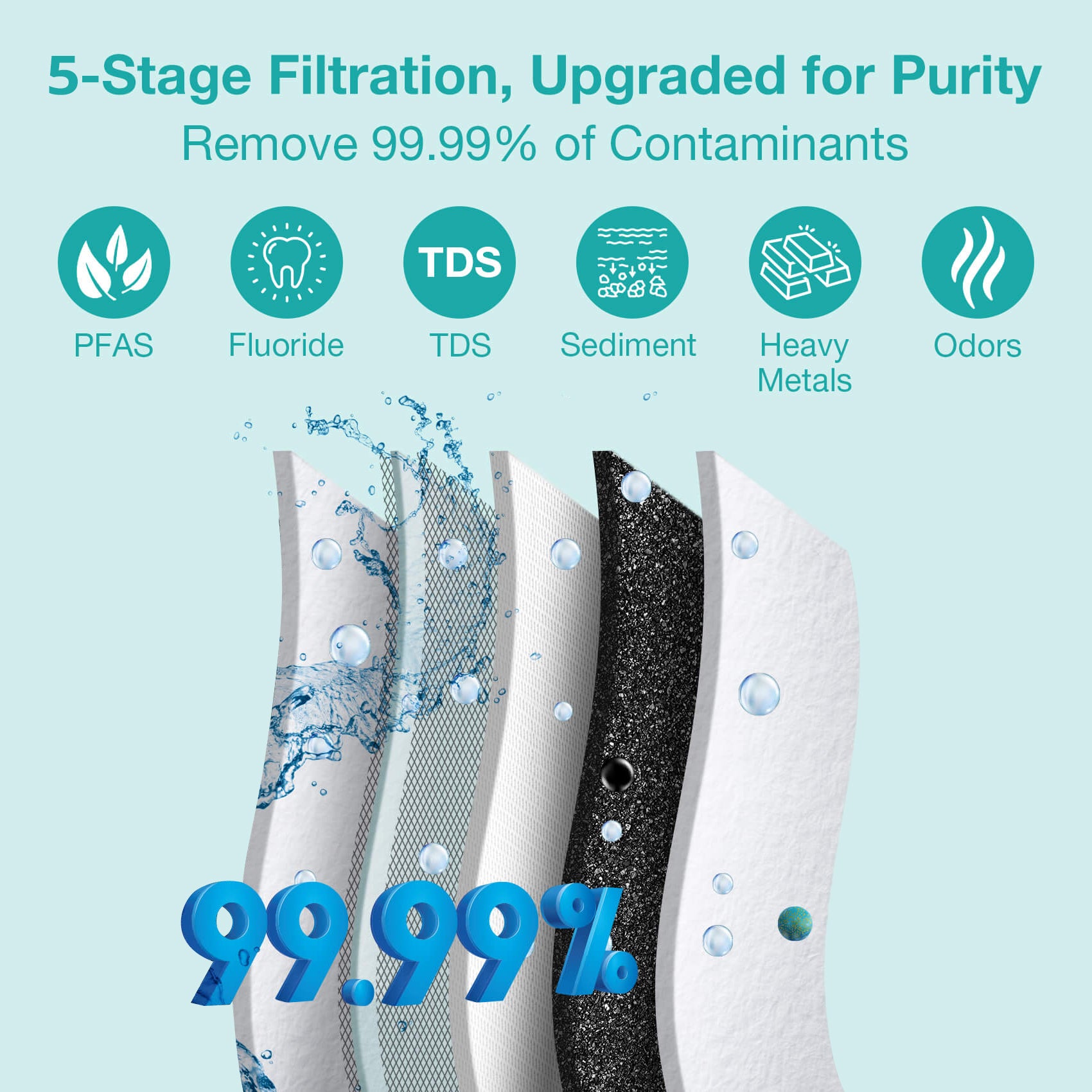
RO is a treatment mechanism, not a universal contaminant list. Before relying on a reduction claim, locate the exact model and exact claim in a current certification directory or other direct evidence. The NSF drinking-water treatment-unit directory can be searched by manufacturer, model, standard, and reduction claim. A broad standard reference, an uncertified marketing graphic, or a certified component does not automatically establish full-system performance.
| Evidence found | What it can support | What it cannot support by itself |
|---|---|---|
| Exact system and exact reduction claim in a current certifier directory | The listed claim within the certification scope | Other contaminants, other variants, neglected units, or every feed condition |
| Manufacturer test for the exact model with identifiable conditions | A scoped first-party or third-party test statement | Independent certification unless the certifier and directory confirm it |
| Membrane pore or TDS change | A mechanism or operational indicator within its limits | Microbiological safety or every contaminant result |
| Clear appearance and acceptable taste | A sensory observation | Absence of pathogens or dissolved contaminants |
This is also why one result cannot substitute for another. A lower TDS reading does not verify lead, PFAS, nitrate, arsenic, bacteria, or any other specific target. Each has its own occurrence, sampling, standard, and treatment evidence.
TDS, minerals, pH, and remineralization answer different questions
Four ideas are frequently compressed into one claim about whether RO water is “healthy.” They should be separated:
- TDS is a bulk measure of dissolved material; it does not identify each substance or its health relevance.
- Mineral content describes particular constituents, not a universal score for nutrition or safety.
- pH is one water-quality property and can matter for taste, treatment, and corrosion, but a single pH reading is not a complete safety assessment.
- Remineralization changes the treated-water composition and often the taste. It does not retroactively prove the membrane's contaminant claims.
EPA's secondary drinking-water guidance treats TDS primarily as an aesthetic and technical parameter associated with taste, deposits, color, or staining—not as a stand-alone health verdict. A very low number is therefore not proof of “perfect” water, and a higher number does not identify what is present. If you need the measurement mechanics rather than a safety verdict, the separate guide to how a TDS meter estimates dissolved solids covers that instrument-level task.
RO can reduce calcium and magnesium in the treated stream, but nutrition should not be reduced to a water-meter debate. The National Institutes of Health lists dairy foods, fortified foods, some vegetables, and fish with bones among important dietary sources of calcium. A household with a nutrition or medical concern should evaluate its actual diet and clinical needs, not assume that an alkaline or remineralization cartridge creates a universal health advantage.
That does not make remineralization meaningless. It can be a legitimate taste and composition preference when the exact media, compatibility, and output are understood. It simply belongs in a different column from contaminant reduction.
The disadvantages belong inside the safety decision
The benefits of RO are conditional: an appropriately selected system can reduce a verified target at one point of use. The disadvantages are also operational, not just financial footnotes.
- Reject water: RO produces a concentrate stream. EPA notes that efficiency varies substantially and does not recommend RO for every application.
- Service dependence: cartridges, membranes, reservoirs, tubing, and faucets remain part of the treated-water path.
- Space and access: a unit that fits but cannot be removed, cleaned, or inspected is a poor long-term installation.
- Cost and supply: exact replacement parts, testing, and qualified service belong in ownership planning.
- Claim mismatch: buying a general RO device for a contaminant without an exact supported claim can create false confidence.
- Source mismatch: some private-well or emergency conditions may need pretreatment, disinfection, another treatment train, or authority-directed action.
These are not arguments for or against every RO system. They are reasons to compare the treatment benefit with the complete water path and ownership burden.
Apply the file to four common situations
| Situation | First evidence | RO decision | Stop condition |
|---|---|---|---|
| Municipal water, no named concern | Current utility report and household plumbing context | RO may be optional; define a taste or contaminant job before purchasing | No treatment target or no willingness to maintain the unit |
| Municipal water, named contaminant concern | Utility result plus exact point-of-use exposure question | Require the exact model's relevant reduction evidence and correct installation | The claim, model, sample point, or replacement plan is missing |
| Private well | Current certified laboratory report and well inspection context | Design a treatment train around the complete result; RO may be one component | Untested source, unresolved microbial risk, incompatible feed condition, or no commissioning plan |
| Active advisory or unusual event | Issuing authority's current instructions | Follow the authority; use RO only if the instructions explicitly support that setup | Any attempt to override the notice with appearance, TDS, or a generic product claim |
If a household includes someone with chronic kidney disease, dialysis, a prescribed electrolyte limit, an infant, or another condition affecting fluid or mineral needs, product copy should not make the clinical decision. The National Institute of Diabetes and Digestive and Kidney Diseases explains that fluid and nutrient needs in chronic kidney disease are individualized. Use the clinician's or dietitian's plan and the local water authority's guidance.
Use current products as formats, not safety verdicts
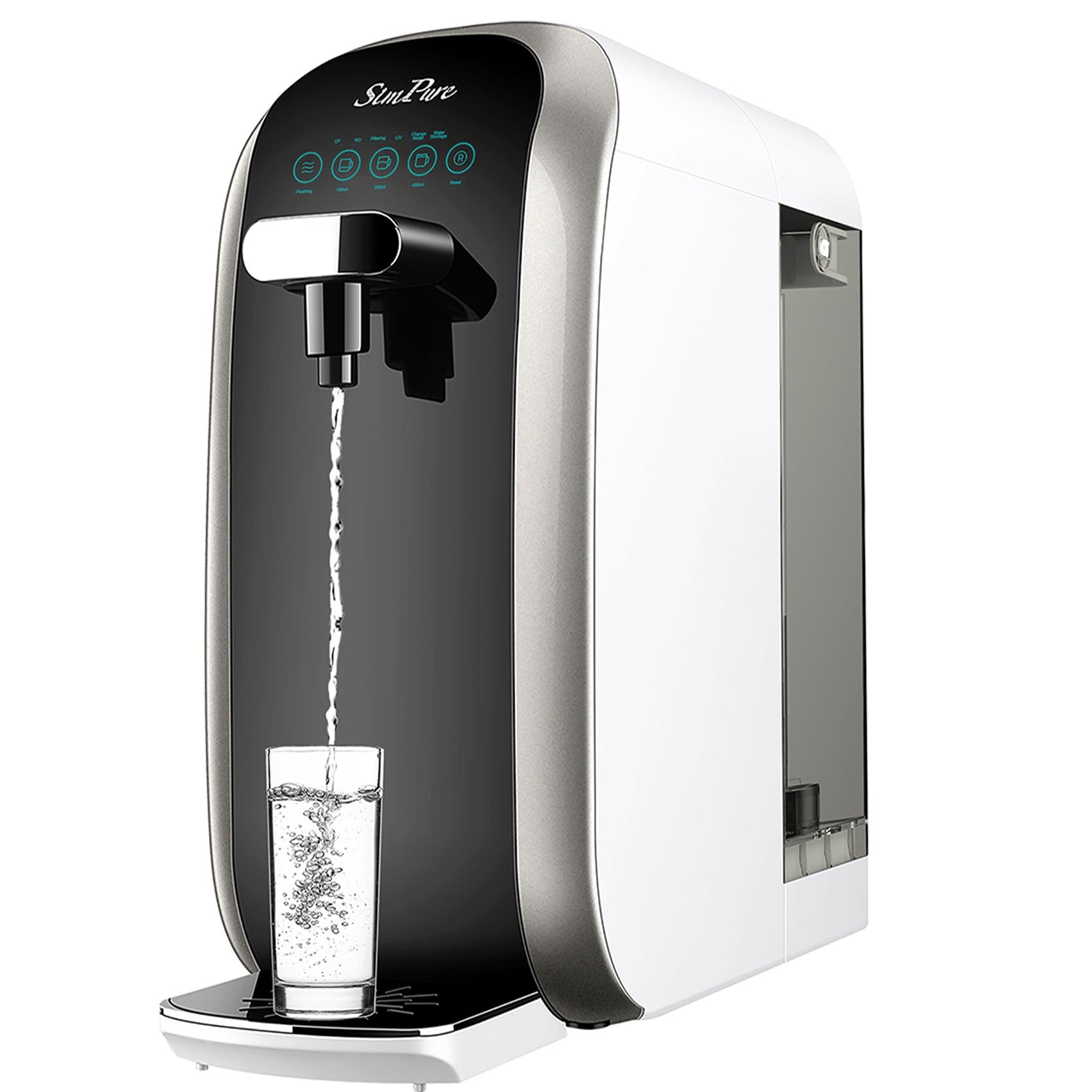
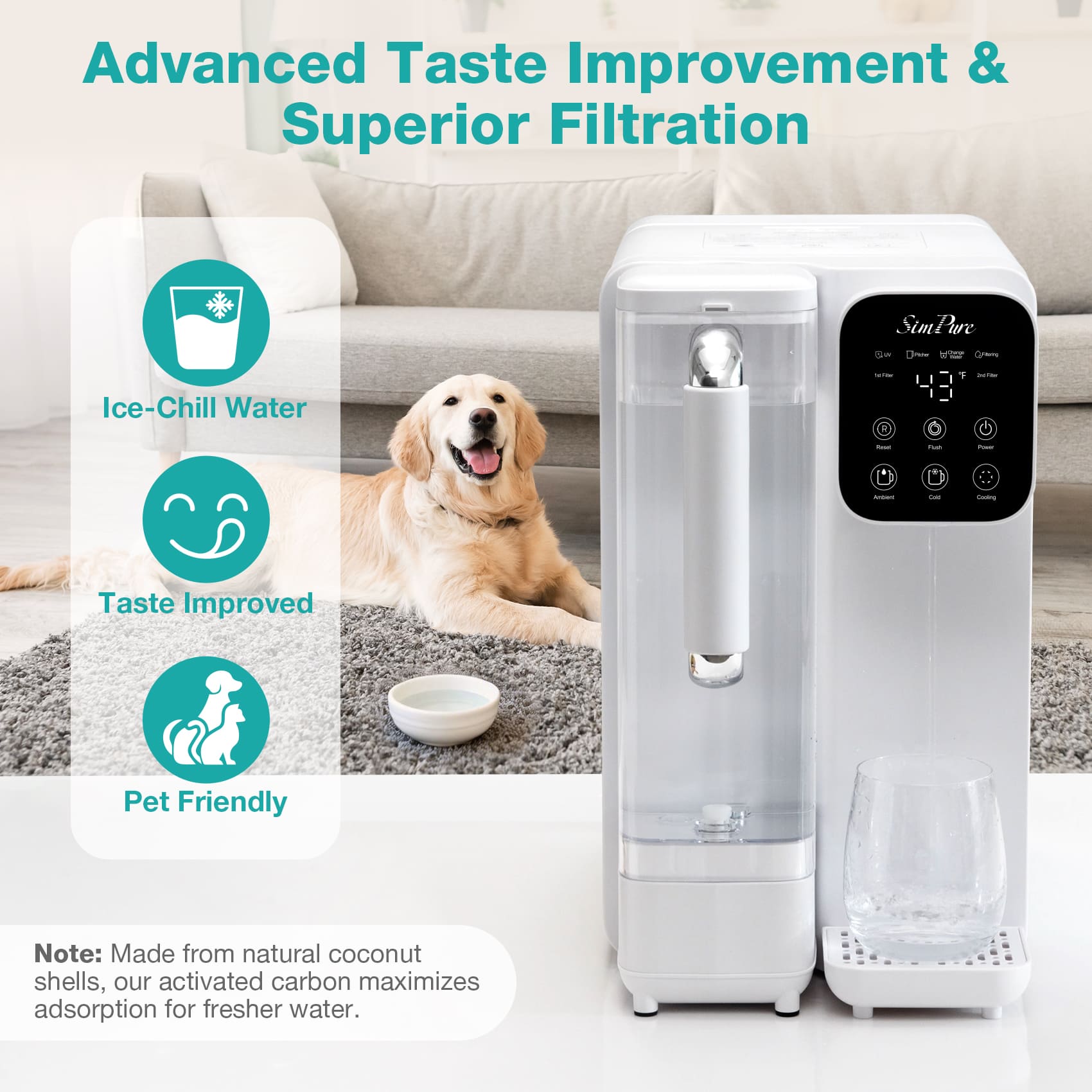
Real product records help with practical questions: Does the unit fit? Where is the feed reservoir? Can the user reach the service parts? Which exact cartridge belongs in each position? For example, the current SimPure Y9A page shows a countertop point-of-use format, while the Y11C-A images above make installation and replacement access visible.
Those observations are first-party product evidence. They do not establish that one model is “healthier,” that every model reduces the same contaminants, or that a new unit remains qualified without maintenance. If you are comparing formats after completing the six gates, browse the current SimPure reverse osmosis collection and take the exact model—not the collection headline—back to your safety file.
Your before-daily-use decision
Before making an RO outlet part of the daily routine, confirm all six statements:
- I know the current source water and any active notice.
- I can name the treatment target instead of saying only “purity.”
- I have exact-model evidence for every reduction claim I rely on.
- I can trace the installed water path from feed to dispensing point.
- I have completed and recorded the required startup, cleaning, and replacement work.
- I know what observation, event, or result would make me stop using the outlet.
When all six are supported, RO water can be a defensible daily drinking-water choice. When one is not, the missing evidence—not the technology's reputation—defines the next action.
Frequently Asked Questions
Are there any side effects of RO water?
RO does not create one universal medical “side effect,” but it does create practical and nutritional questions that should be kept separate. It can reduce calcium, magnesium, and other dissolved constituents, which may change taste; it also creates reject water and depends on correct maintenance. Most people should evaluate those trade-offs against their source water and diet rather than assume that low-mineral water is automatically harmful or healthier. Anyone with a prescribed fluid or mineral plan should follow individualized clinical guidance.
Is it safe to drink RO water daily?
It can be a defensible daily choice when the source water, exact model and claim, installation, maintenance, and treated-water result all support that use. Do not treat TDS, clarity, taste, or the word “RO” as a stand-alone safety test. Follow public-health advisories, maintain the complete water path, and use individualized clinical guidance when a medical condition affects fluid or nutrient needs.
What is a major downside of reverse osmosis water?
For many point-of-use systems, the reject-water stream is a major downside. The size of that burden varies by exact model and operating conditions, so compare a verified efficiency or treated-to-waste measure rather than a generic ratio. Other costs include replacement parts, cleaning, space, electricity for powered models, and the risk of buying broader treatment than the source water actually requires.
Is RO water healthier than tap water?
There is no universal ranking. U.S. public water can already meet applicable drinking-water requirements, while an exact RO system may offer useful point-of-use reduction for a verified concern. The better choice is the one supported by current source-water evidence and an exact treatment claim, with an installed water path the household can maintain; neither “tap” nor “RO” is a complete health verdict.