

Reverse osmosis (RO) water can be remineralized by passing it through a compatible post-RO mineral cartridge or by choosing an RO system with a dedicated remineralization stage. The practical goal is not to chase the highest pH or TDS reading. It is to add a controlled finishing step, follow the equipment instructions, establish a baseline, and watch for changes over time.
This guide explains the methods that are easiest to repeat at home, how to install or use them, and how to check the result without treating one meter reading as a full water analysis.
What Remineralizing RO Water Actually Changes
An RO membrane reduces dissolved ions, so the product water commonly has a lower total dissolved solids (TDS) reading than the feed water. A remineralization stage sits after the membrane and allows selected minerals to dissolve into the finished water. Depending on the media and contact time, it may also raise pH and alkalinity.
Those three measurements are related, but they are not interchangeable:
- pH describes how acidic or basic the water is at that moment.
- Alkalinity describes the water's capacity to resist a drop in pH.
- TDS estimates the total concentration of dissolved ions; it does not identify which minerals are present.
A higher TDS number therefore does not prove that a particular amount of calcium or magnesium was added. If exact mineral composition matters, use a laboratory analysis rather than relying on a handheld TDS meter alone.
Three Practical Ways to Remineralize RO Water
1. Use an RO system with a dedicated mineral stage
This is usually the simplest option for a new installation. The membrane and post-treatment stages are designed as one flow path, and the manufacturer provides compatible replacement parts and flushing instructions.
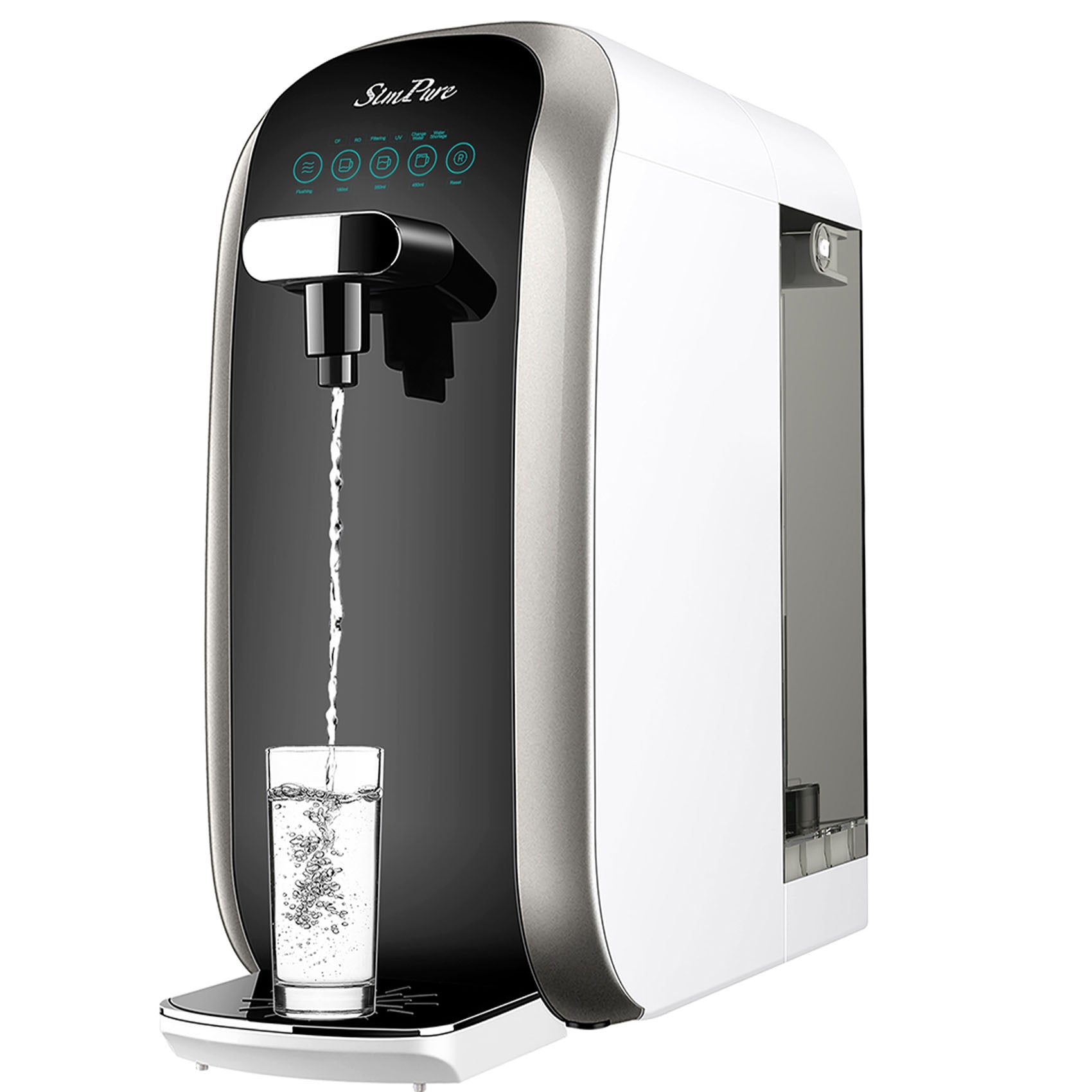
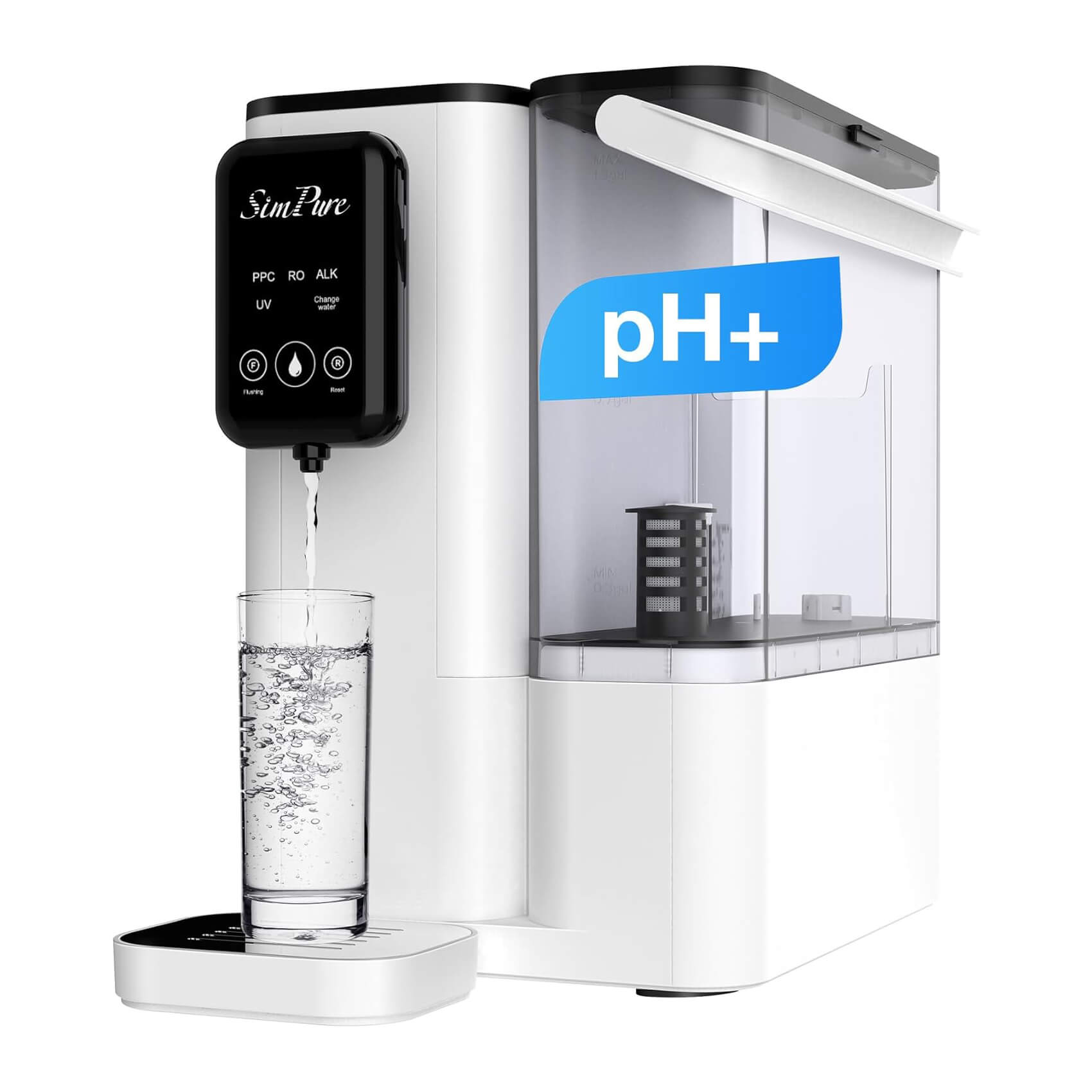
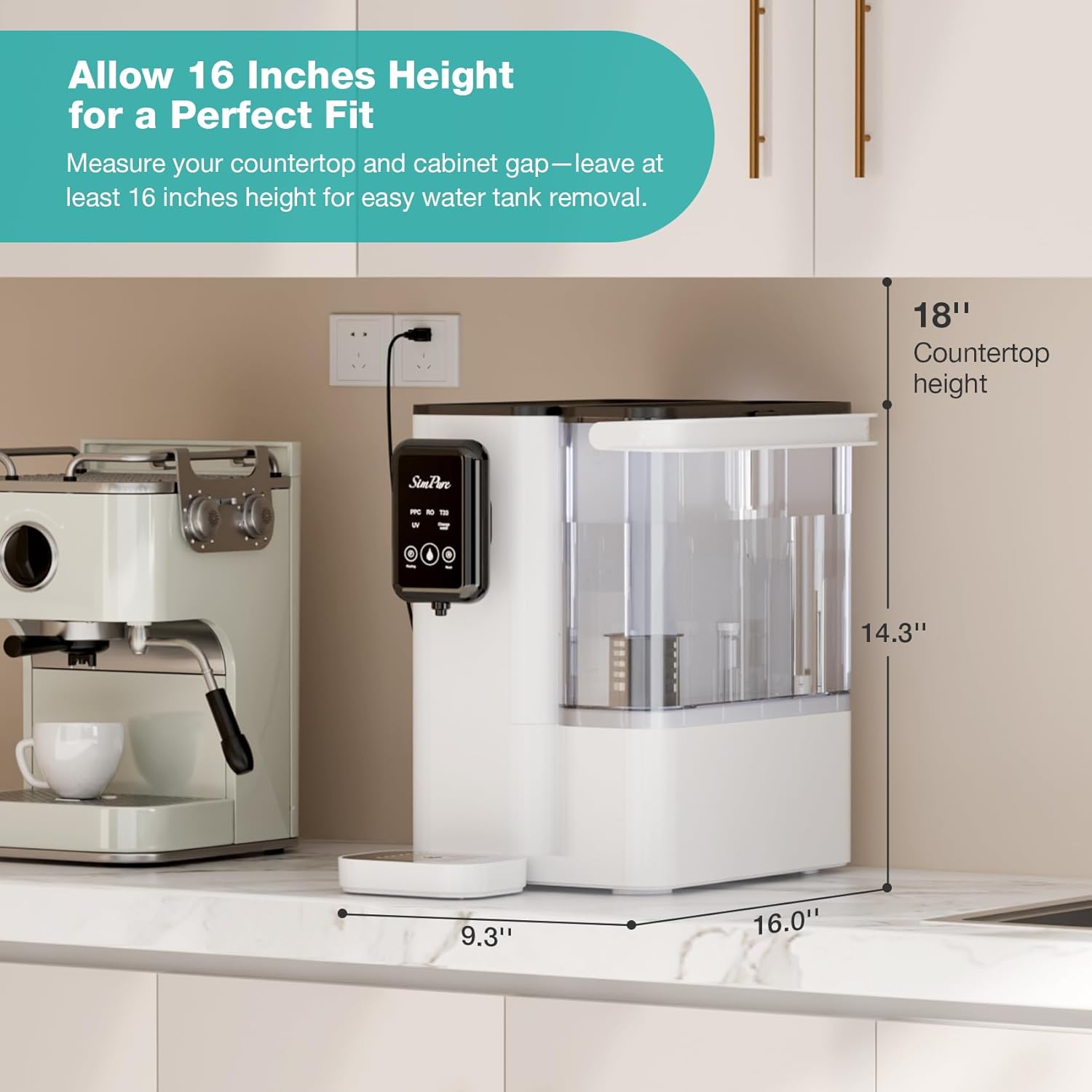
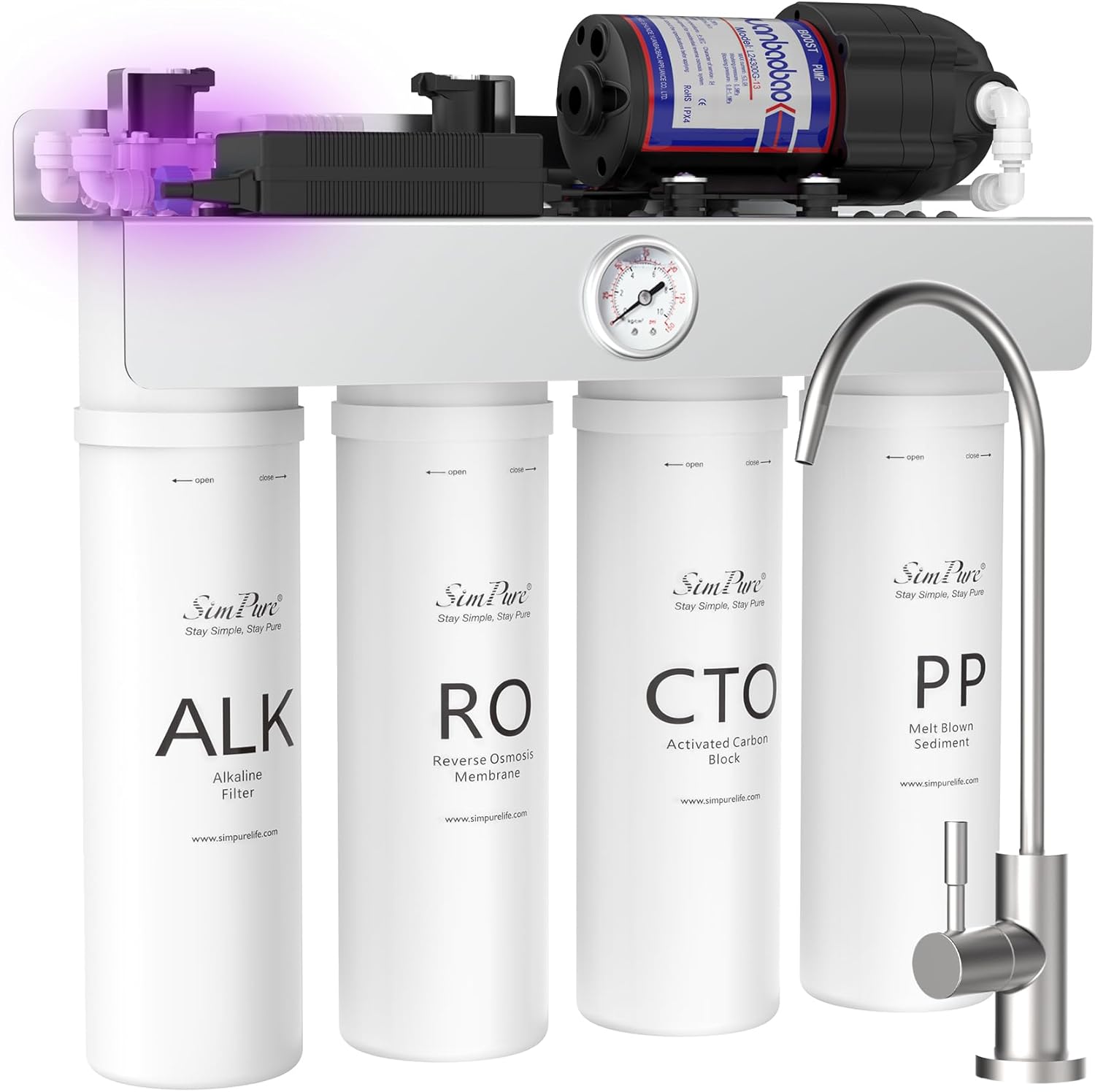
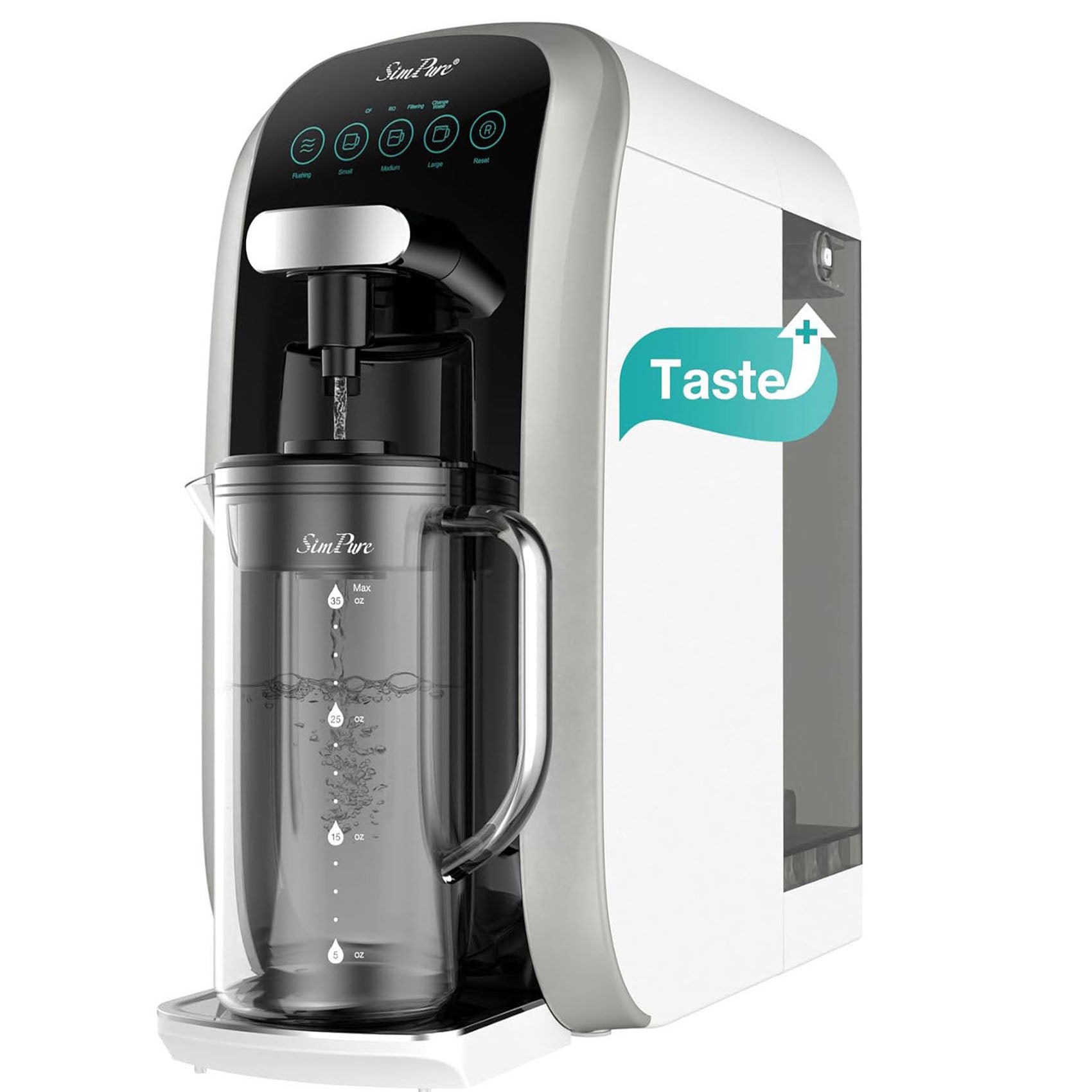
For a countertop example, the SimPure Y7T-A countertop RO system pairs an RO stage with a separate alkaline remineralization stage and dispenses into a glass pitcher. The product page currently lists a 100 GPD membrane rating and gives model-specific replacement guidance. Treat those intervals as starting points because actual service life varies with feed-water conditions and use.
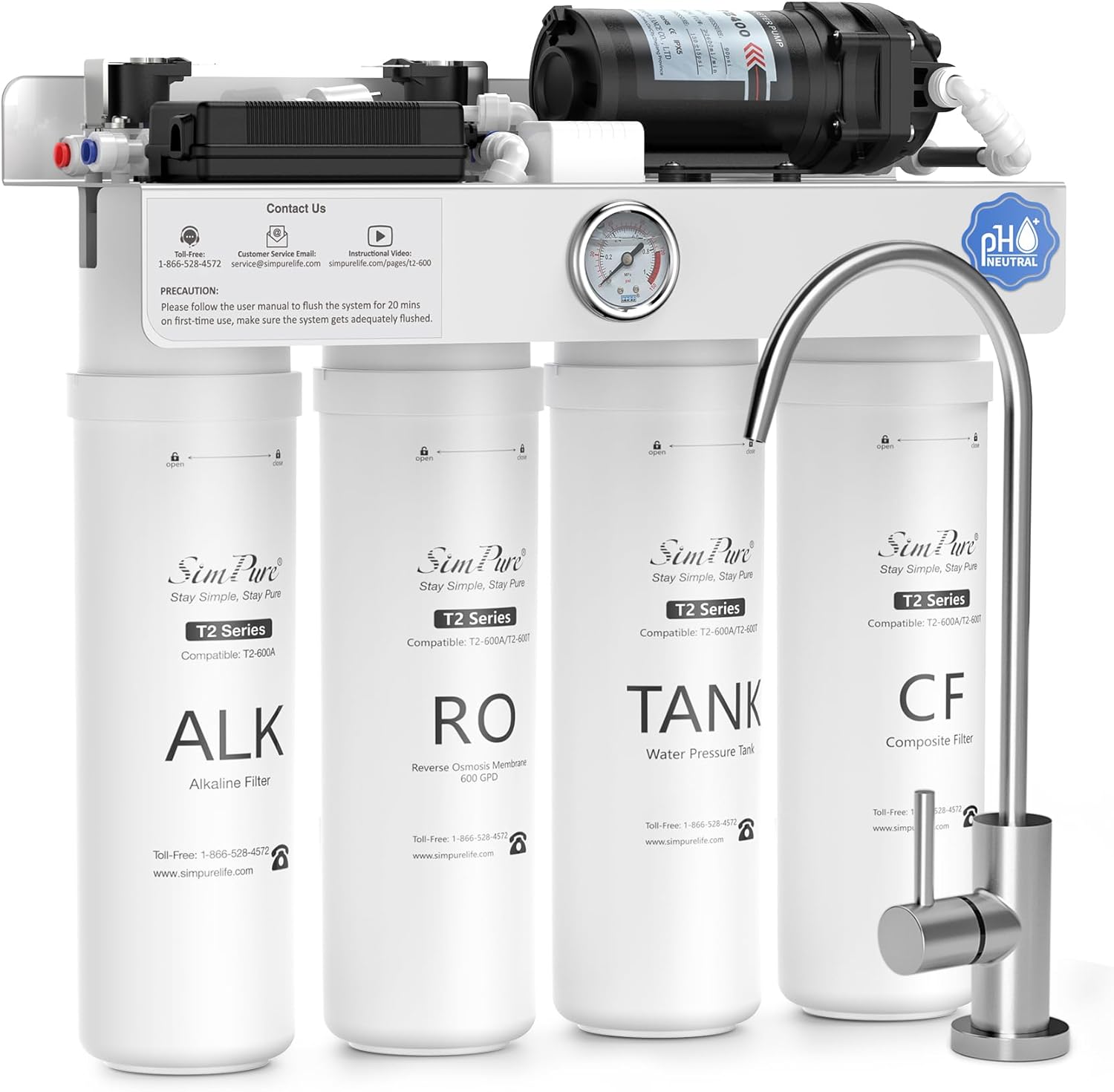
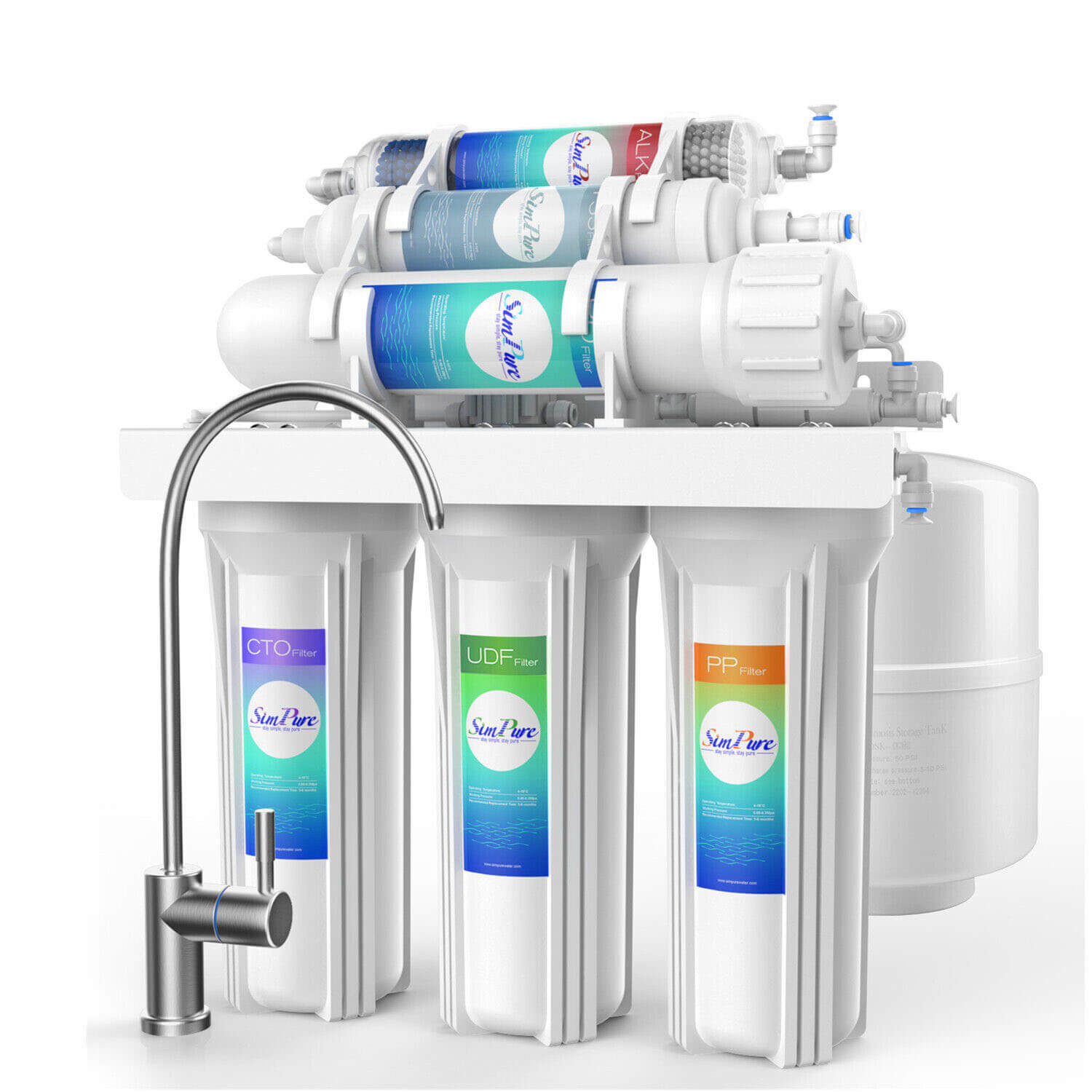
If you are comparing countertop, tankless under-sink, and other configurations, browse the SimPure reverse osmosis systems collection. Check whether “alkaline” or “remineralization” is explicitly listed for the exact model; not every RO system includes that stage.

2. Add a compatible inline remineralization cartridge
An inline cartridge can be a practical retrofit when the existing RO system supports it. It normally goes in the product-water line after the membrane and storage tank, when present, and before the dedicated drinking-water faucet. Exact placement can differ by system.
Before buying a cartridge, confirm:
- tubing size and connector type;
- the direction-of-flow marking;
- working-pressure and temperature limits;
- the mineral media named by the manufacturer;
- the required flush volume or flush time; and
- whether the retrofit affects the system warranty.
Do not place loose mineral material into a housing unless that housing and media were designed to be used together. A purpose-built cartridge provides a defined water path and a documented replacement procedure.
3. Use measured mineral drops intended for drinking water
Mineral drops are portable and require no plumbing, but repeatability depends on the label being specific. Choose a product that states its ingredients, dose per volume, storage directions, and expiration information. Measure the water volume and the dose each time.
This method is less convenient for a whole household because every pitcher or bottle must be dosed separately. It also makes comparison difficult if the dose changes from one refill to the next. Avoid improvised recipes or unlabelled concentrates.
|
Method |
Best fit |
Main advantage |
Main limitation |
|
Built-in mineral stage |
New RO purchase |
Integrated flow path and model-specific parts |
Requires choosing the feature at purchase |
|
Inline cartridge |
Compatible existing RO system |
Automatic treatment at the faucet |
Fit, pressure, and placement must be verified |
|
Mineral drops |
Travel or small batches |
No plumbing change |
Manual dosing for every volume |
How to Add a Remineralization Cartridge Step by Step
Step 1: Map the existing water path
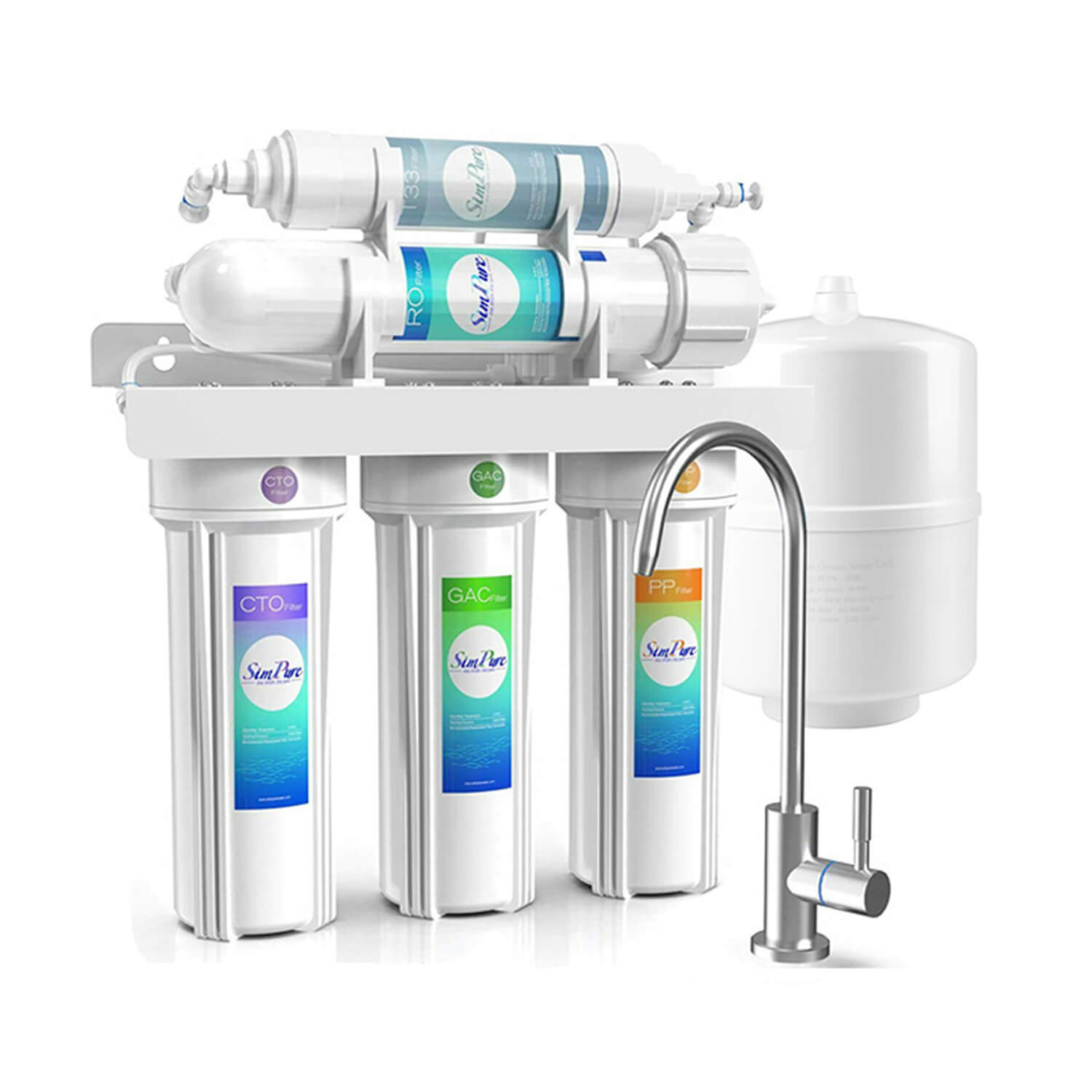
Identify the feed connection, prefilters, RO membrane, storage tank if present, final postfilter, and faucet line. Use the diagram for your exact model. A mineral cartridge is a finishing stage, not a replacement for the membrane.
Step 2: Verify compatibility
Match the cartridge to the tubing, fittings, pressure range, and intended flow rate. If the system has a final carbon stage, follow the manufacturer’s specified order rather than assuming which cartridge goes last.
Step 3: Record a baseline
Before changing the system, measure product-water pH and TDS using calibrated meters and note the taste. If you test alkalinity, use the same method and sample volume each time. The baseline lets you evaluate the change instead of guessing.
Step 4: Isolate the system and relieve pressure
Close the feed-water valve, turn off power if the system uses a pump or dispenser, close the tank valve where applicable, and open the faucet until flow stops. Then install the cartridge in the marked flow direction, following the system and cartridge manuals.
Step 5: Check the connections and flush
Restore the water supply gradually and inspect every fitting. Flush exactly as directed by the cartridge manufacturer before collecting drinking water. Newly wetted mineral media may release fine particles or produce a temporarily higher reading, which is why the stated flush procedure matters.
Step 6: Establish the new operating range
After flushing, measure pH and TDS under the same conditions used for the baseline. Record the date, readings, cartridge model, and any taste change. These figures describe your setup; they are not universal targets.
How to Check Whether the Setup Is Working
Use a small four-part control loop:
- Choose: select a documented method that fits the RO configuration.
- Prepare: install or dose according to the product instructions and complete the required flush.
- Baseline: record pH, TDS, date, and taste under consistent conditions.
- Monitor: repeat the same checks periodically and replace the cartridge according to the model guidance or when performance shifts.
A modest rise in TDS after the mineral stage can indicate that ions were added, but it cannot tell you which ions or how much of each. Likewise, pH can change with temperature, dissolved carbon dioxide, contact time, and the test method. Compare like with like: use the same meter, calibration routine, sample temperature, and collection point.
If you are deciding whether the extra stage is worthwhile, first read Does RO Water Remove Minerals? What You Should Know. For the difference between treatment method and finished-water pH, see Alkaline Water vs. Reverse Osmosis Water.
A Practical Decision Rule

For a new purchase, choose an RO model with a documented mineral stage if you want the most integrated route. For an existing system, add an inline cartridge only after confirming compatibility and placement. Use labelled mineral drops mainly when plumbing is impractical or the volume is small.
Whichever method you choose, keep the target simple: a repeatable process, documented components, consistent measurements, and timely cartridge replacement. Remineralization is a finishing step; it does not replace correct RO sizing, routine filter service, or source-water testing when a specific concern needs to be identified.
Frequently Asked Questions
What is the best way to remineralize reverse osmosis water?
For most households, the most repeatable method is a compatible post-RO mineral cartridge or an RO system with that stage built in. Both routes treat water automatically and come with defined installation and replacement instructions.
Can you add minerals back to reverse osmosis water?
Yes. A post-RO cartridge can add selected dissolved minerals after membrane treatment. Labelled mineral drops can also be used in measured batches when their dosing directions are followed.
Does remineralizing RO water raise TDS?
It commonly raises TDS because mineral ions dissolve into the water. The amount depends on the media, flow, contact time, and water conditions. A TDS reading does not identify the individual minerals.
Does a remineralization filter raise pH?
It can, depending on the media and operating conditions. Measure before and after under consistent conditions rather than relying on a universal result.
Where should a remineralization filter be installed?
It is generally installed on the product-water side after the RO membrane. The exact position relative to a storage tank and final postfilter varies, so use the diagram for the specific system and cartridge.
How often should an RO remineralization filter be replaced?
Use the interval stated for the exact model, then adjust within the manufacturer’s guidance for actual water use and feed-water conditions. Record the installation date and compare periodic readings under the same conditions.