

Have you ever cleaned your kitchen faucet, only to see white marks appear again a day later?
Or maybe you take a glass out of the dishwasher and notice it looks cloudy, even though it has just been washed.
A lot of people assume they are doing something wrong.
They buy a stronger cleaner. They wipe surfaces more often. They try different dishwasher detergents.
But sometimes, the problem is not your cleaning routine.
It is the water itself.
Those white spots are usually caused by minerals left behind after water dries. They are especially common in homes with hard water, where calcium and magnesium levels are higher.
So why does your water leave white spots? And is there a way to reduce them?
The Reason Behind Those White Marks
Water looks simple, but it contains more than just water molecules.
As water travels through underground rocks and soil, it picks up natural minerals along the way. Calcium and magnesium are two of the most common minerals found in hard water.
When water drops sit on a surface and evaporate, those minerals do not disappear with the water.
They stay behind.
Over time, a few tiny spots can become a noticeable layer of white buildup.
This is why you may see the same marks returning again and again, even after cleaning.
Why Some Homes Have More Water Spots Than Others
Not every home has the same water experience.
Two houses in the same area can sometimes have different results depending on their water source and plumbing system.
People who live in areas with harder water often notice:
-
Glasses that never seem completely clear
-
White buildup around faucets
-
Shower doors that need frequent cleaning
-
Coffee makers that collect mineral deposits
The interesting part is that many homeowners do not realize they have hard water at first.
They simply think:
“Why is my kitchen harder to keep clean than before?”
Are White Spots a Sign of Dirty Water?
Not necessarily.
This is a common misunderstanding.
White spots usually mean minerals are being left behind, not that your water is contaminated.
Calcium and magnesium are naturally occurring minerals. In fact, some people prefer the taste of mineral-rich water.
The issue is not always safety.
For many households, the frustration comes from the everyday effects:
More cleaning.
More maintenance.
More time spent removing buildup.
Can a Normal Water Filter Stop White Spots?
This is where many homeowners get disappointed.
A basic water filter can improve some things, but it may not solve mineral buildup.
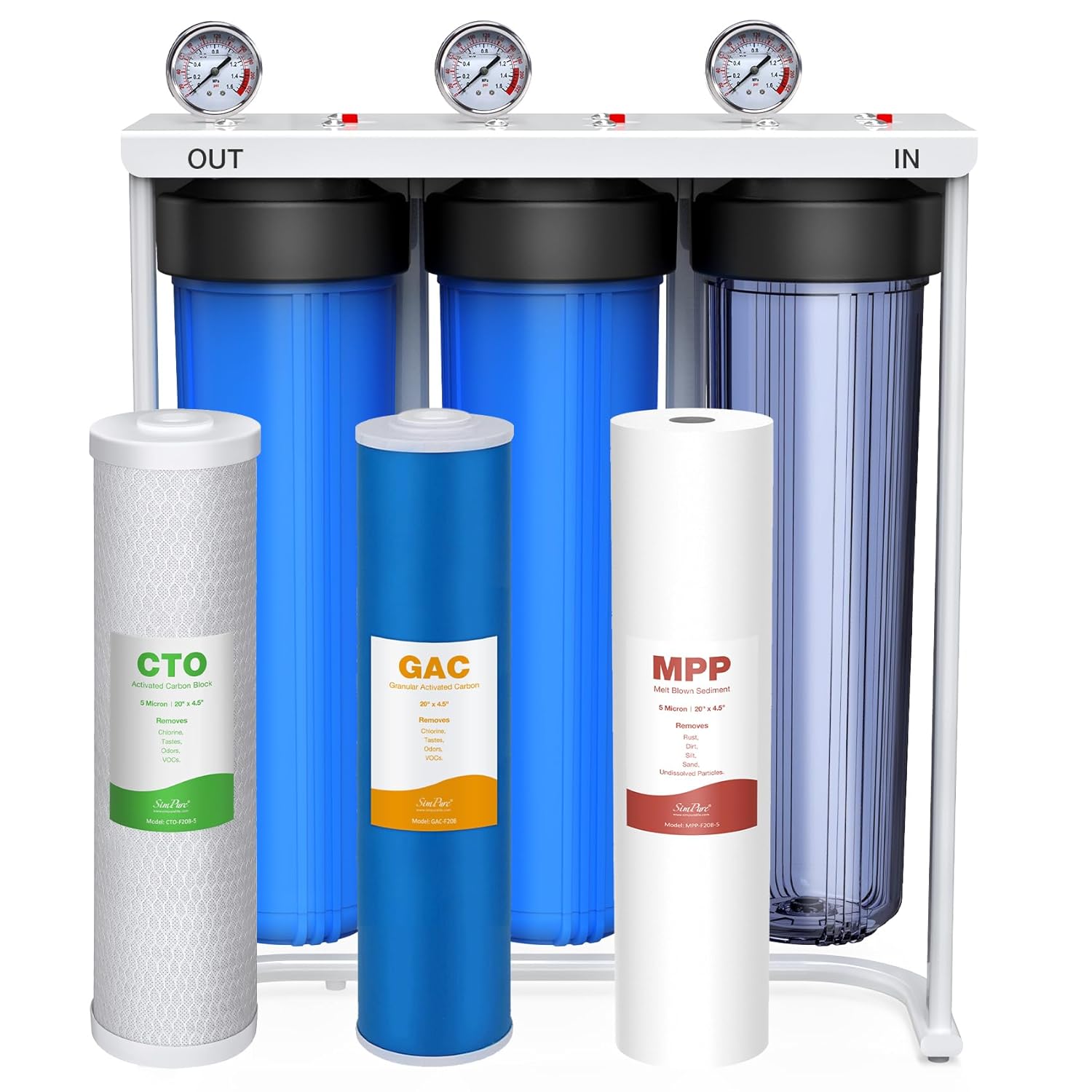
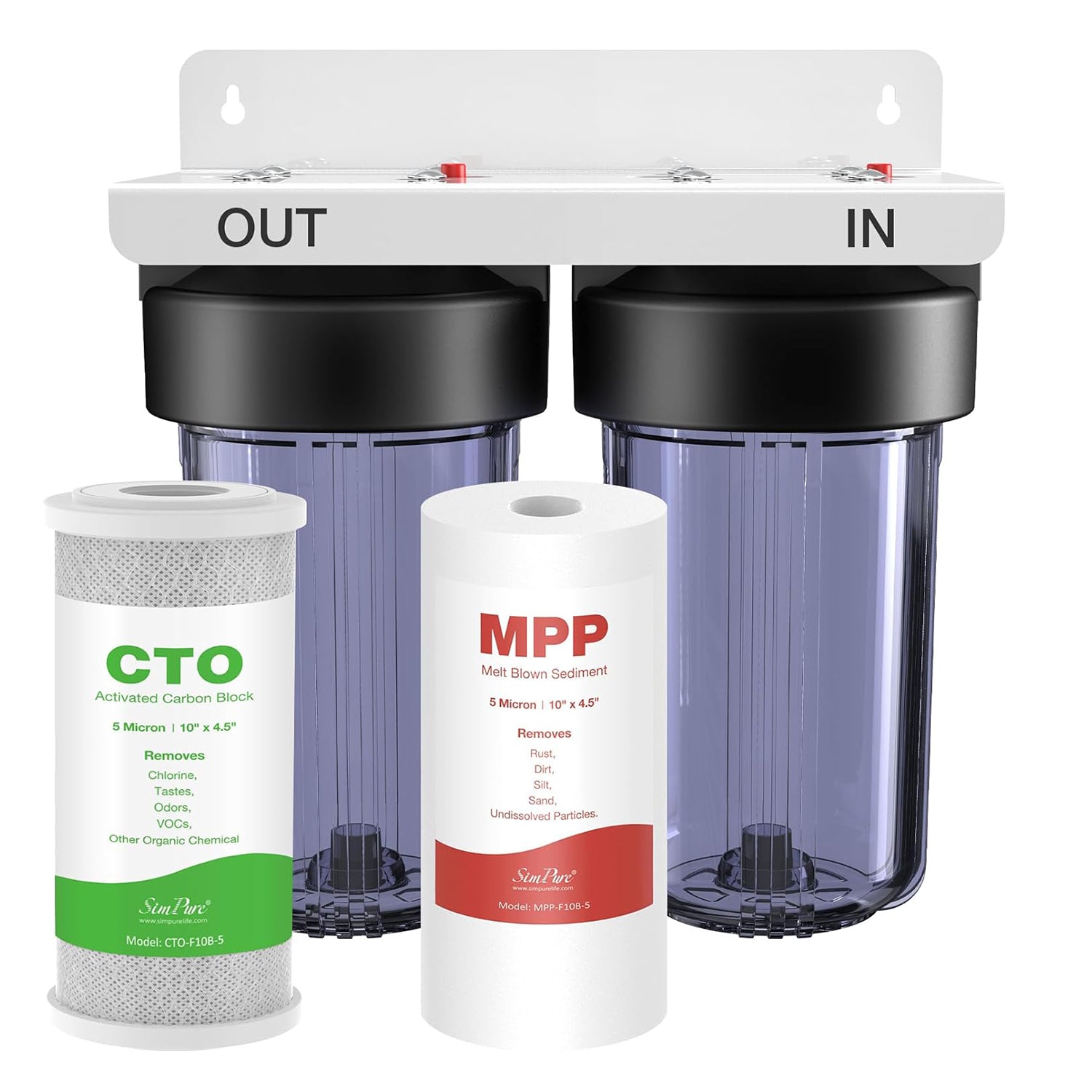
For example, carbon filters are useful for reducing chlorine taste and odor. They can make tap water taste fresher.
But the minerals responsible for white spots are dissolved in the water.
They are not particles that can simply be caught by a standard filter.
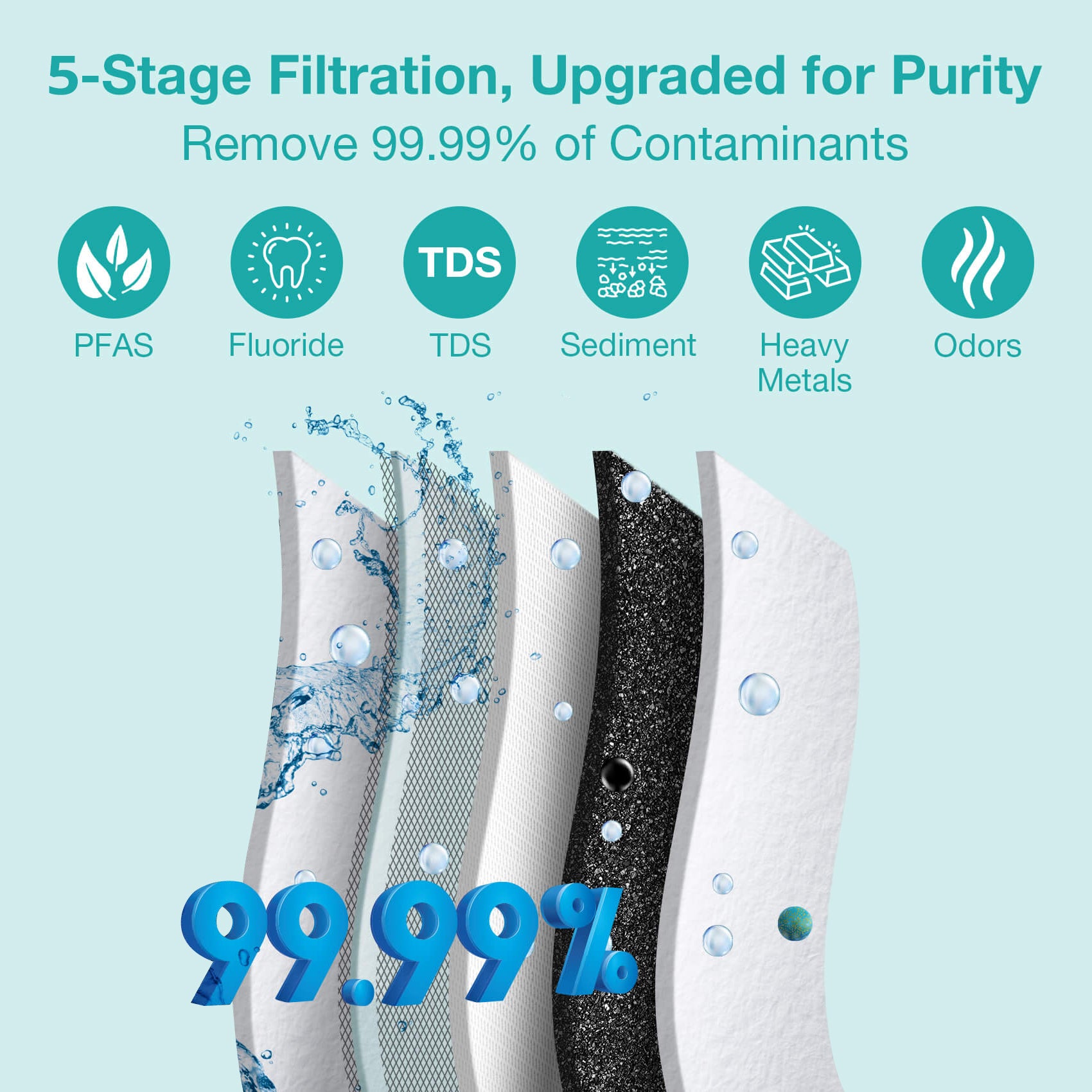
If your main problem is cloudy glasses, faucet buildup, or mineral deposits, you need a filtration method that can address dissolved minerals.
Is Reverse Osmosis a Good Option?
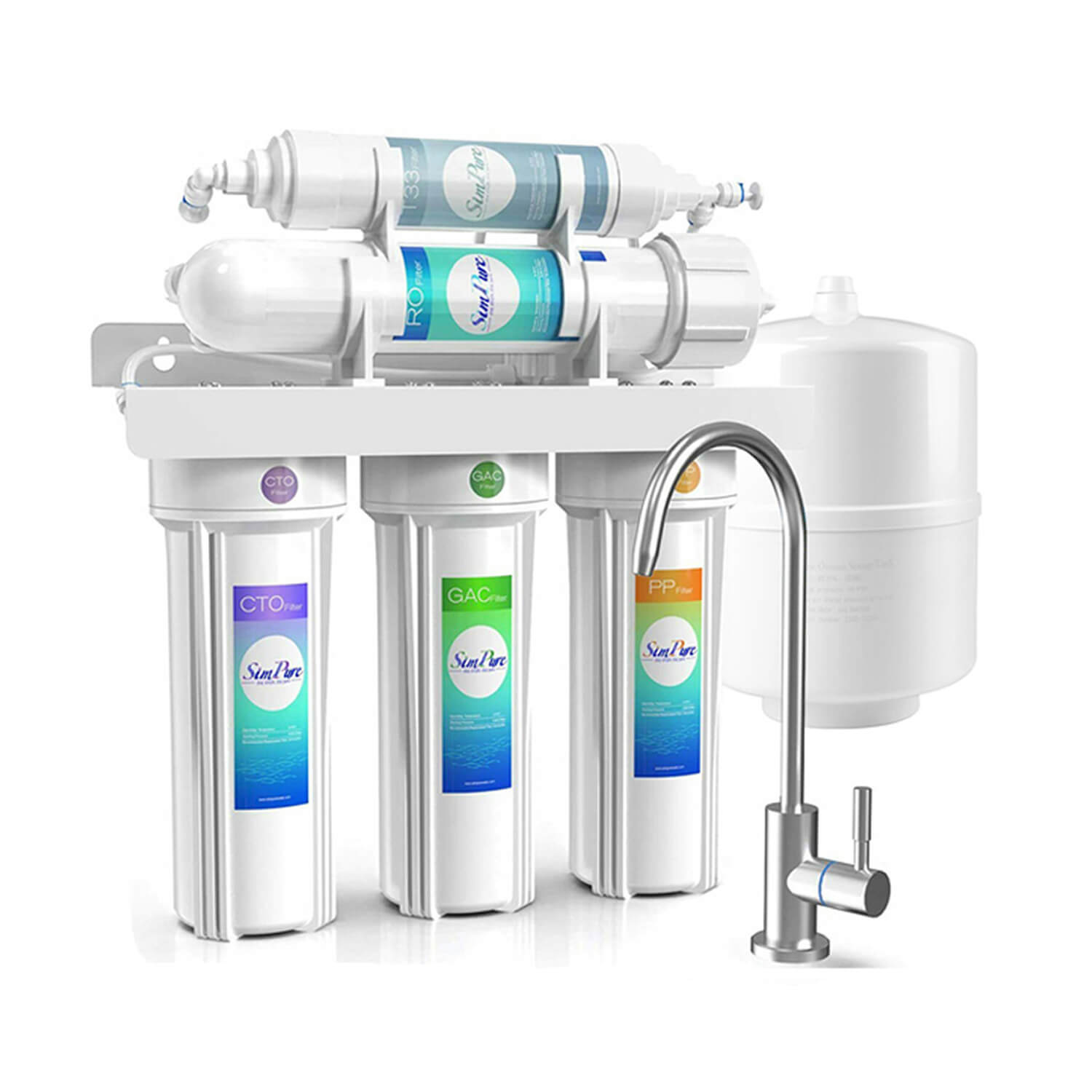
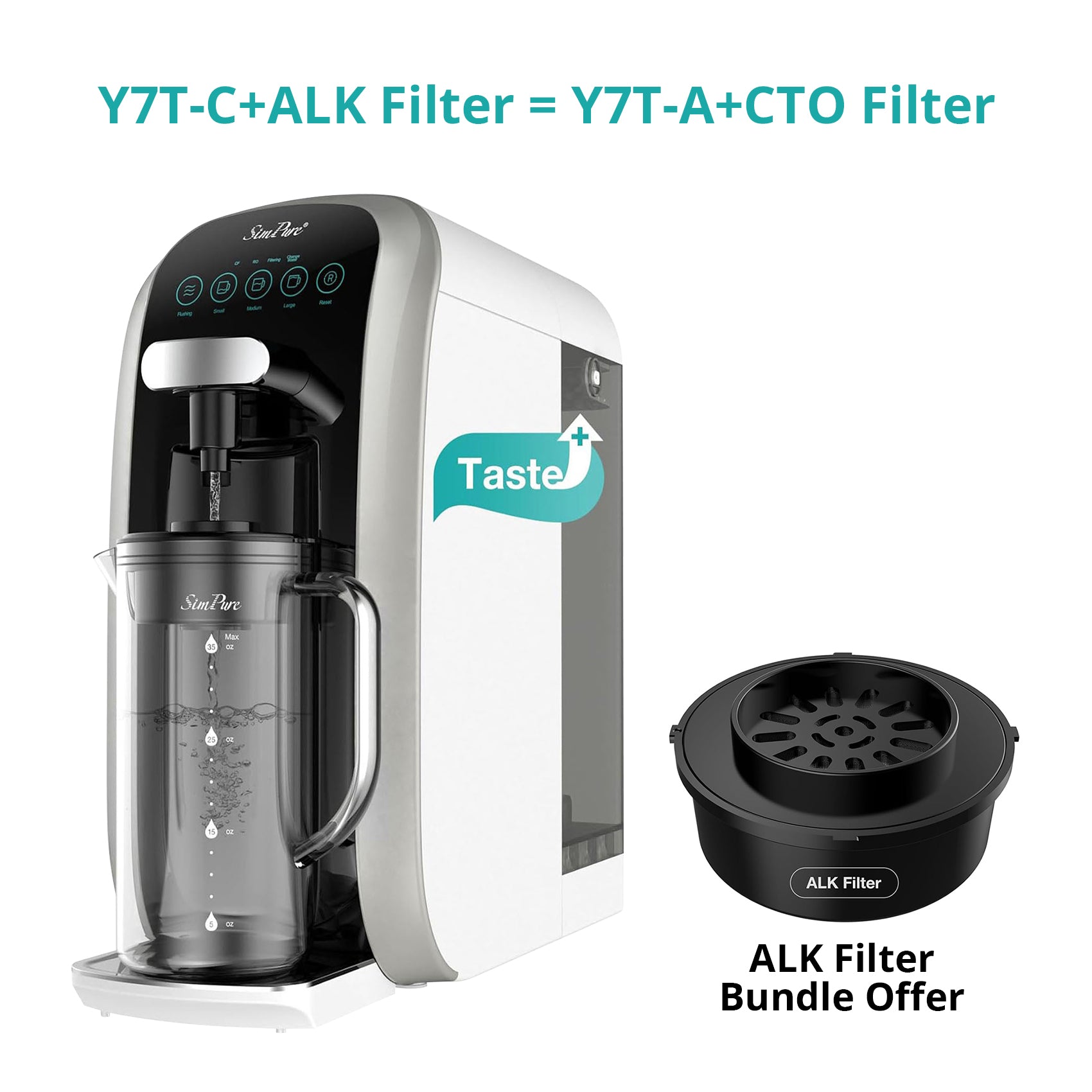
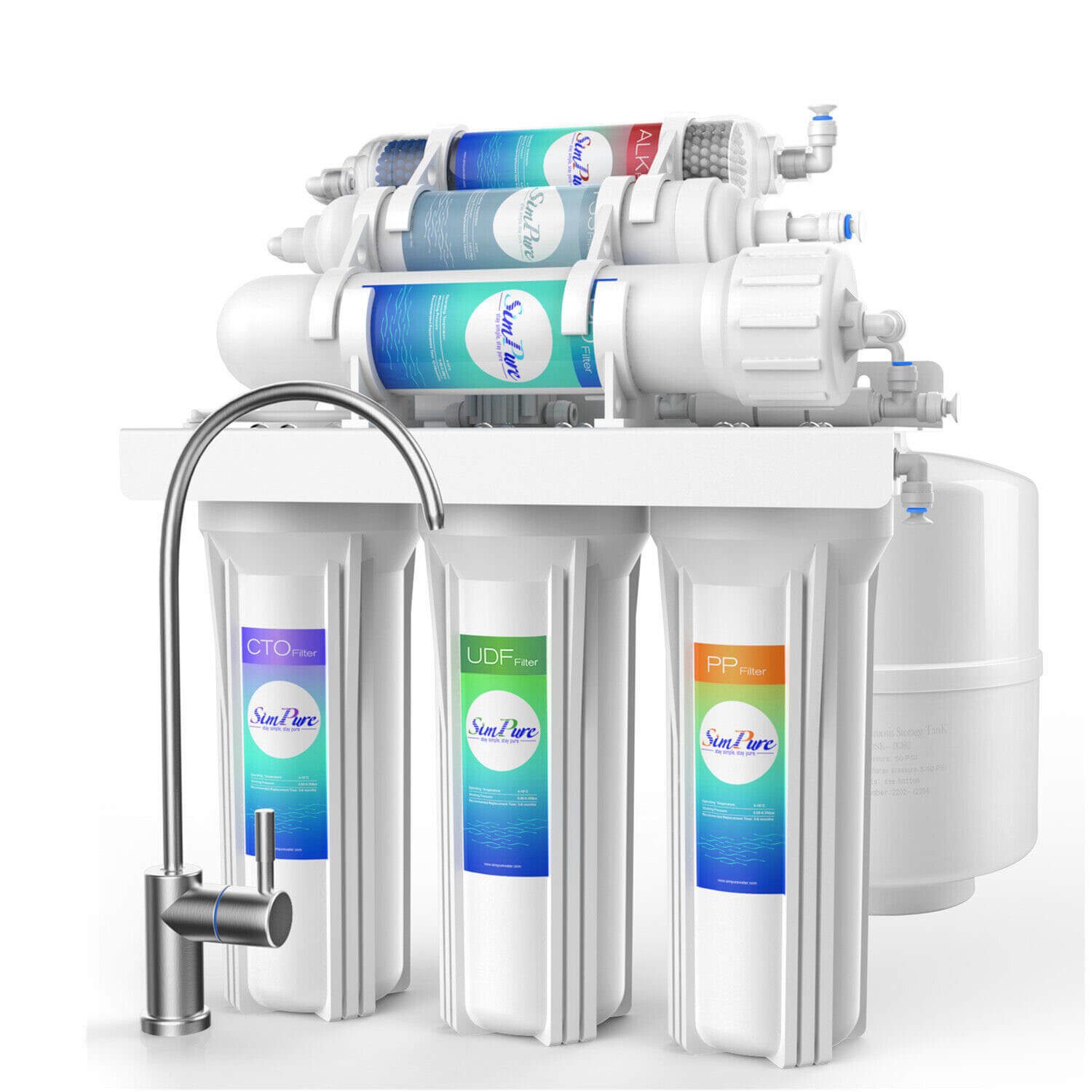
For people who mainly want better drinking and cooking water, reverse osmosis is one option worth considering.
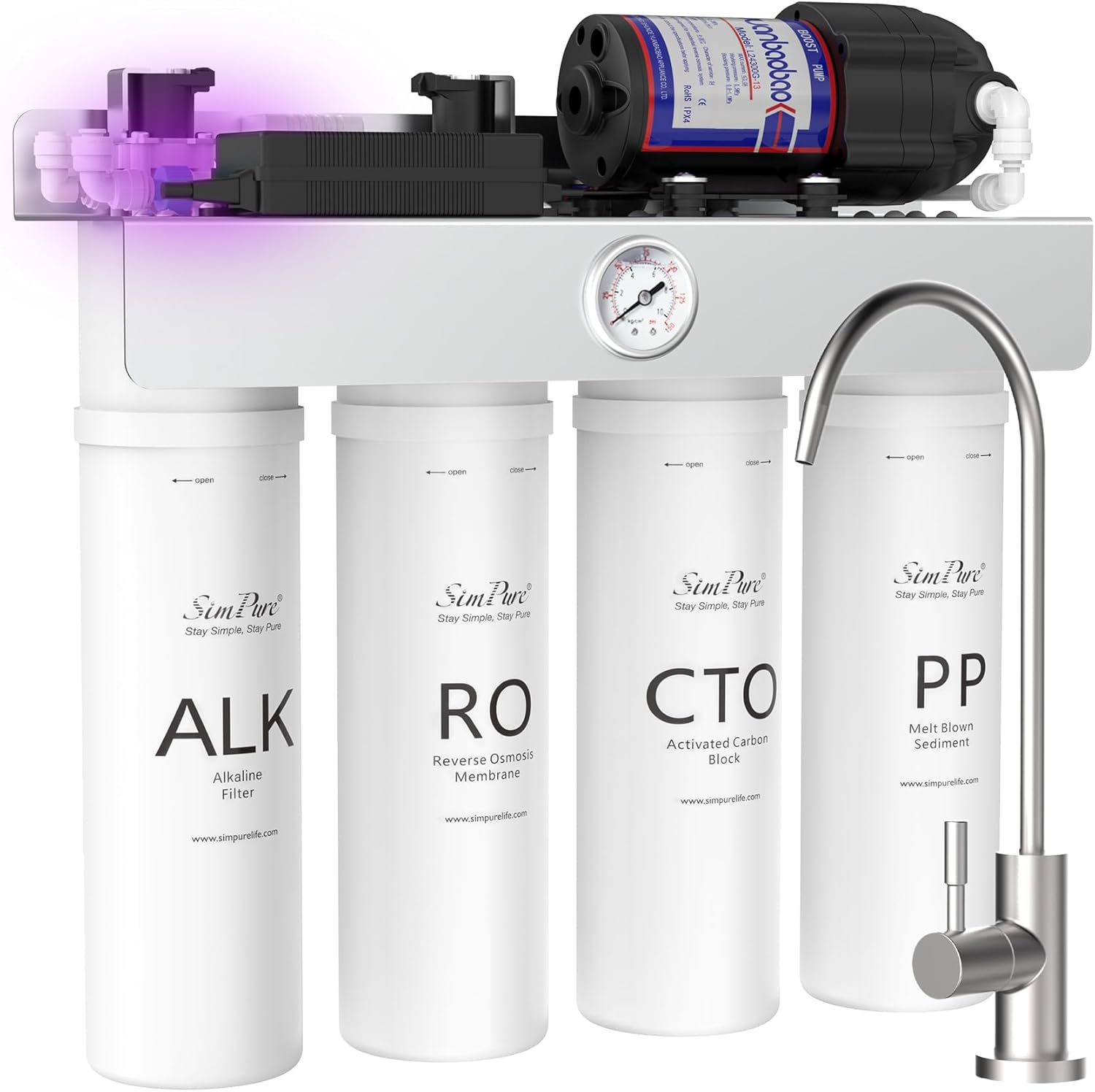
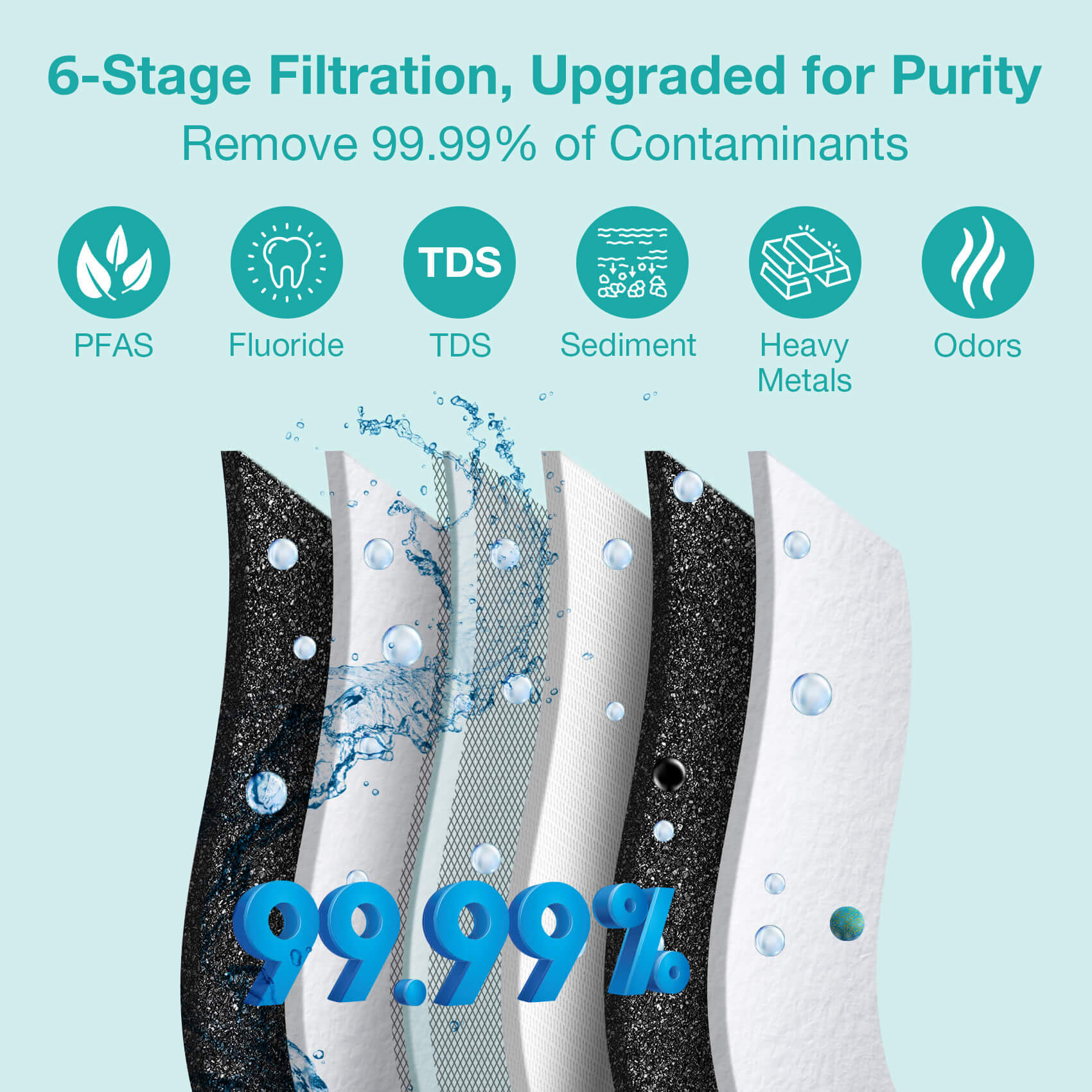
RO systems use a special membrane to reduce many dissolved substances in water, including minerals that contribute to hardness.
Many homeowners choose RO not because they want to treat every faucet in the house but because they want cleaner-tasting water for the things they use every day:
Morning coffee.
Cooking meals.
Filling a water bottle.
Making tea.
These small daily moments are often where water quality becomes noticeable.
Why Are Countertop RO Systems Popular?
Not everyone wants a large water treatment project.
Some people live in apartments.
Some are renting.
Some simply do not want to change their kitchen plumbing.
That is why countertop RO systems have become a popular choice for many households.
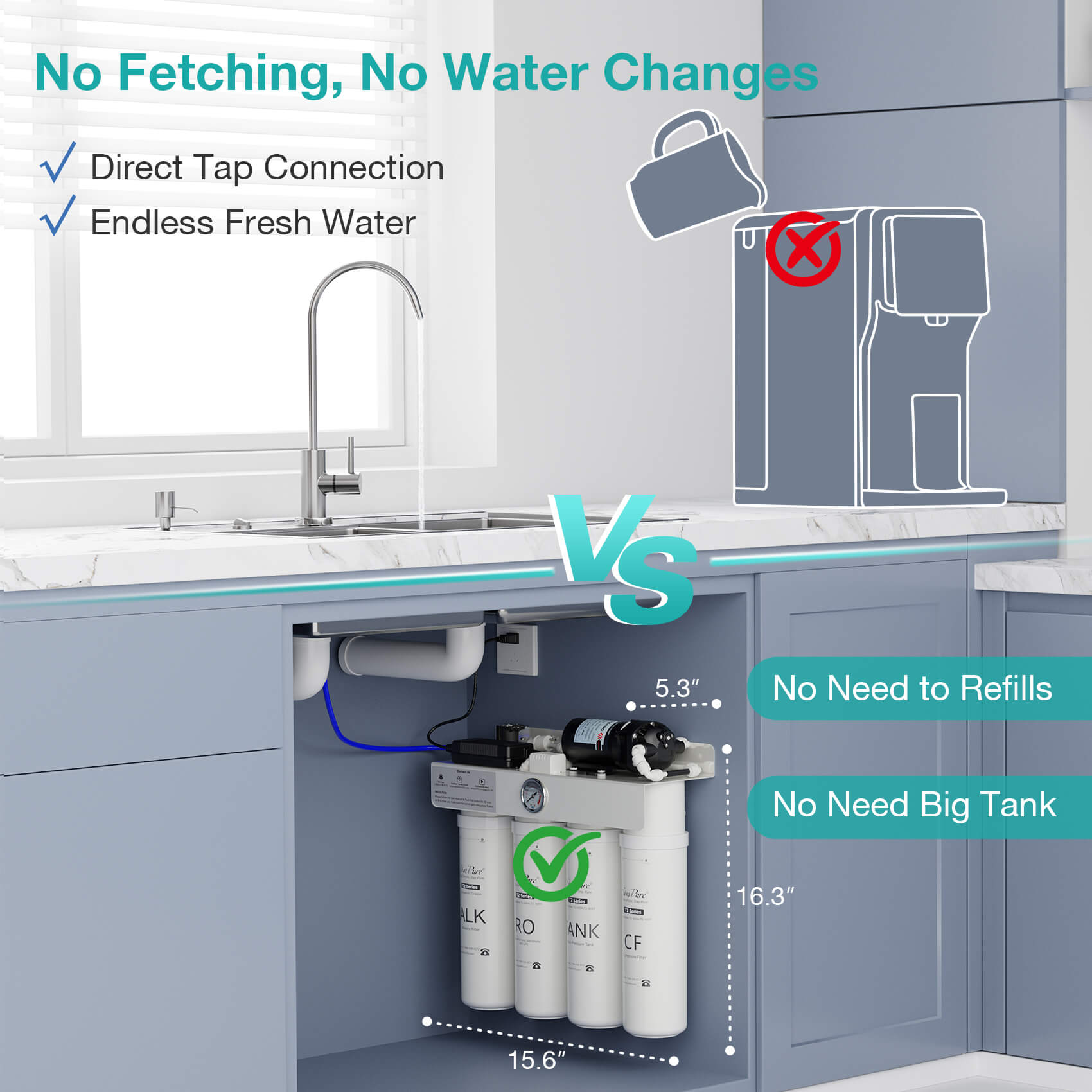
They provide filtered drinking water without requiring a complicated installation.
For families who mainly care about the water they drink and cook with, this type of system can be a convenient alternative.
Making Everyday Water Easier
If white spots are becoming a regular annoyance, the first step is understanding what is causing them.
A simple water test can help you learn more about your water hardness level.
From there, you can decide what makes sense for your home.
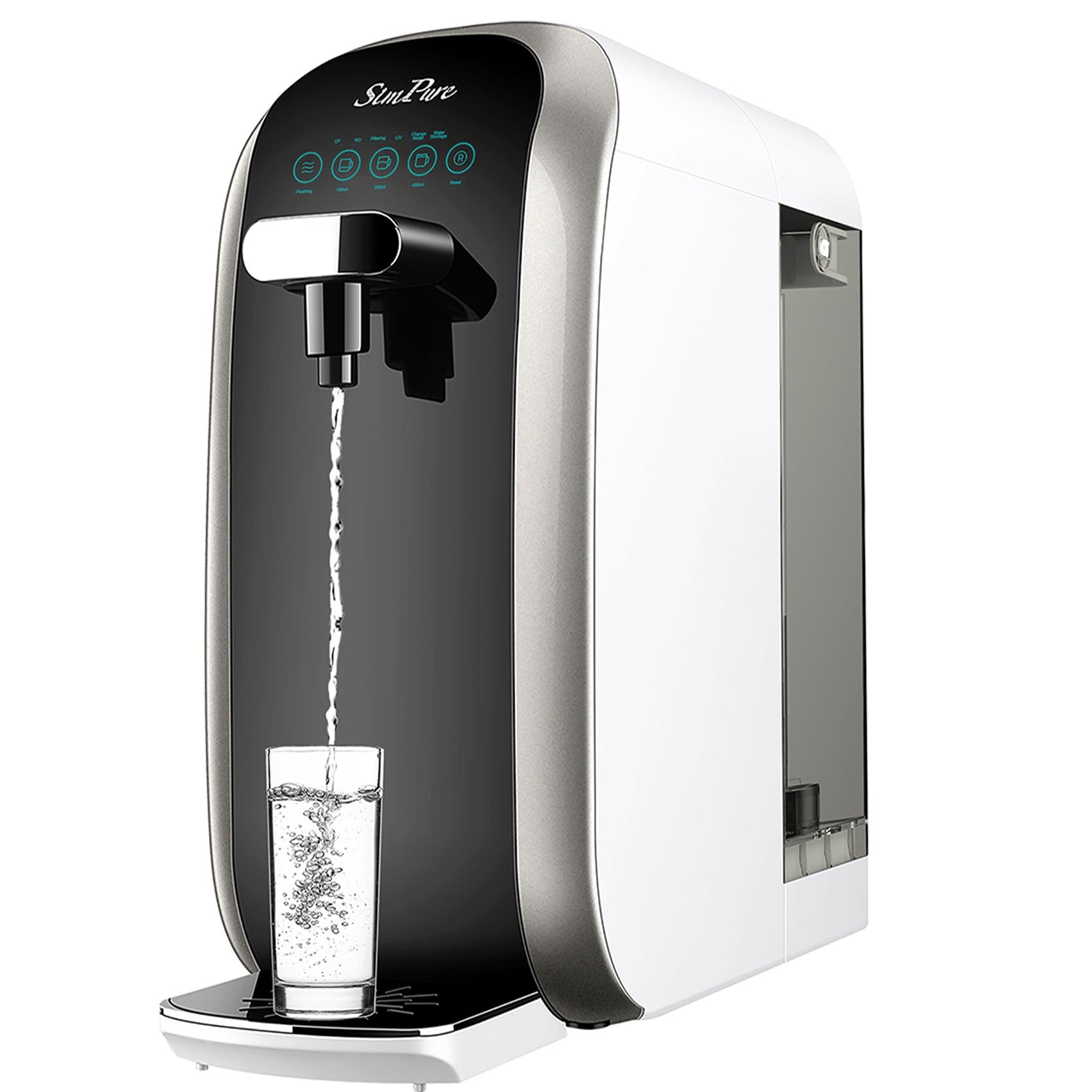
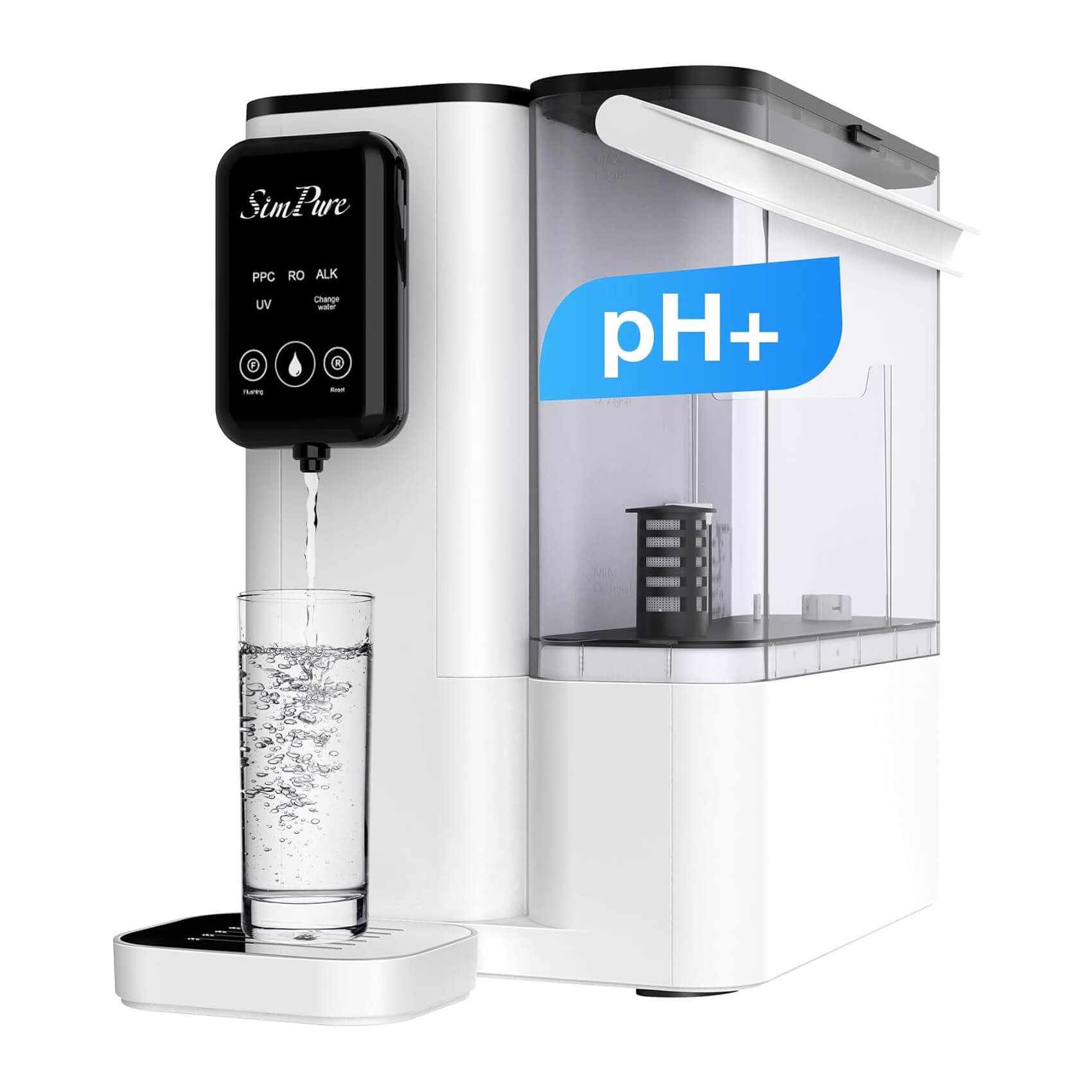
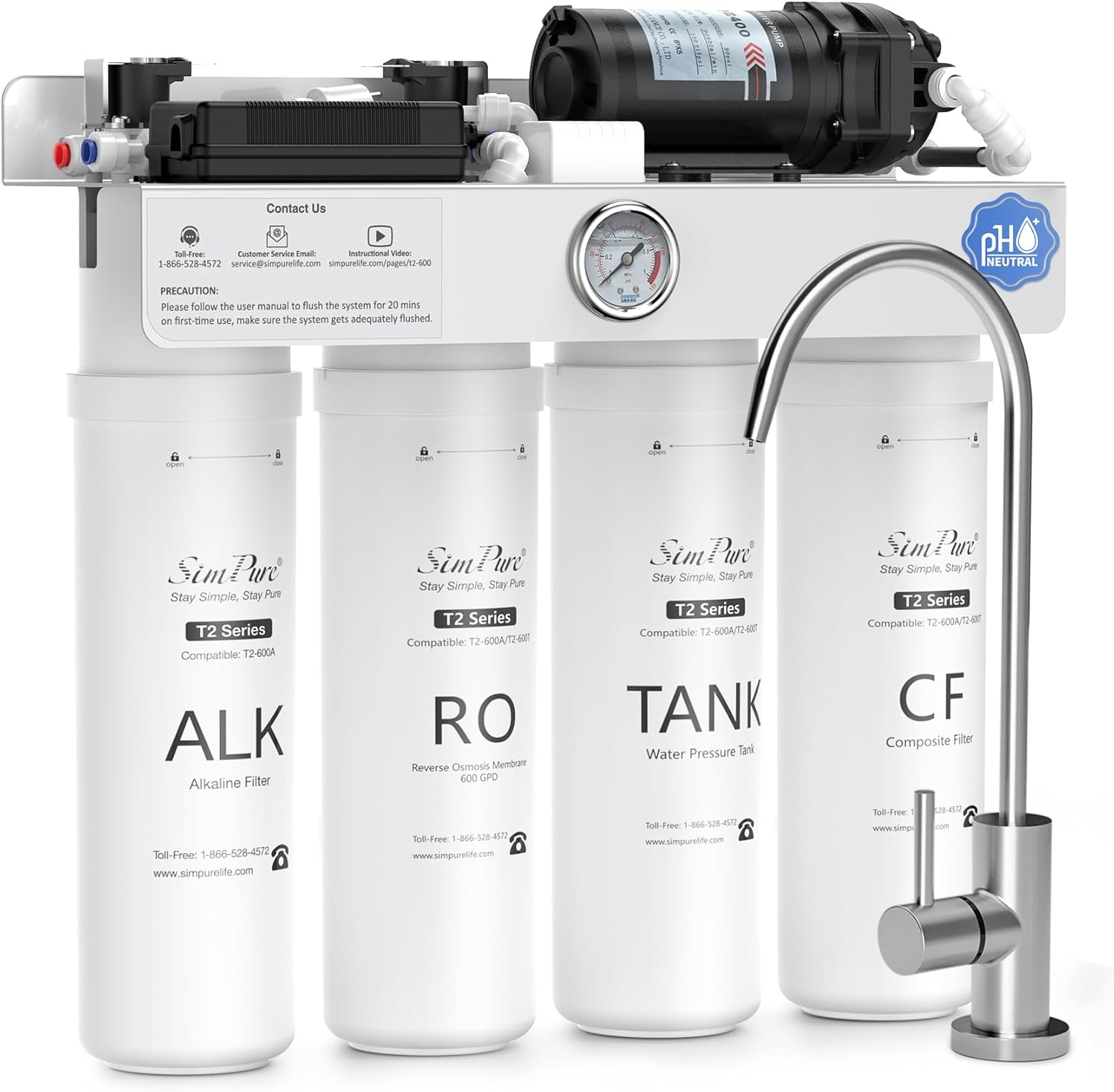
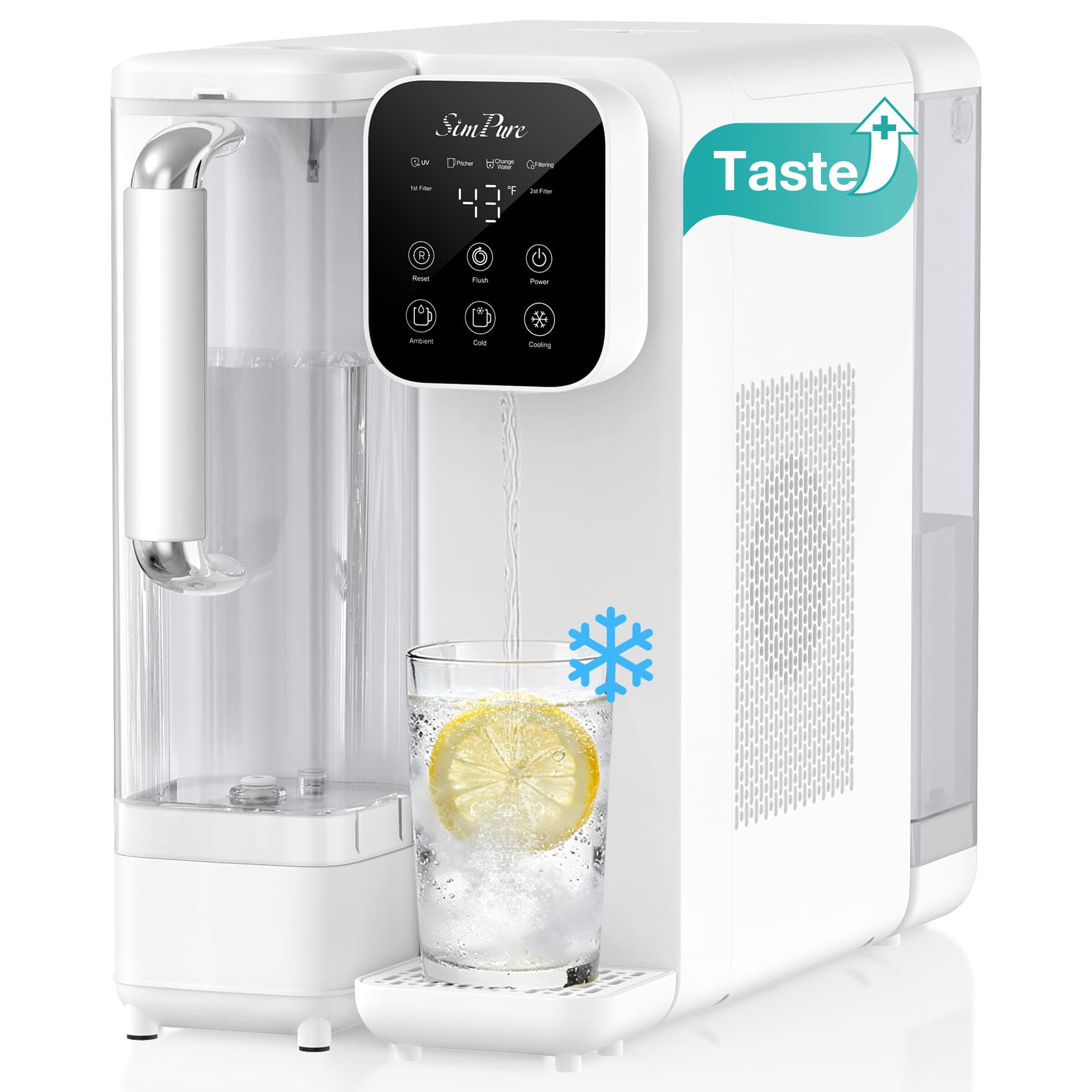
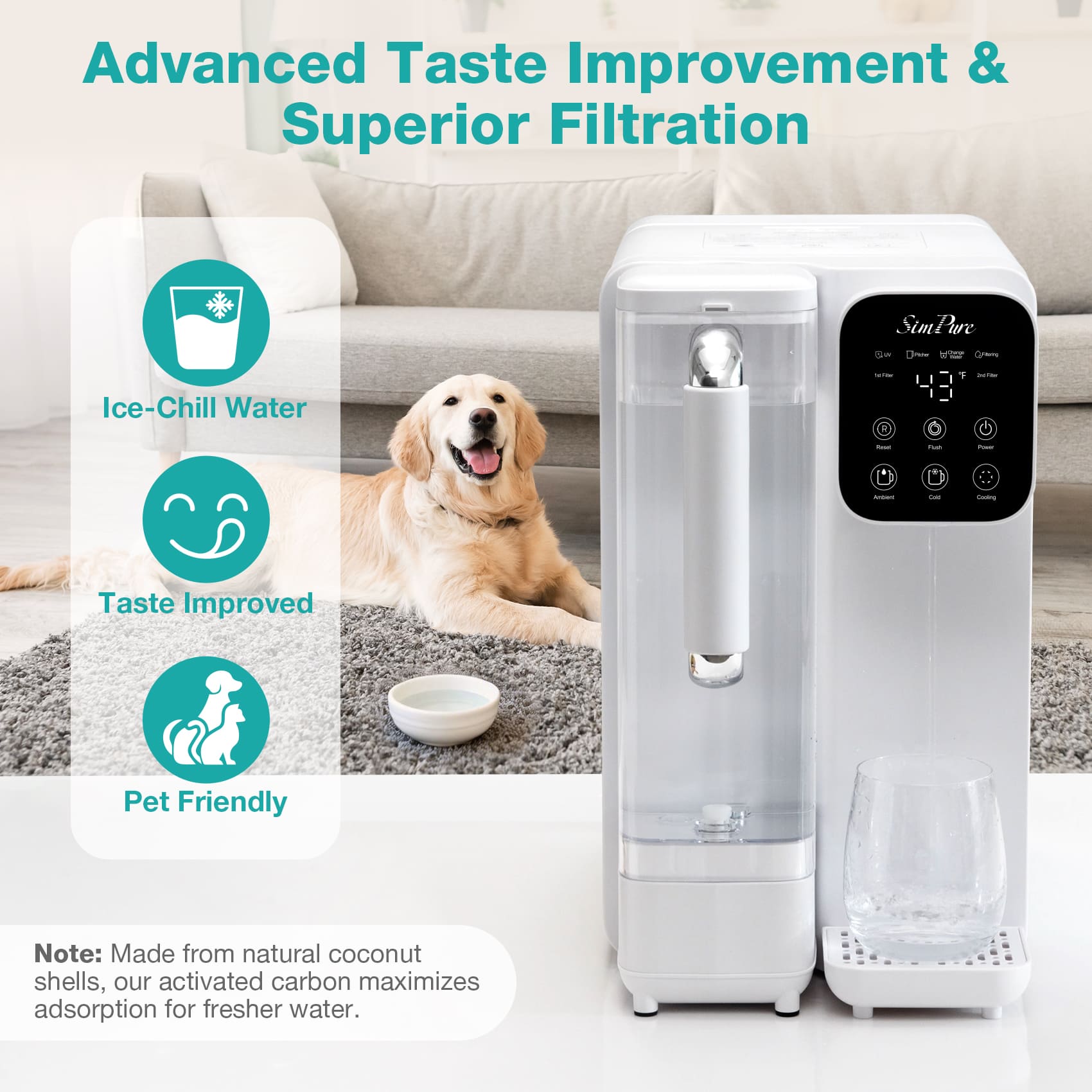
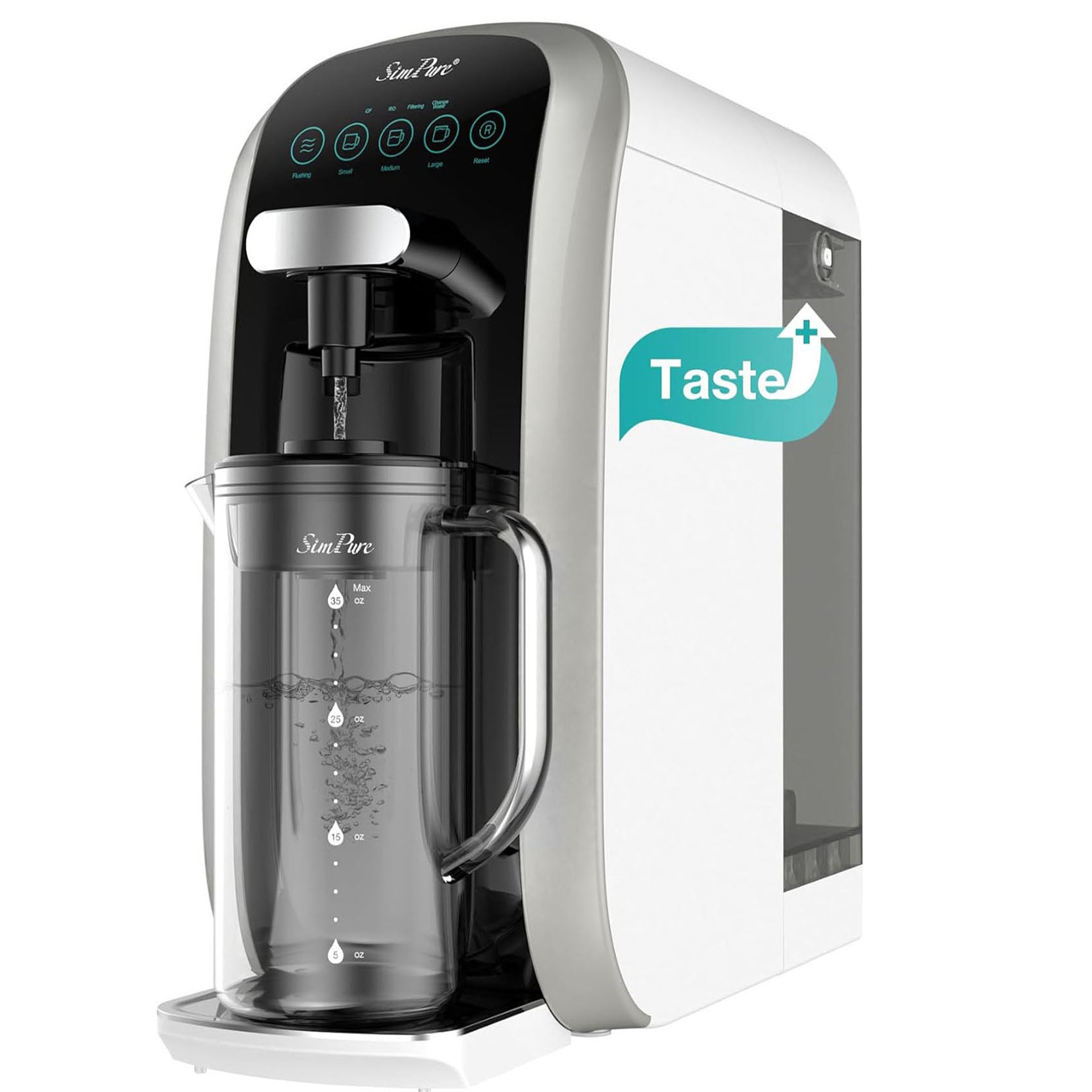
For households looking to improve drinking and cooking water, a countertop RO system like SimPure can provide an easier way to access filtered water without major changes to the kitchen.
The goal is not to create a complicated water setup.
It is simply to make everyday water more enjoyable.
FAQ
Why does my water leave white spots?
Most white spots are caused by minerals such as calcium and magnesium that remain after water evaporates.
Are white water spots harmful?
Usually, no. They are mainly a cosmetic issue and a sign of mineral buildup.
Can vinegar remove water spots?
Yes. Vinegar can help dissolve some mineral deposits on surfaces, but it does not change the mineral content of your water.
Does boiling water remove minerals?
No. Boiling does not remove most dissolved minerals from water.
Can reverse osmosis reduce water spots?
Yes. RO systems can reduce many dissolved minerals that contribute to water spots, especially in drinking water.
Final Thoughts
White spots may seem like a small household annoyance, but they are often a sign of what is happening inside your water.
Instead of constantly cleaning the same buildup, it can be helpful to understand the reason behind it.
Once you know what is causing the problem, choosing the right water solution becomes much easier.