With so much talk about clean water these days, you’ve probably heard about reverse osmosis systems. You might have heard the name tossed around, but what exactly does an RO system do? How do reverse osmosis systems work? Why is it so popular in homes today? If you're new to water filters or just curious, this simple guide will walk you through everything you need to know about how reverse osmosis systems work and why they’re a top choice.
Background: What Is a Reverse Osmosis System?
A reverse osmosis water system is a filtration technology that uses a semi-permeable membrane with microscopic pores (approx. 0.0001 microns) to allow pure water molecules to pass while blocking larger molecules such as dissolved salts, heavy metals, and bacteria. It acts as a super-fine molecular sieve, ensuring that only purified H2O reaches your glass.
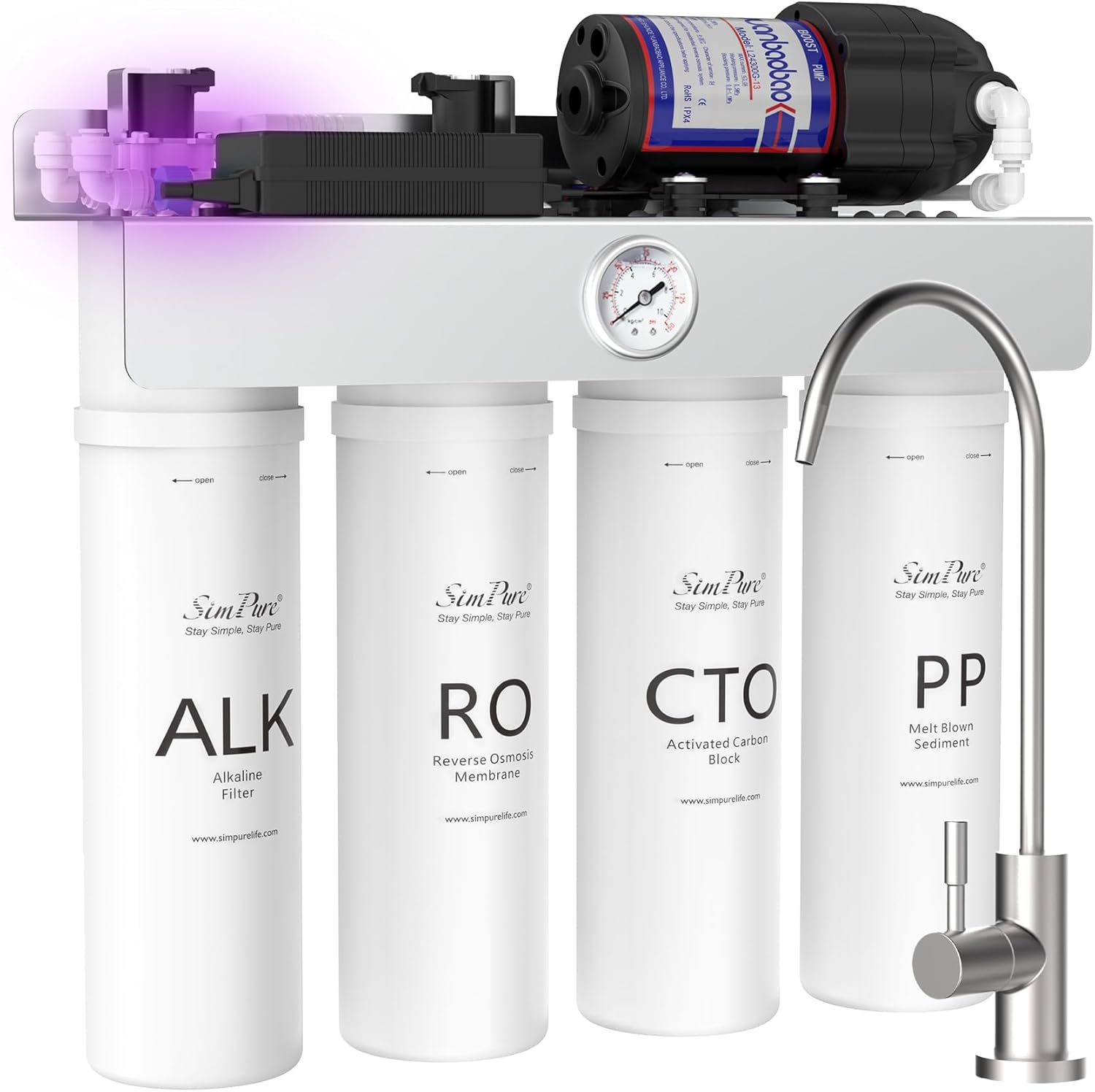
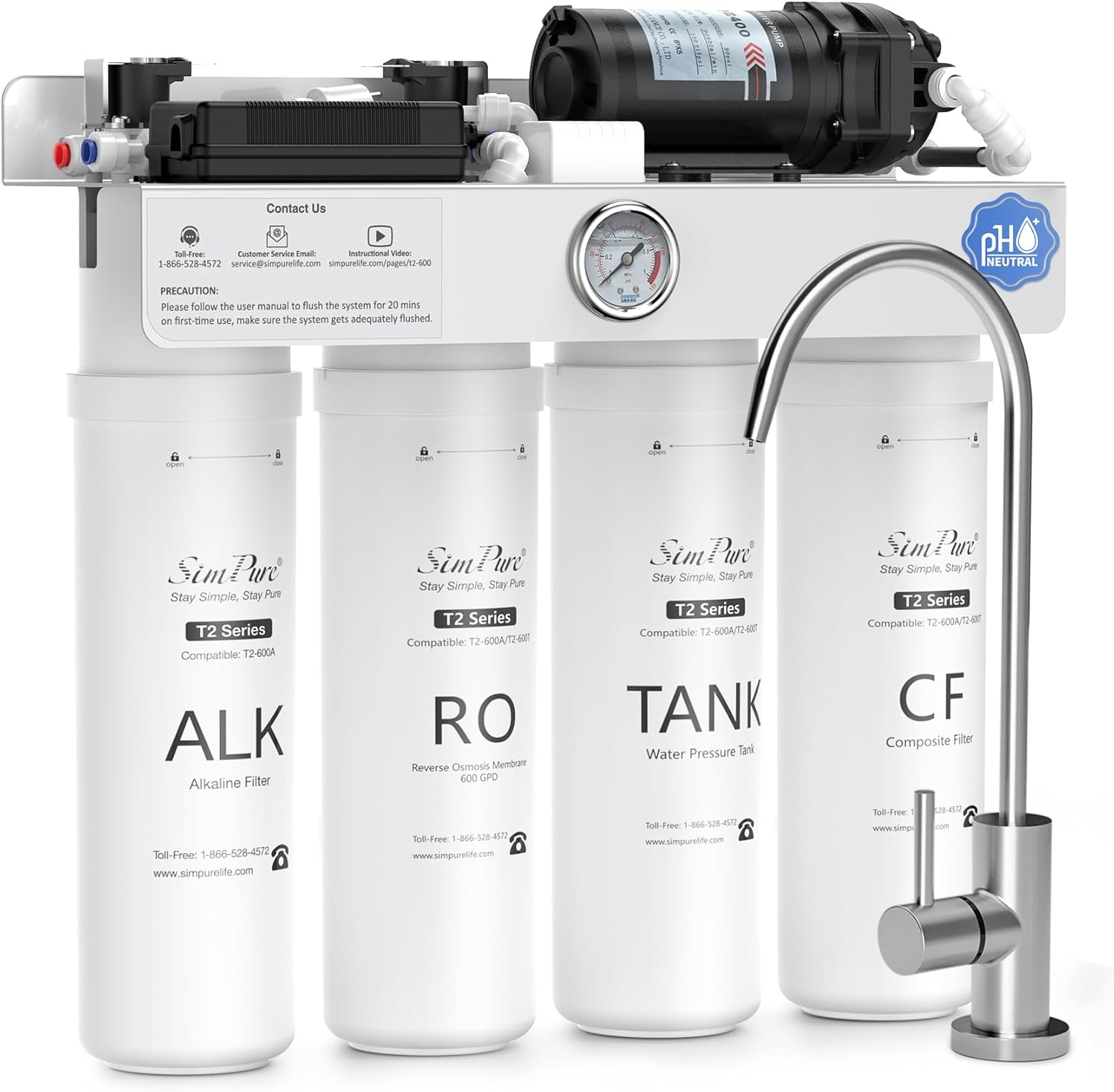
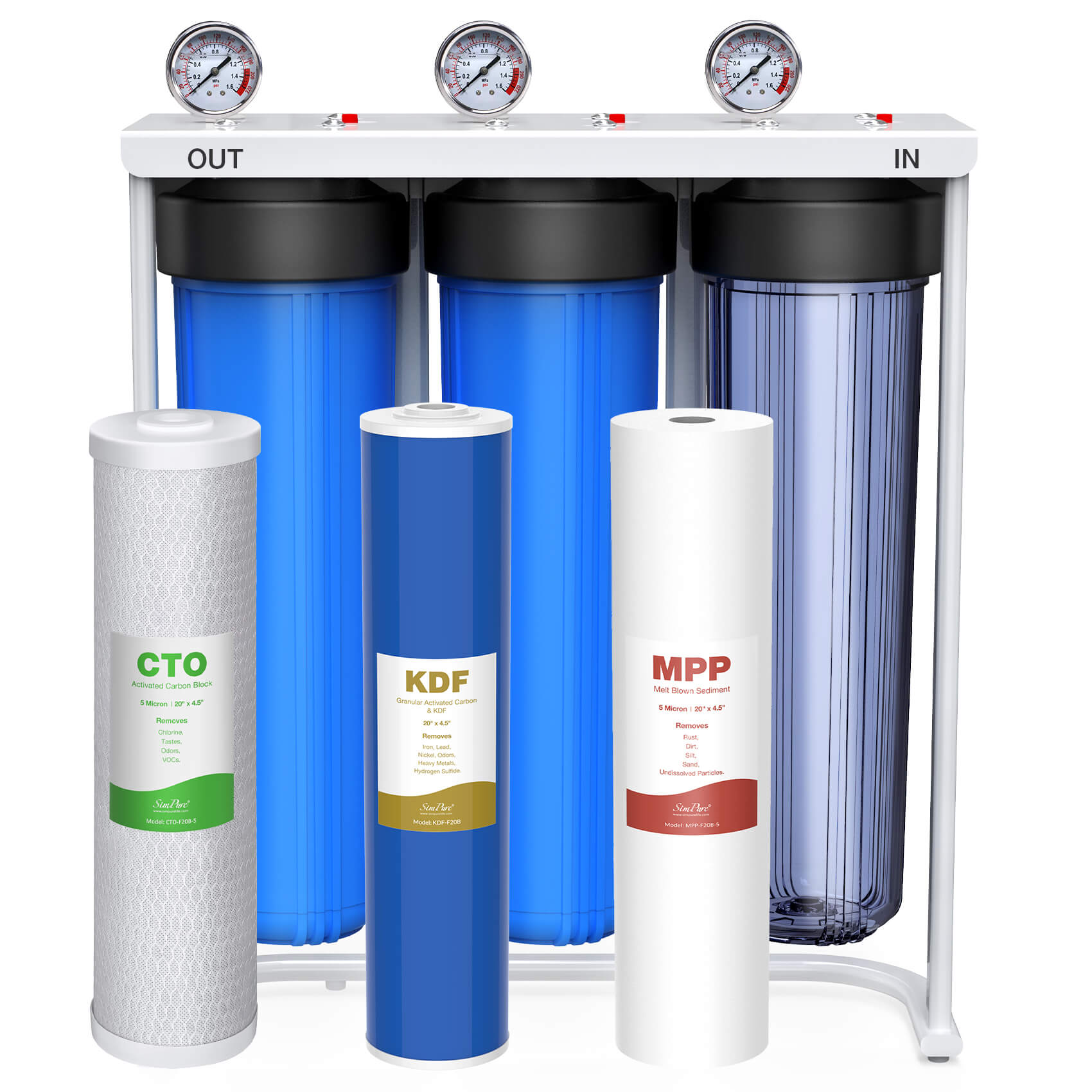
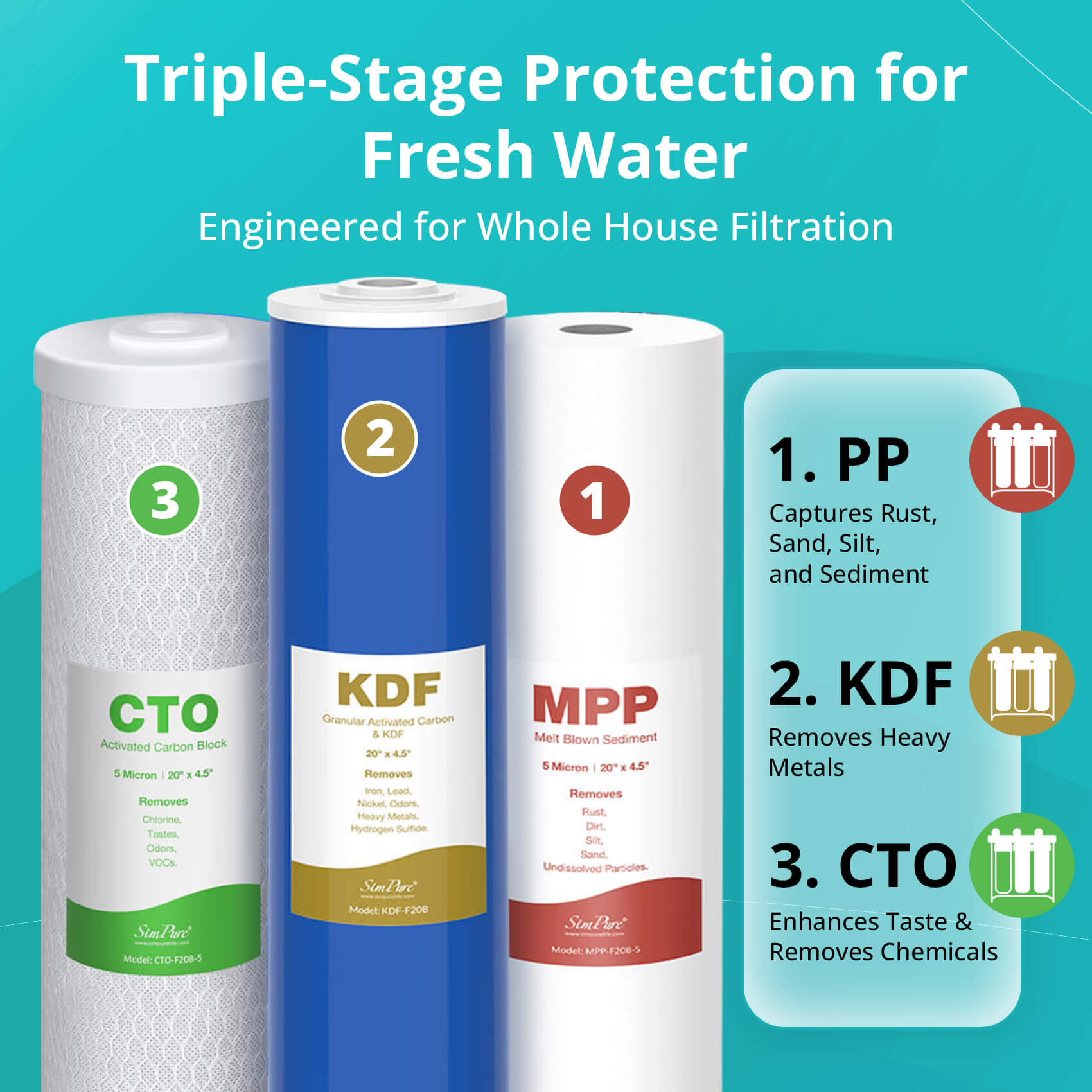
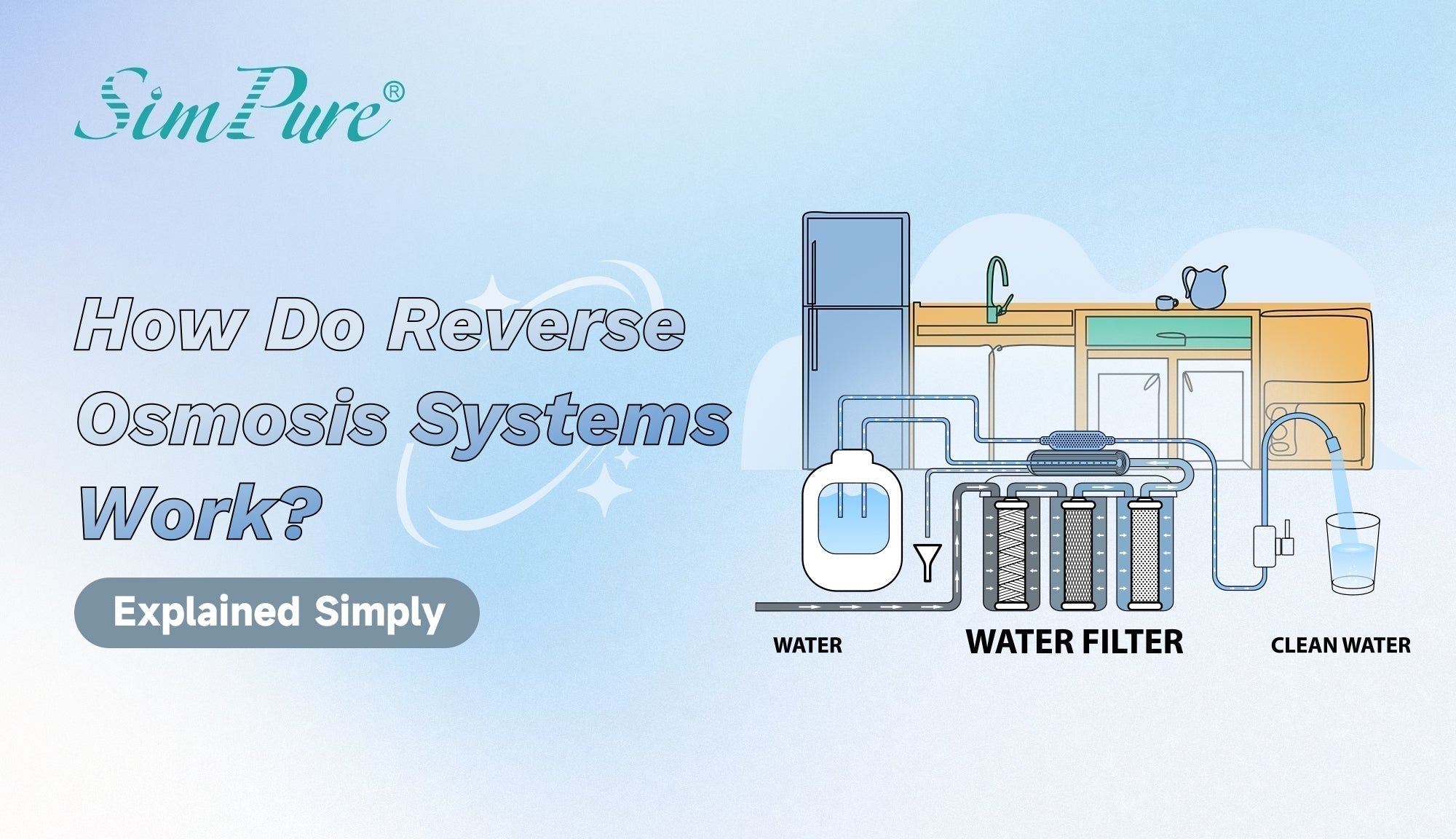
Imagine it like a super-fine sieve that catches everything you don’t want in your water. The system typically consists of several stages. First, large particles like sediment are removed. Then, the water flows through the RO membrane, which removes even smaller particles such as minerals, salts, and harmful chemicals. Finally, the filtered water goes through a post-filter to ensure a fresh, clean taste.
Function & Purpose: What Does a Reverse Osmosis System Do?
A reverse osmosis system is designed to purify water by stripping away up to 1,000+ types of contaminants. By forcing water through a synthetic membrane, the system physically separates clean water from unwanted substances, providing safe drinking water for cooking, hydration, and appliance longevity.
- Removes Contaminants: Filters out harmful substances like lead, arsenic, fluoride, and microplastics.
- Improves Taste and Odor: By removing chlorine, an RO system eliminates unpleasant smells and chemical aftertastes.
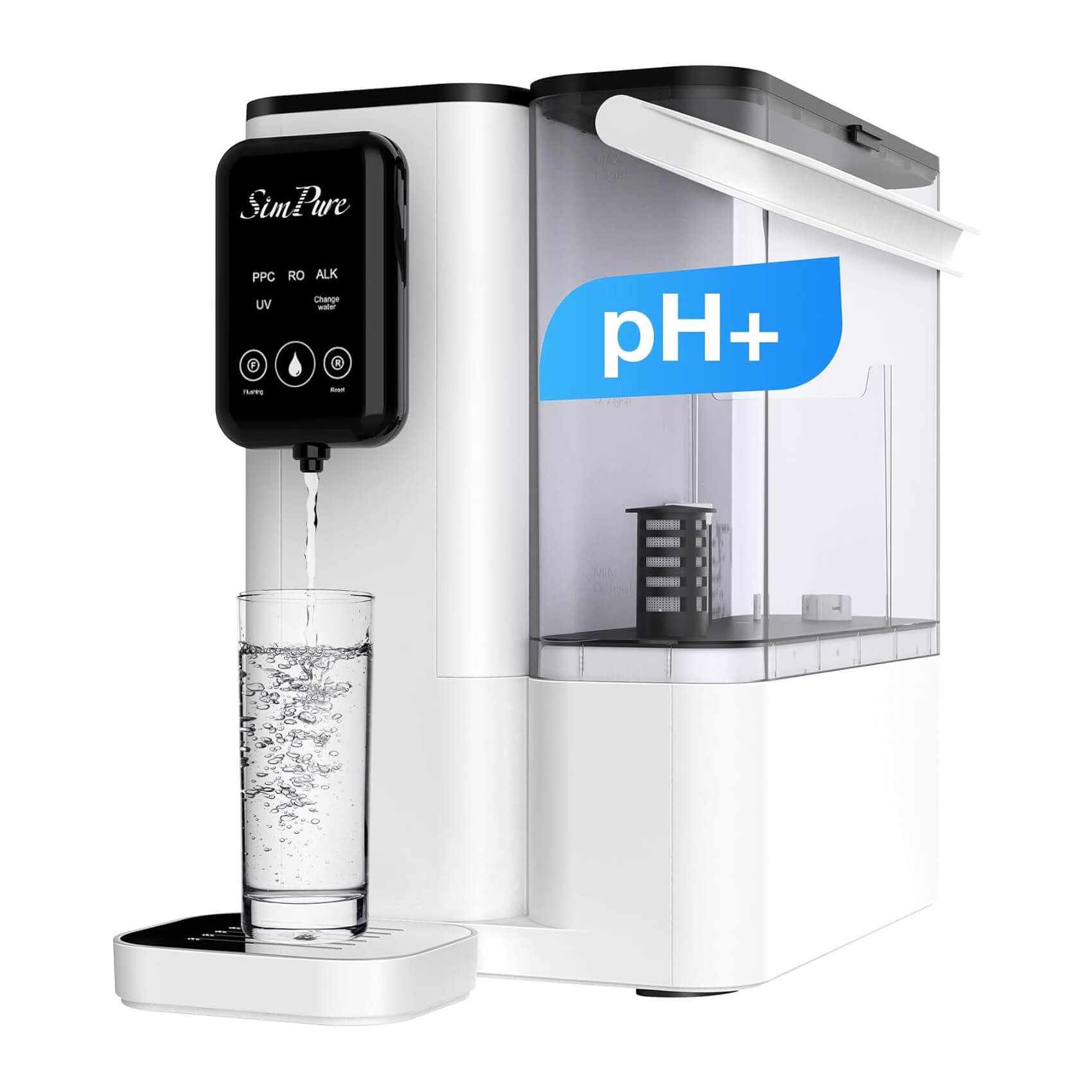
- Provides Healthier Water: Advanced systems now include remineralization to restore essential minerals like Calcium and Magnesium, ensuring a balanced pH (>7.5).
Work Principle: How Does Reverse Osmosis Work?
Reverse osmosis is the process of applying mechanical pressure to a concentrated solution to force water molecules through a semi-permeable membrane into a less concentrated area. This effectively "reverses" the natural osmosis process seen in nature, isolating pure water from its contaminants.
- Pre-Filtration: Removes sediment and chlorine to protect the RO membrane.
- Pressurization: Water is forced against the semi-permeable membrane using house or pump pressure.
- Separation: Only pure water molecules pass through the 0.0001-micron pores.
- Waste Flush: Contaminants are washed away, keeping the system clean and effective.
Imagine a sieve used to sift flour. When you pour flour through it, the sieve lets only fine particles pass while holding back larger pieces. Reverse osmosis works in a similar way. In nature, water tries to dilute high-salt areas. In an RO system, we use a pump to do the opposite: forcing the "dirty" salty water against a membrane so only the pure water molecules can squeeze through to the other side.
Efficiency: Do Reverse Osmosis Systems Work?
Reverse osmosis systems are the most efficient point-of-use water treatment available today. Their effectiveness is verified by rejection rates (how many contaminants are blocked) and the pure-to-drain ratio (how much water is saved during the process).
- 99% Rejection: Confirmed efficiency against heavy metals, fluoride, and microplastics.
- Eco-Friendly Ratios: Modern systems like the Y9A offer a 2.5:1 pure-to-drain ratio, far superior to traditional 1:4 systems.
- Energy Efficiency: RO operates on pressure rather than heat (like distillation), making it more sustainable for daily household use.
Case Study: How the SimPure Y9A 6-Stage RO Works
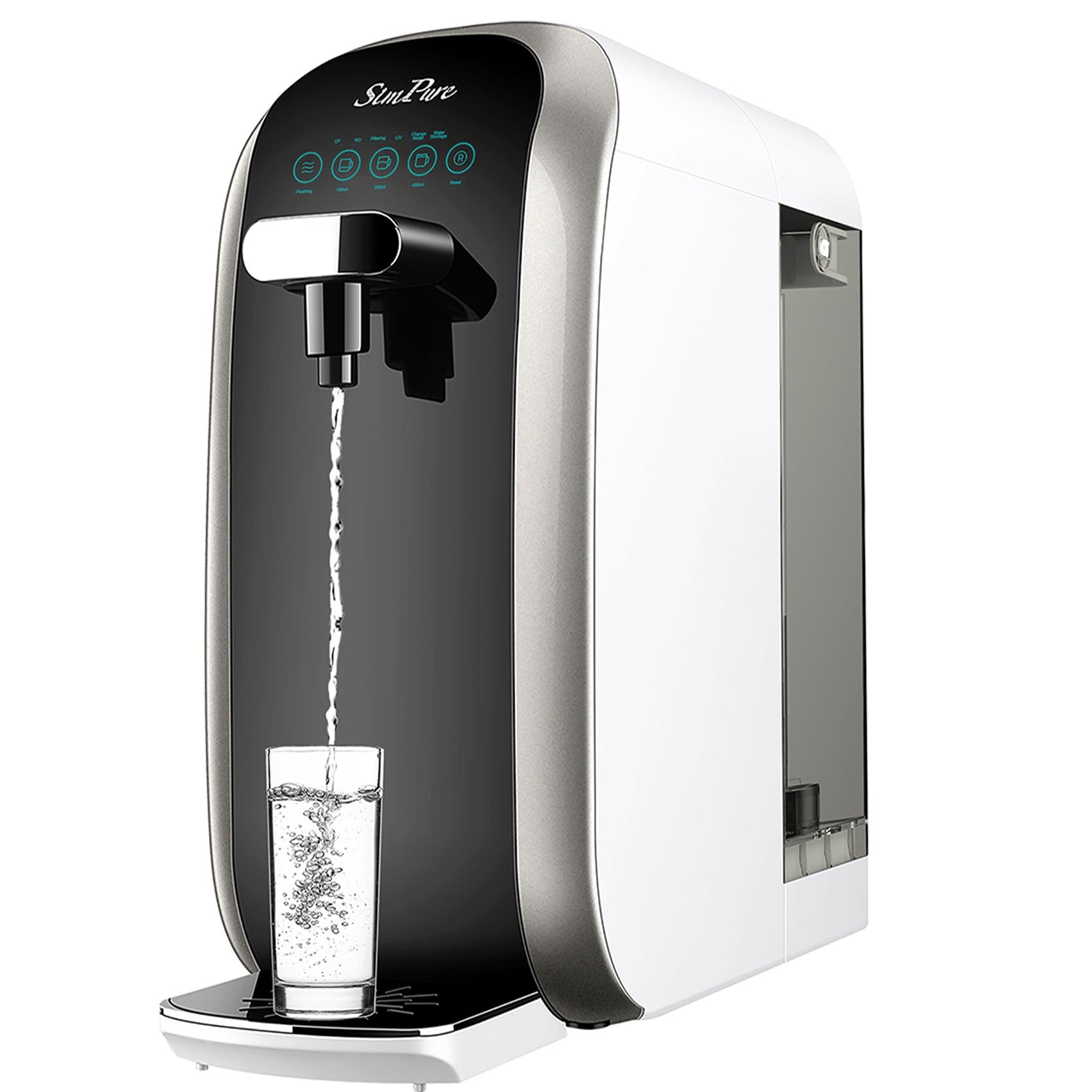
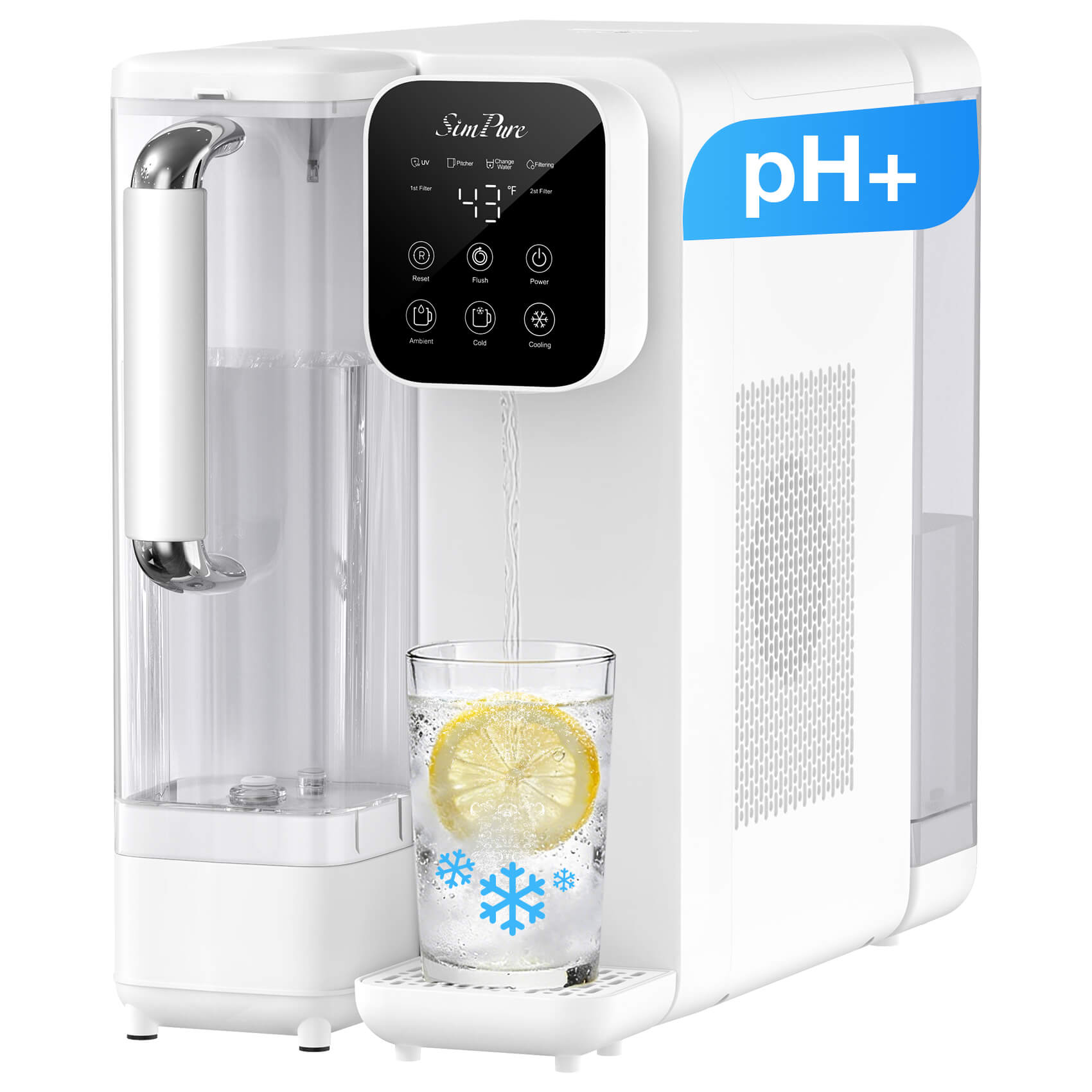
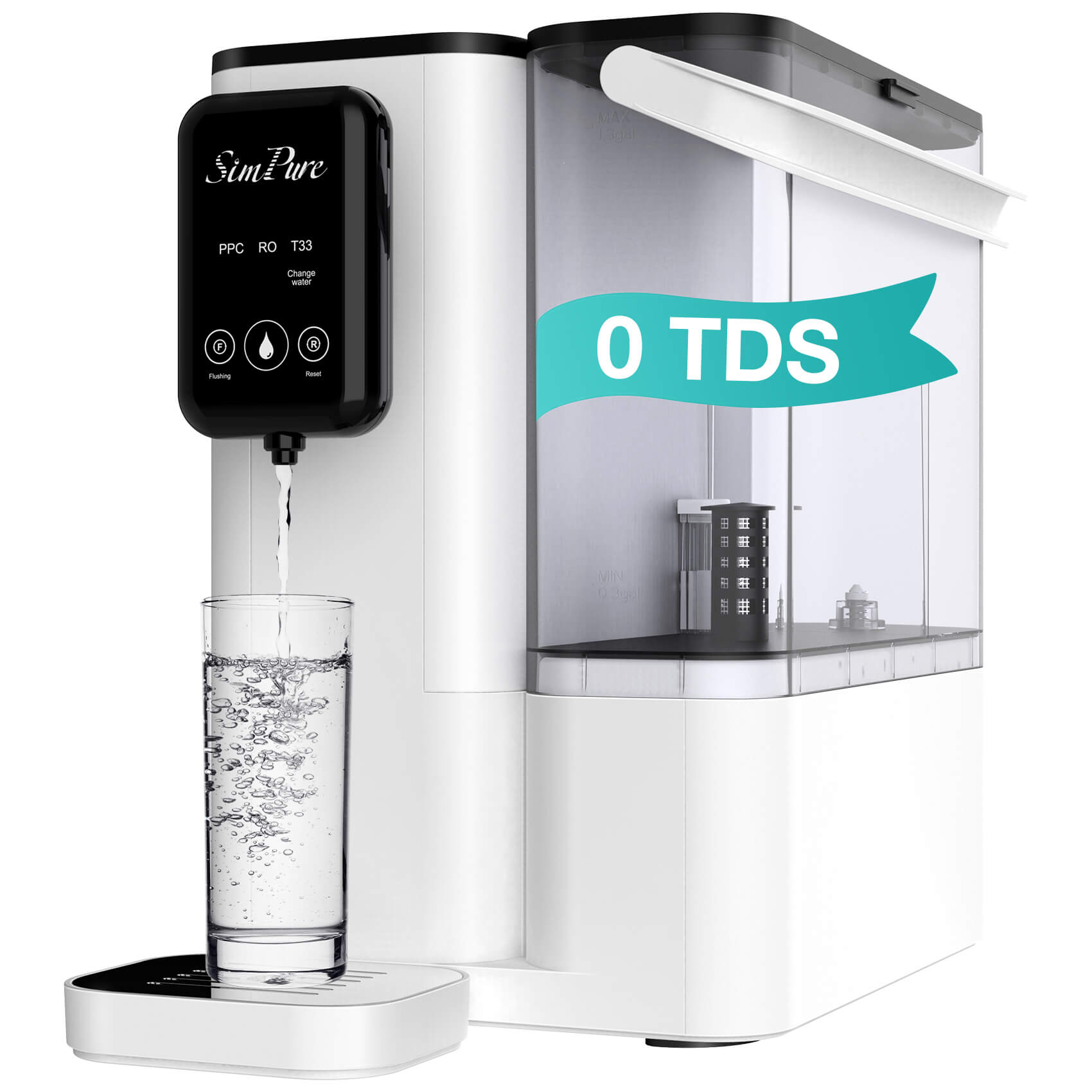
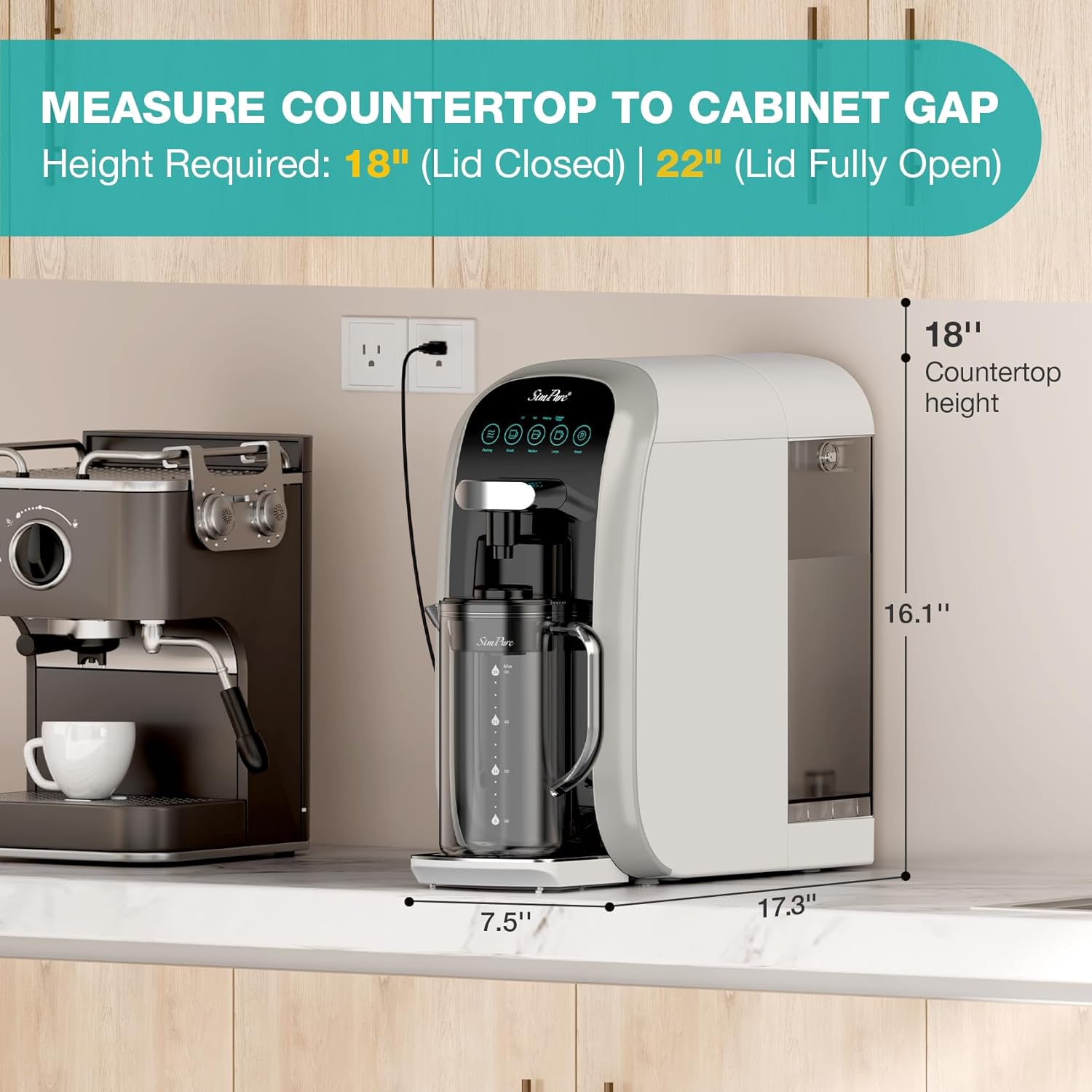
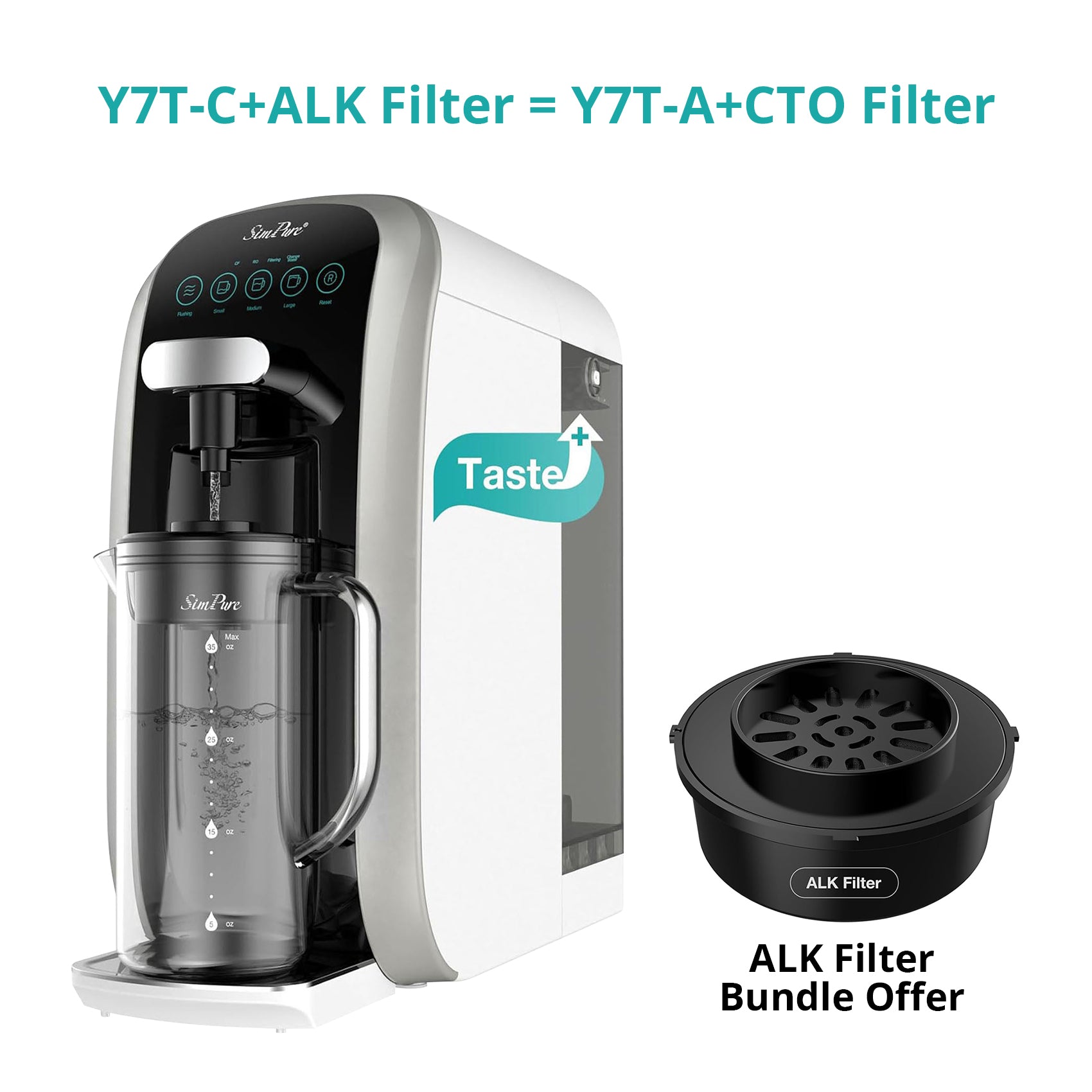
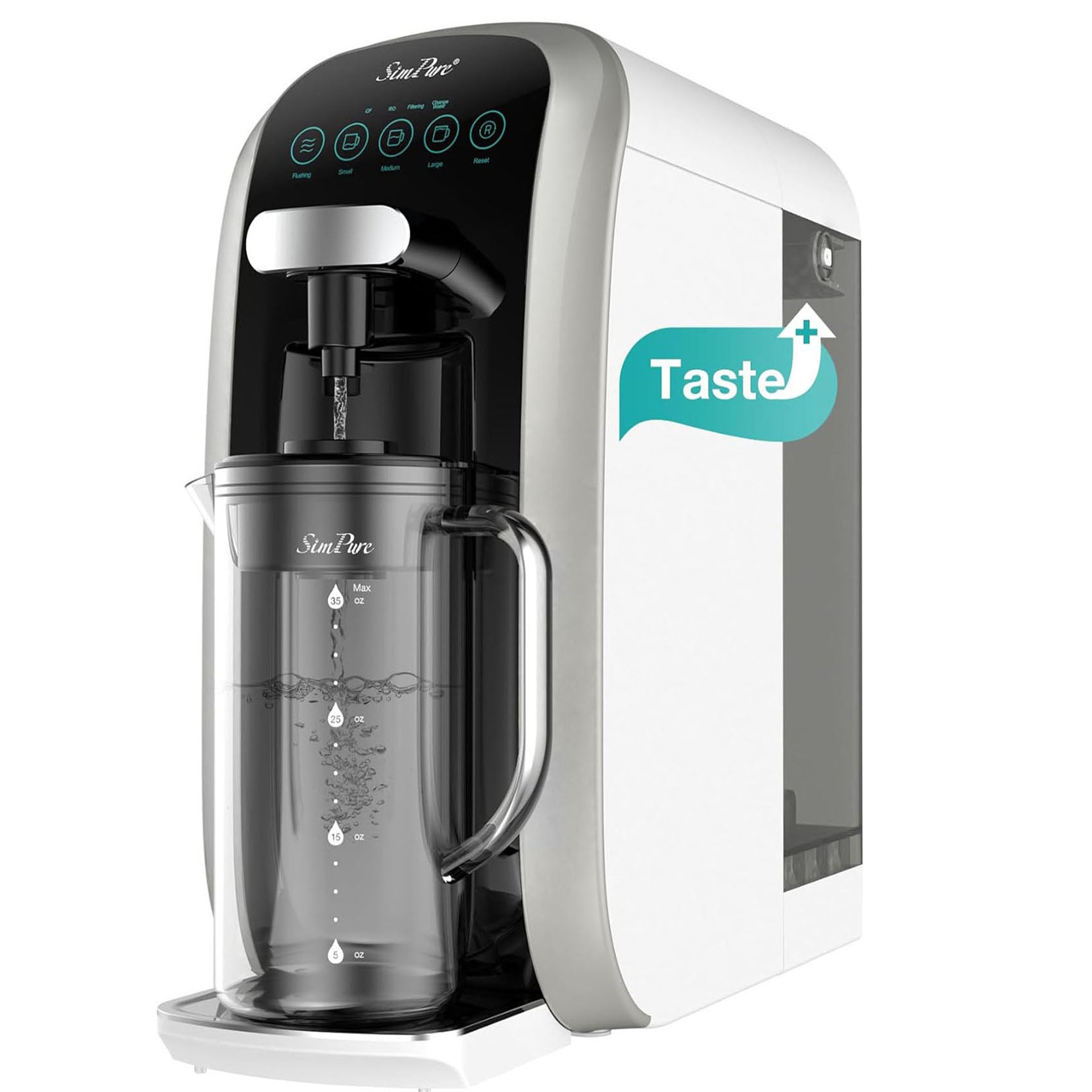
Our SimPure Y9A Countertop RO System serves as the perfect example of modern reverse osmosis efficiency. Unlike traditional under-sink units, it integrates a high-flow 300 GPD membrane with a 6-stage purification process to deliver instant, mineralized water.

6-Stage Alkaline RO System
- High Capacity: 300 GPD (fills 6oz glass in 12 seconds).
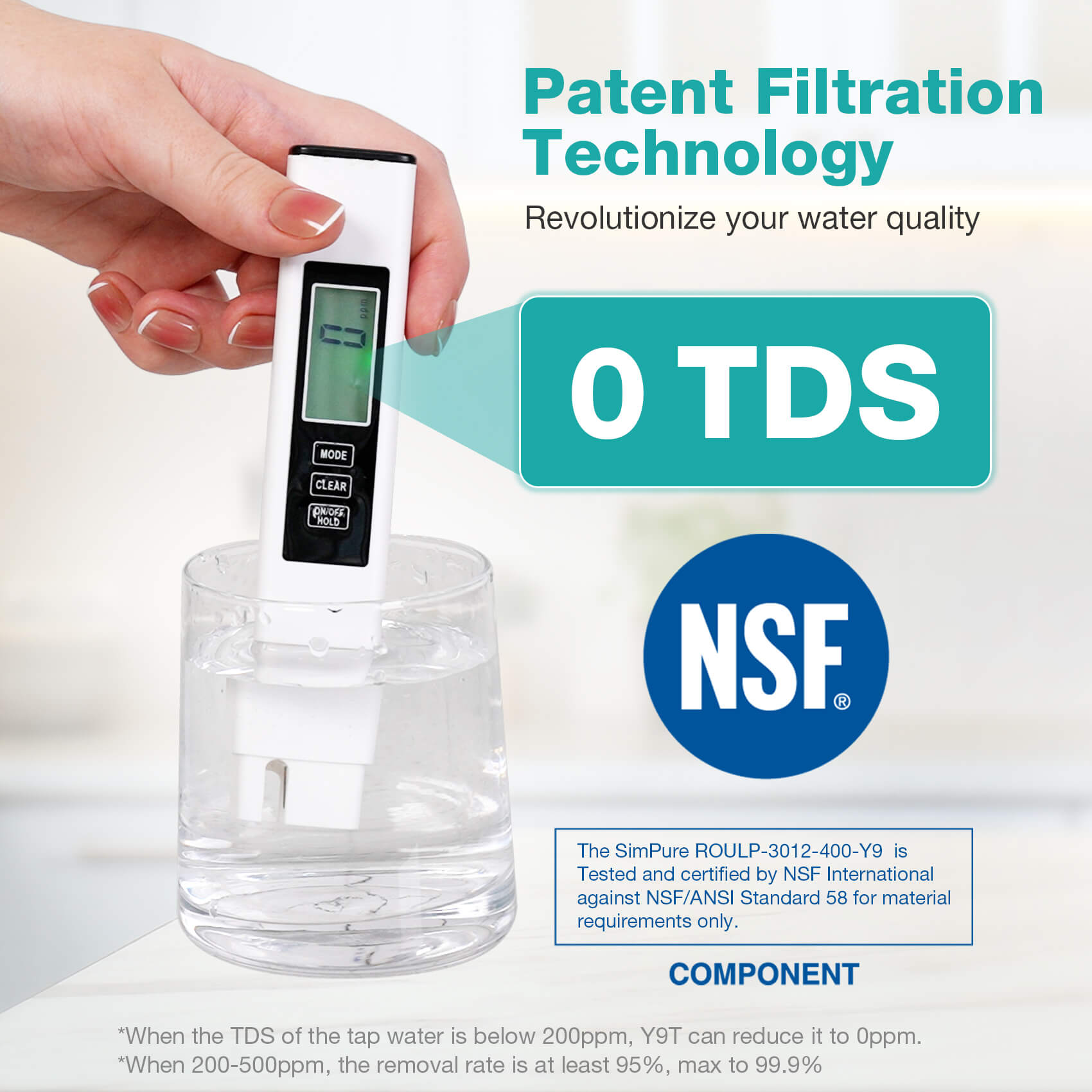
- Pure Performance: Removes 99.98% TDS & 99.09% PFAS.
- Healthy Balance: Restores Ca, Mg, and K for pH >7.5.
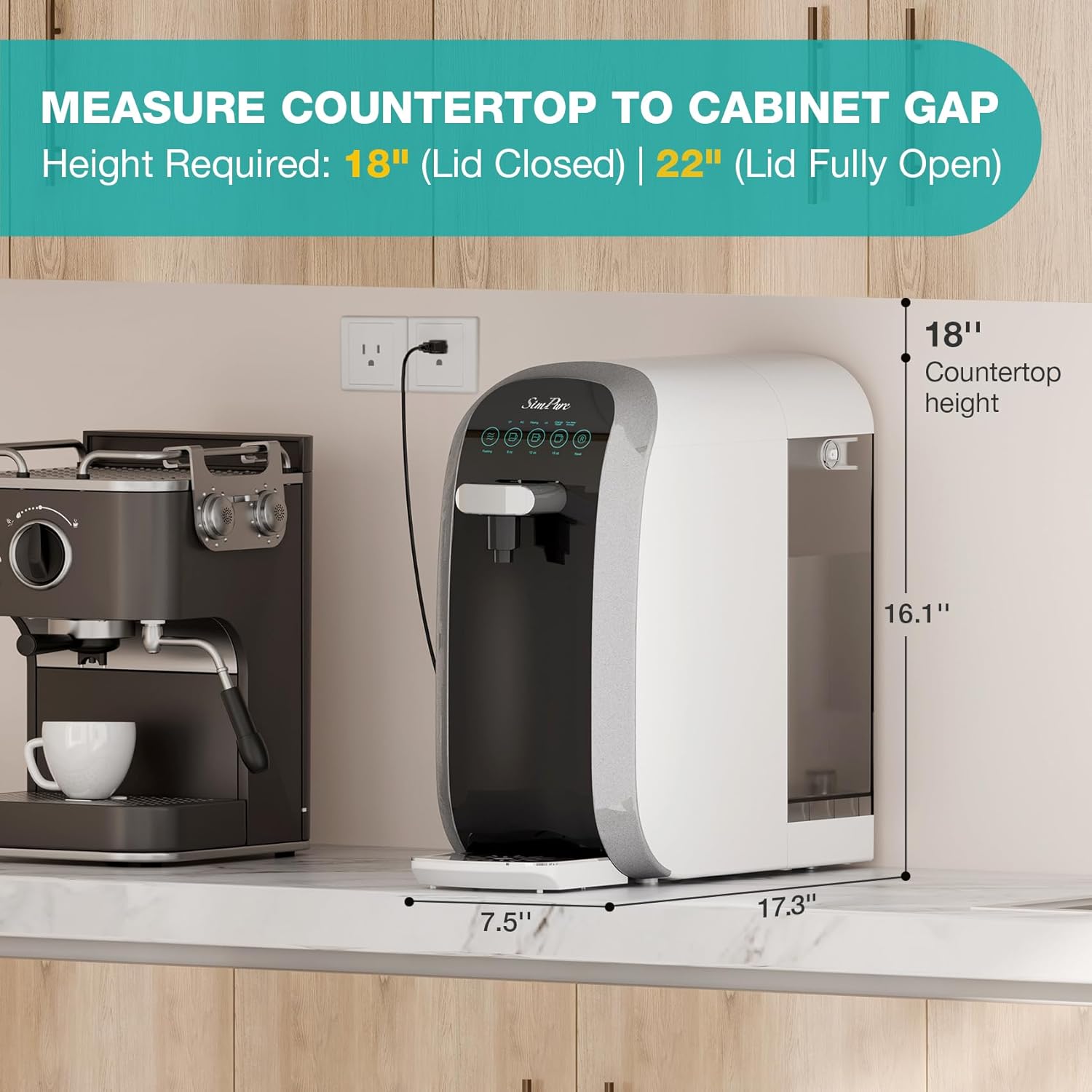
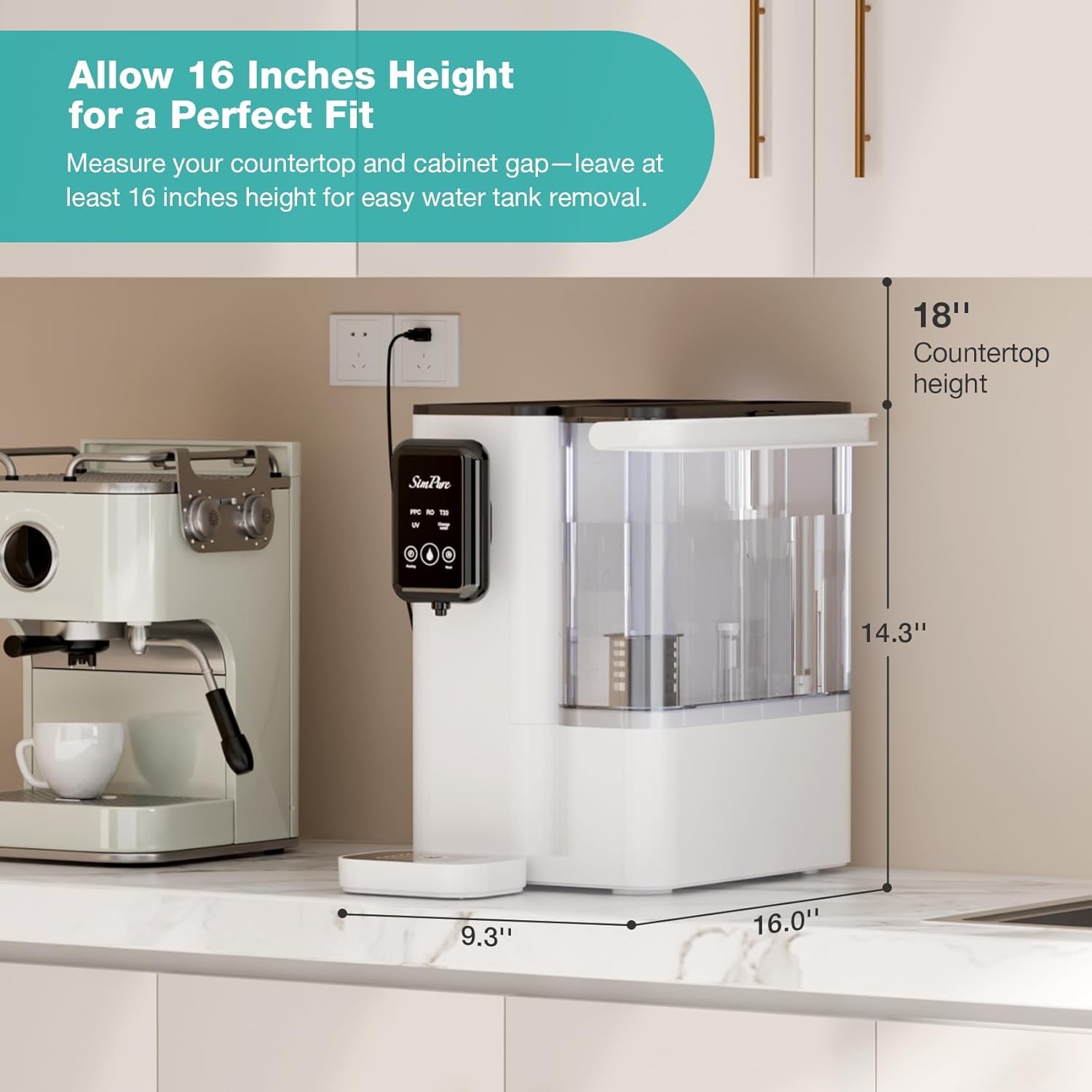
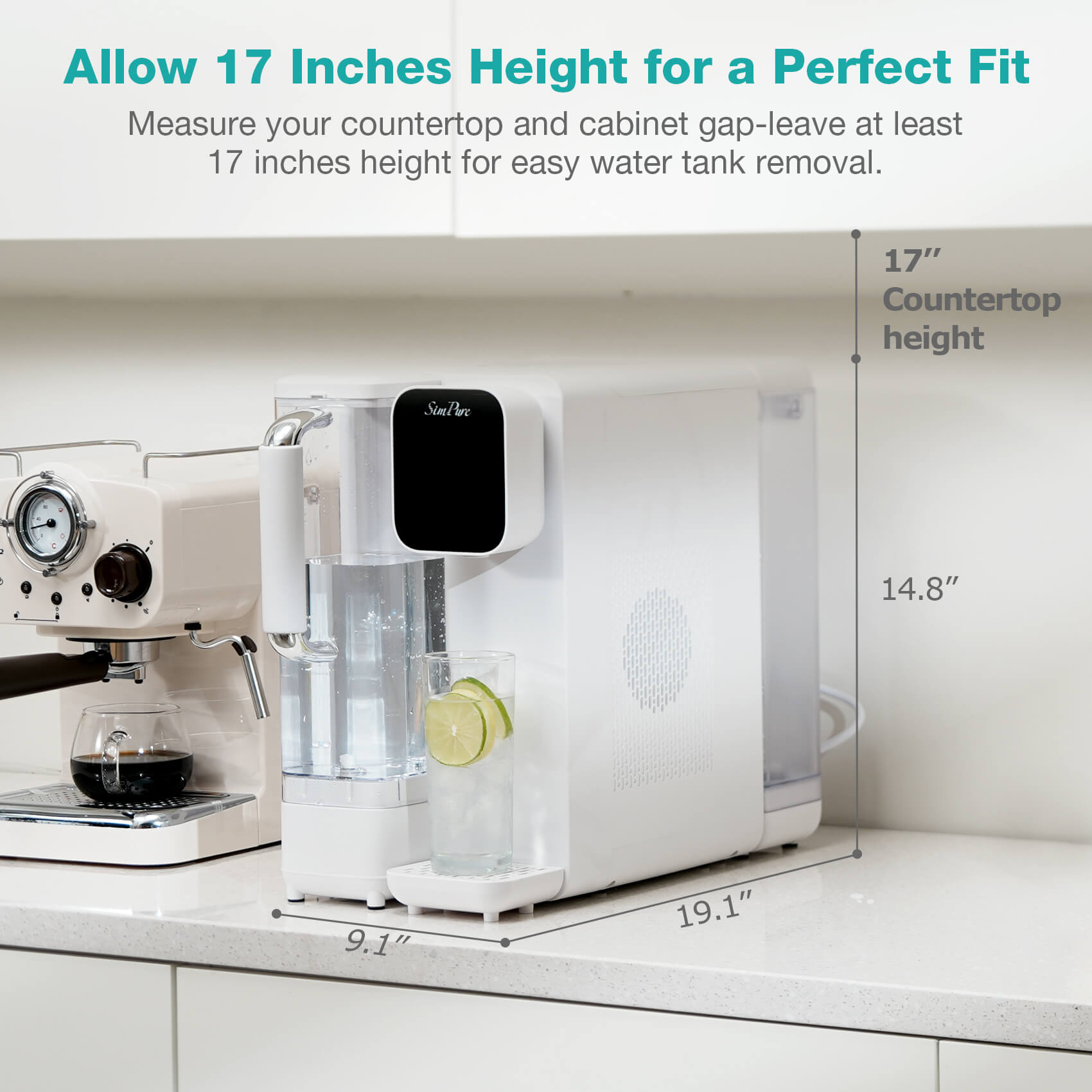
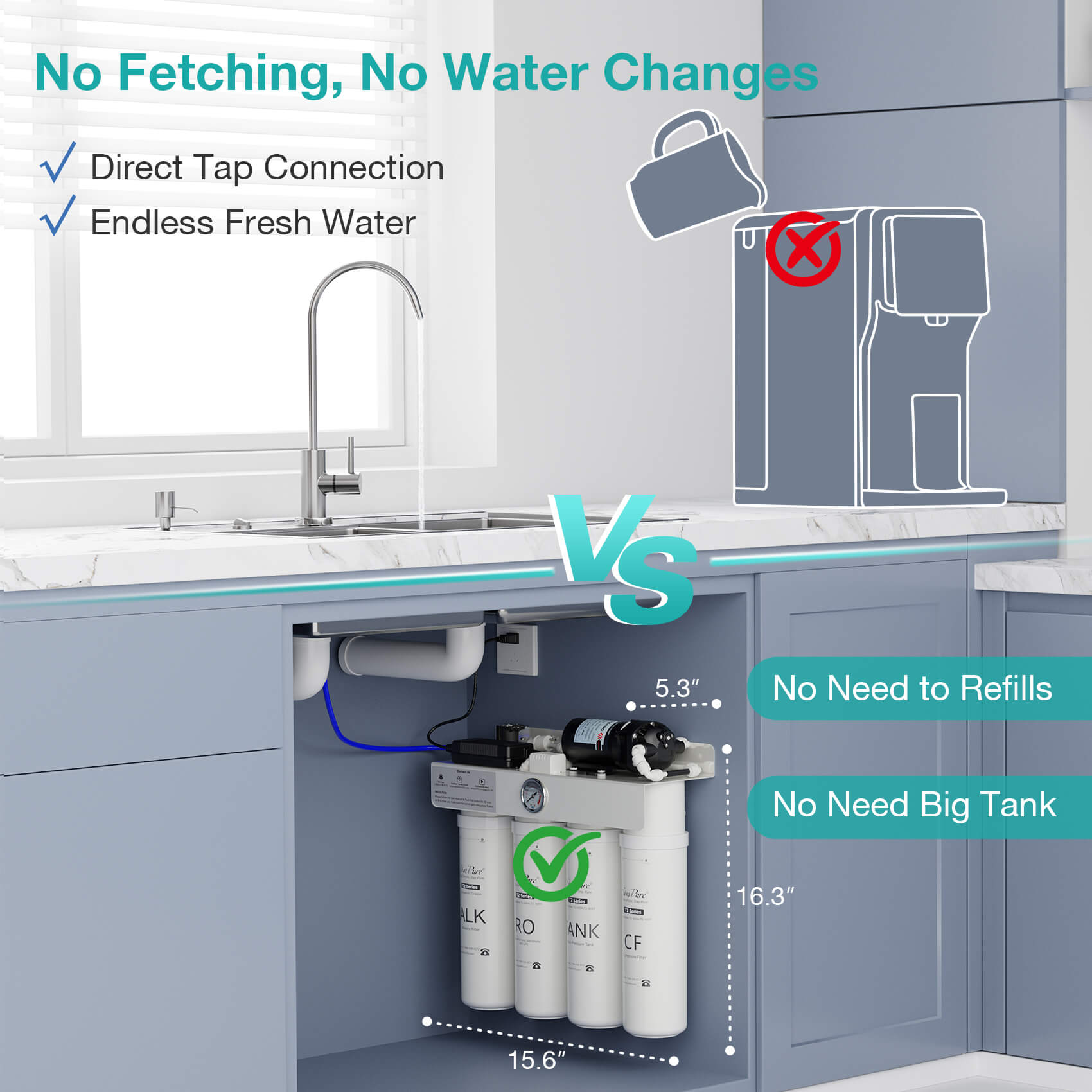
- Zero Installation: Just plug in and use (Side Feed Tank).
In the Y9A system, the process starts with PP and Carbon filtration to remove sediment and chlorine. The core is the 300 GPD RO Membrane, which handles the heavy lifting of stripping metals and toxins. Finally, an Alkaline filter adds beneficial minerals back into the water, while Sterilization light ensures 99.99% elimination of bacteria, providing a multi-barrier approach to purity.
Technical Comparison: RO vs. Other Systems
| Metric | SimPure Y9A (RO) | Standard Pitcher | UV Purifier | Distillation |
|---|---|---|---|---|
| TDS Removal | >99.98% | <10% | None | 99% |
| PFAS & Lead | Yes (Certified) | No | No | Yes |
| Speed | 300 GPD (Fast) | Slow | Instant | Very Slow |
| Healthy Minerals | Yes (Remineralized) | Partial | Yes | No (Stripped) |
FAQs on Reverse Osmosis
A: Basic filters are effective for chlorine and taste but cannot remove dissolved solids (TDS), heavy metals, or viruses. Only RO provides molecular-level purification.
A: For the Y9A, PPC and ALK filters should be replaced every 6 months, while the RO membrane lasts up to 9 months depending on water quality.
A: No RO system is waste-free as the membrane must "flush" away contaminants. However, the Y9A's 2.5:1 ratio is among the most efficient on the market.
Ready for Fresh Water?
Join over 100,000+ families drinking safer water with SimPure technology.
Shop SimPure RO Systems - Special Offers