
Drinking water is an important thing when hiking or traveling outdoors, especially in the hot summer. The gravity based water purifier is a good choice for you to get clean water at a low cost. If you don't know much about gravity based water purifier systems, just keep reading.
What Are Gravity-Based Water Purifiers?

Gravity based water purifier is a drinking water purification tool that is convenient to carry around when engaging in outdoor activities. It does not need to be installed on the faucet, no tap water pressure is required. It only requires you to get the water into the water bag, then the gravity-based water purifier can immediately purify the outdoor rainwater, stream water, river water, lake water, and other natural water into sterile, no suspended pollutants and other harmful substances, which can be directly consumed and safe to drink.
Also, a gravity based water purifier is also the best choice for soldiers, outdoor workers, travel, adventure, mountaineering, hiking, camping, fishing, hunting, and other outdoor enthusiasts to get safe drinking water when engaged in outdoor activities. It can avoid the tiredness of carrying a large amount of drinking water with you, and avoid diarrhea, vomiting, fever, and other diseases caused by drinking unclean drinking water; At the same time, it is also an emergency water purification equipment to ensure the safety of drinking water when natural disasters such as earthquakes and floods occur.
How Does Gravity Based Water Purifier Work?

Gravity fed water purifier is a portable water filter that relies on gravity to automatically filter water. The oversized water storage bag and virus-grade filtration precision make it a water artifact for wild adventures, hiking, and camping trips. Just hang your hydration bag and let Earth gravity do the work. All you need to do is to hang the gravity bag on a high place such as a tree and connect the water source to the straw, which is very convenient.
Is Gravity Based Water Purifier Good?

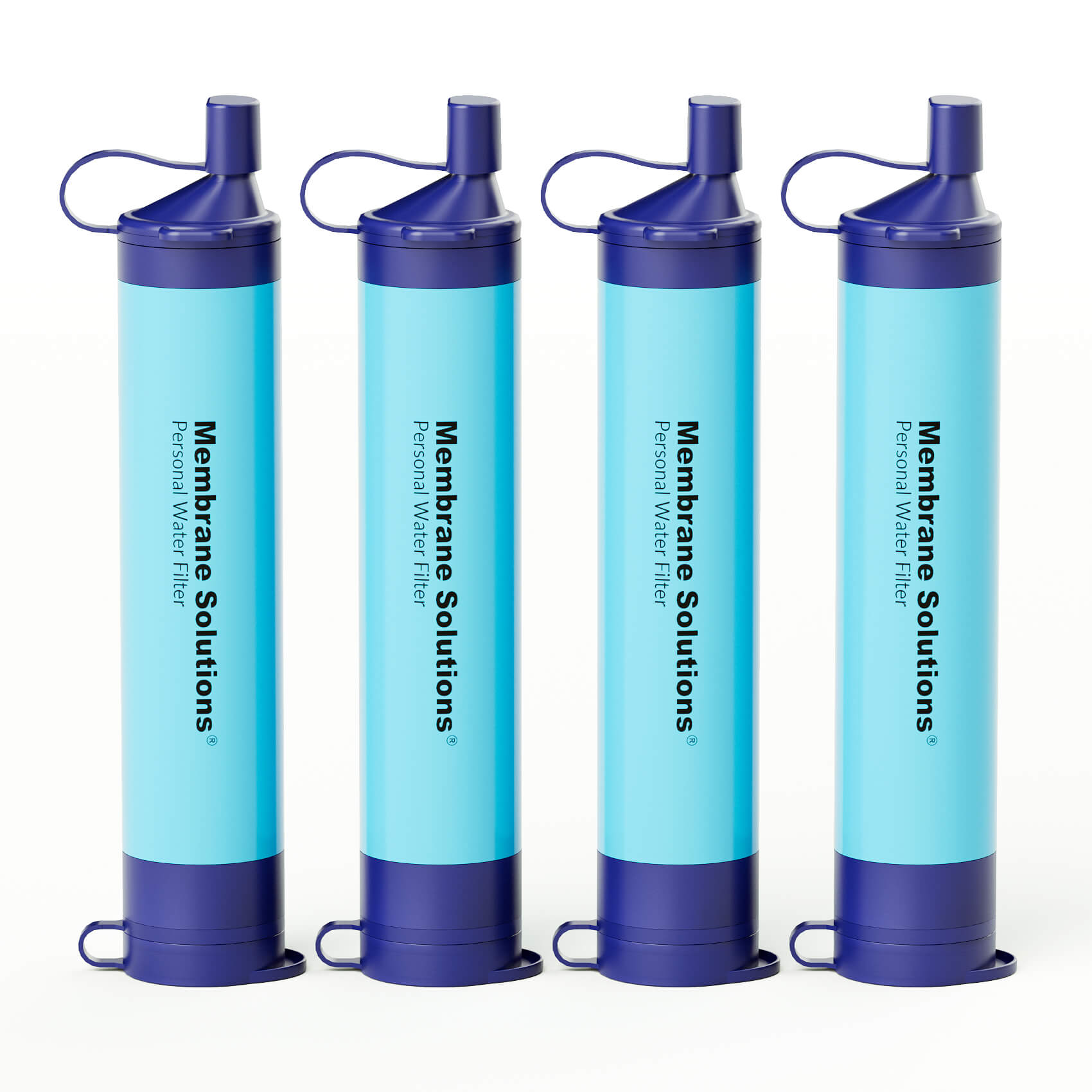
Yes, a gravity fed filter system is extremely good. Generally speaking, the gravity based water purifier system consists of a gravity water bag and a life filter straw. It is lightweight, easy to use, ultra-inexpensive, and does not require electricity. The water filter straw of the gravity based water purifier system can filter out the particulate matter with a 0.1-micron hollow fiber ultrafiltration membrane, coconut shell GAC filter, and double PP fiber filter. It can totally filter out the pathogens such as bacteria and protozoa, Giardia, and Cryptosporidium. The water filter straw is an ideal tool for multiple purposes such as backpacking, hiking & camping, and traveling, and also a good companion for fishing, hunting, and natural disaster emergency preparedness.
Is Gravity Based Water Purifier Safe for Health?
Of course, a gravity based water purifier is safe and good for your health than directly drinking unpurified water. Gravity-based water purifiers come in various grades - those that will take dead mice out of the water, and those that will remove grains of sand, etc, bacteria, and salt molecules. However, it should be noted that the water filter straw cannot filter out the virus, so you'd better boil the water before drinking. If you want a lightweight, simple carry-on filter at a reasonable price, then the gravity based water purifier system is your best choice.
What is the Best Gravity Water Filter System?
SimPure gravity based water purifier is the best outdoor water filtration product designed for outdoor enthusiasts to easily solve the problem of using clean and safe water outdoors. Simpure is a sub-brand of Membrane Solutions, Inc., established in 2006 in Washington, USA. Simpure brand is dedicated to providing people around the world with high-quality products to truly purify their drinking water & air quality. With advanced safety filtration technology and lightweight design, simpure gravity fed water purifier products are perfect for camping, hiking, biking, mountain climbing, backpacking, hunting, skiing, or any other outdoor activity you enjoy. Here are the best 3 recommended gravity water purifiers.
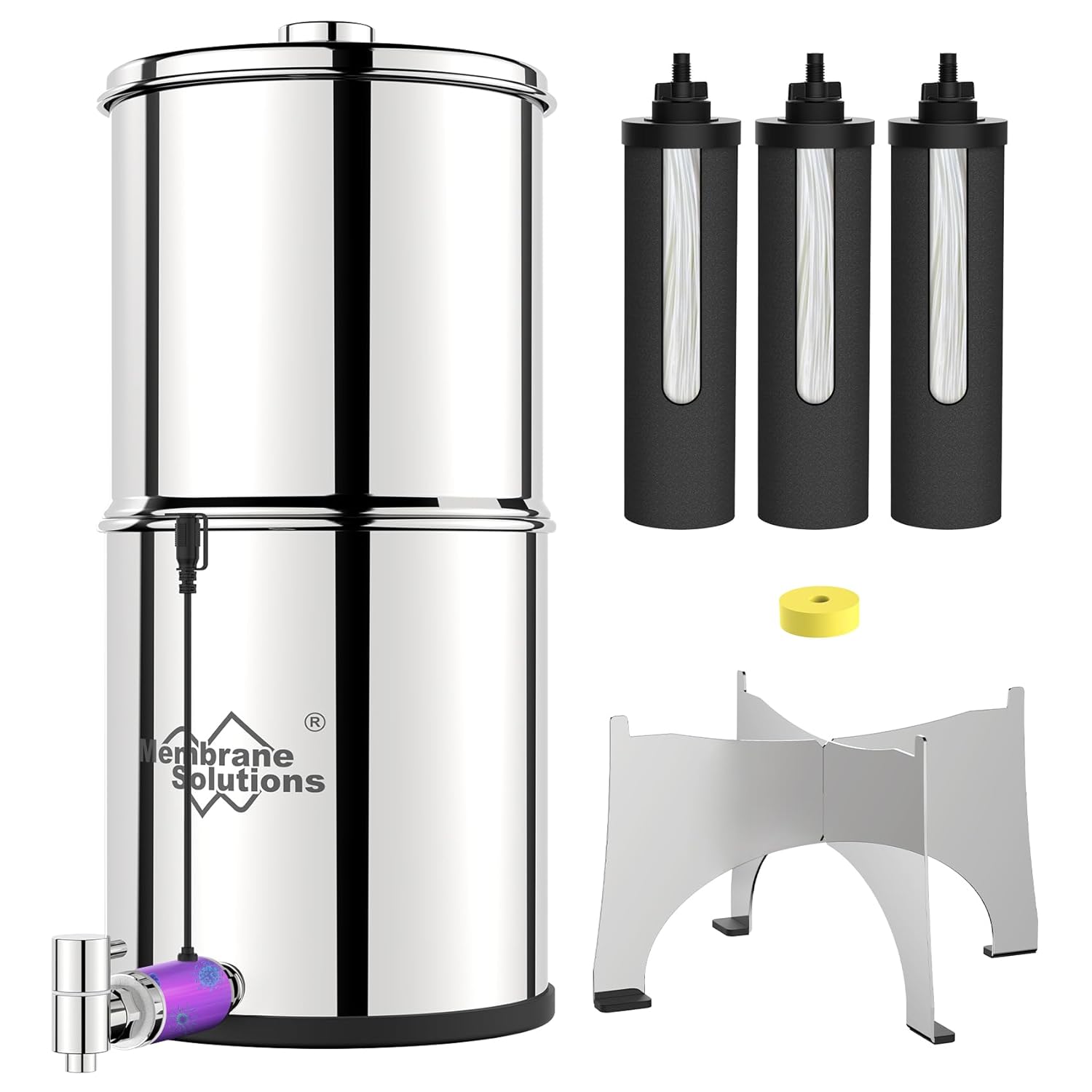
1. Membrane Solutions U3P UV Stainless Steel Gravity Water Filter 2.25 Gallons
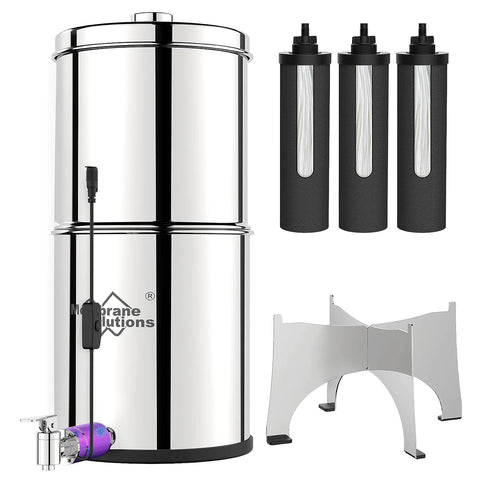
Membrane Solutions U3P UV Countertop Stainless Steel Gravity Water Filter is your top choice for pure and safe drinking water. With its advanced 3-stage filtration technology, including a 0.1μm hollow fiber UF membrane, a 1μm activated carbon block filter, and an innovative UV sterilization module, the U3 eliminates over 1,000 contaminants, including viruses, bacteria, heavy metals, and more. This gravity-based water purifier boasts a remarkable 9,000-gallon filter lifespan and a large 2.25-gallon water capacity, ensuring an uninterrupted supply of clean water for your family. Crafted with food-grade SUS304 stainless steel, a non-slip stand, and easy setup, the U3P is perfect for indoor and outdoor use.
2. SimPure Gravity Water Purifier For Backpacking 3L
This SimPure gravity water purifier is the best portable gravity water filter for backpacking. All materials used in our camping water filter are BPA-free, food-grade, FDA certificated, and no chemicals are used to filter water. With 3L TPU gravity-fed bag can provide you with enough reliable pure water. Ideal for backpacking, camping, or just keeping on hand for backpacking.
3. Membrane Solutions 6L Emergency Gravity Water Purification System

After the survey, 6L capacity is the most appropriate solution for group water needs. This Membrane Solutions gravity water purification system can provide you with enough reliable sources of pure drinking water at any time and anywhere, especially for emergency preparedness (tornadoes, rainstorms, earthquakes, floods, etc.). What's more, it also meets with FDA and is food-grade, BPA-free.